
 By Elina
Strawberry shortcake is split buttermilk biscuits filled with macerated strawberries and whipped cream — and the one thing that decides whether it works is the biscuit staying crisp under the berries. Build each serving at the table, never ahead. Eight servings take about 25 minutes of hands-on work, 15 minutes in the oven, and a 30-minute rest while the berries turn juicy.
How strawberry shortcake stays crisp instead of soggy
A strawberry shortcake fails in one place: the biscuit. The berries are wet, the cream is wet, and a biscuit that sat assembled for twenty minutes eats like damp bread. The fix is order, not ingredients. The berries macerate in their own bowl, the cream waits in the fridge, the biscuits bake and cool — and the three meet only on the plate, seconds before serving.
Cold is the second half of the fix: butter in cold and cubed, buttermilk in cold, dough handled as little as possible — stirred until it just comes together, patted out once, cut once. Warm butter melts into the flour before the oven, and the biscuit bakes dense and flat instead of tall and flaky. Overworked dough does the same thing from the other direction: the more it is kneaded, the tougher it gets.
The biscuits that hold strawberry shortcake together
Every ingredient in the biscuit earns its place. The flour is 2 cups (250 g) of all-purpose flour — bread flour makes a tough biscuit, cake flour makes one too soft to hold the berries. The baking powder is 1 tablespoon, which sounds like a lot and is exactly right: it lifts the biscuit tall enough to split. The sugar is 1/4 cup (50 g) in the dough, plus a tablespoon of coarse sugar on top before baking for a crisp crust. The salt is 1/2 teaspoon — without it the biscuit tastes flat against the sweet berries.
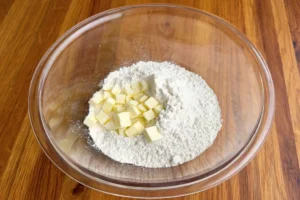
The butter is 1/2 cup (115 g) of cold unsalted butter, worked into the flour until the mixture looks like coarse crumbs with pea-sized pieces still visible. Those pieces melt in the oven and leave the flaky layers. The liquid is 2/3 cup (160 ml) of cold buttermilk with 1 teaspoon of vanilla stirred in. Buttermilk gives the crumb its slight tang and its tenderness; whole milk works in a pinch, but the biscuit comes out less tender. If the dough feels sticky, it is right — add flour only on the work surface, never into the bowl.
Macerated berries: the juice that makes strawberry shortcake
Macerating is just sugar and time doing the work. Slice 1 1/2 lb (680 g) of fresh strawberries, toss them with 1/4 cup (50 g) of granulated sugar and 1 tablespoon of lemon juice, and leave the bowl alone for 30 minutes. The sugar pulls juice out of the berries until they sit in their own syrup — that syrup is what soaks into the biscuit on purpose, in a controlled spoonful, instead of the berries weeping all over the plate. The lemon juice keeps the flavour bright; without it the berries taste flat and one-note sweet.
Pick berries that are ripe and fragrant, not just red. An underripe strawberry stays firm and sour no matter how long it macerates. Hull and slice them: thin slices macerate faster and layer better on the biscuit. Taste the bowl at 30 minutes and add a spoonful more sugar only if the berries are still sharp — the amount in the recipe assumes ripe fruit.
The skillet way: one pan, warm wedges
The video’s second way uses the same dough in a cast-iron skillet, and it is the better choice when the shortcake is dessert for a crowd rather than a plated serving. Butter a 10-inch cast-iron skillet generously, press the dough in evenly, and scatter 1 cup of sliced strawberries over the top. Bake at 425°F (220°C) for 20 to 25 minutes, until the top is deep golden and the edges pull away from the pan.
Cut it into wedges at the table while it is still warm and spoon the macerated berries and cream over each wedge. The skillet version trades the crisp split biscuit for something softer and warmer — the bottom steams slightly under the berries, more like a cobbler than a shortcake — which is why it is served warm, in the pan, instead of plated.
A lighter way to serve it
The video’s third way is cut off before it is named, so this is a serving variation rather than a video method: skip the whipped cream and serve the biscuits with the macerated berries and a spoonful of Greek yoghurt sweetened with a tablespoon of honey. The yoghurt’s tang suits the berries, and the strawberry shortcake feels lighter after a heavy meal. Use full-fat yoghurt, not fat-free — the fat-free kind weeps water onto the biscuit within a minute. Half cream and half yoghurt, whipped together, is the middle ground: it holds its shape like cream and tastes brighter.
Method: biscuits, berries, cream, build
- Macerate the berries. Slice the strawberries, toss with the sugar and lemon juice, and leave for 30 minutes until they sit in their own syrup.
- Mix the dough. Whisk the flour, baking powder, sugar and salt. Cut in the cold butter until pea-sized pieces remain, then stir in the cold buttermilk and vanilla until the dough just comes together.

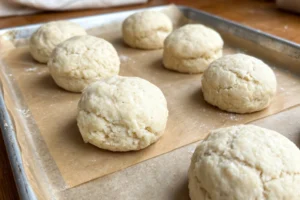
- Cut the biscuits. Pat the dough out on a floured surface to about 1 inch thick. Cut 8 rounds with a floured cutter, pressing straight down without twisting. Gather the scraps once, gently, for the last biscuit.
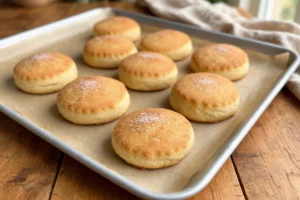
- Bake. Brush the tops with a little extra buttermilk and scatter over the coarse sugar. Bake at 425°F (220°C) for 14 to 16 minutes, until tall and deep golden. Cool on the tray for 10 minutes.
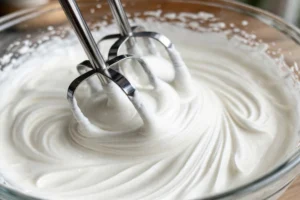
- Whip the cream. In a cold bowl, whip the cold heavy cream with the powdered sugar and vanilla to soft peaks.
- Build at the table. Split a warm biscuit. Spoon berries and a little syrup over the bottom half, add cream, set the top half on, and finish with more berries, more cream and a whole strawberry. Serve within 20 minutes of building.
Where it goes wrong
Soggy biscuits. Built ahead, or spooned on with too much syrup. Build at the table and add syrup a spoonful at a time.
Flat, dense biscuits. Warm butter, or kneaded dough. Use butter and buttermilk straight from the fridge and stir only until the dough comes together.
Tough biscuits. Too much flour worked in, or a twisted cutter. Flour the surface and the cutter, not the dough, and press straight down.
Cream that will not whip. Warm cream or a warm bowl. Chill both — cold cream whips in about 2 minutes.
Berries that taste flat. Underripe fruit, or skipped lemon juice. Buy fragrant berries and do not skip the lemon.
Make-ahead, fridge time and freezing
The parts keep separately, and that is the whole storage plan. Baked biscuits keep in an airtight container at room temperature for 1 day, or frozen for up to 1 month — thaw at room temperature and warm them for 5 minutes in a 350°F (175°C) oven before serving. Macerated berries keep covered in the fridge for 1 day; after that they soften too much for layering, though the syrup is still good spooned over yoghurt. Whipped cream keeps in the fridge for a few hours, covered, and can be re-whipped briefly if it slumps. Never store a strawberry shortcake assembled: the biscuit goes soft within the hour, and there is no way back. Get the cream and berries back into the fridge within 2 hours of serving.
More strawberry desserts to try: Strawberry Honey Bun Cake and Red Velvet Strawberry Cheesecake.
For another berry-and-cream dessert, the Chocolate Raspberry Mousse Cake layers raspberries and mousse the same way. Watch the biscuits come together in the Strawberry Shortcake Short.
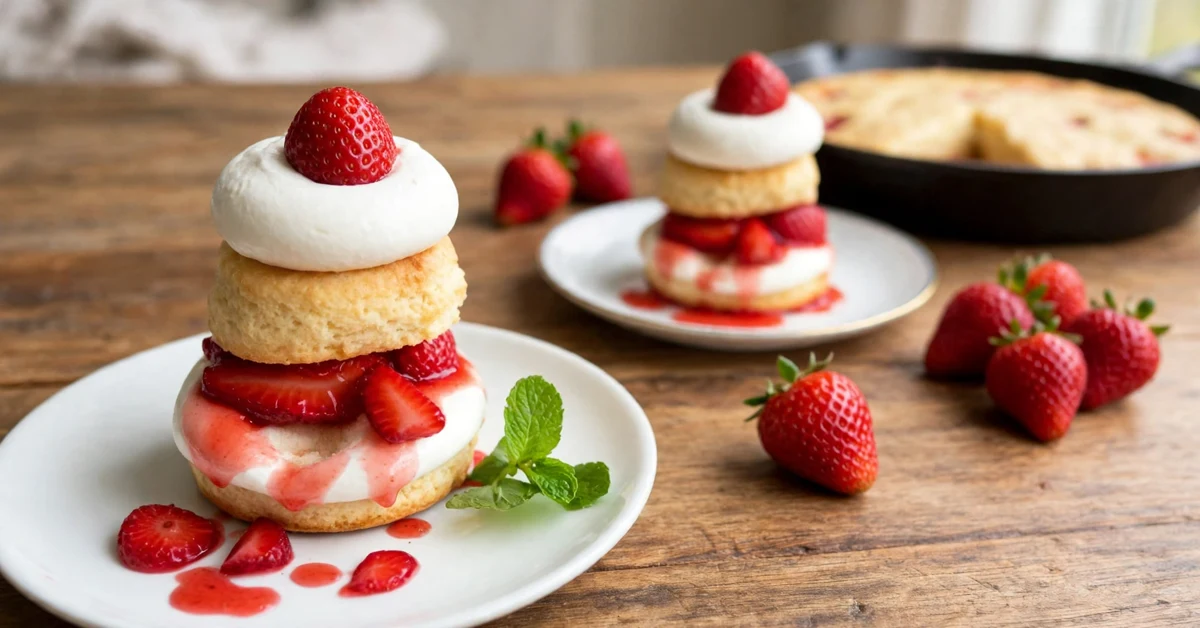
Strawberry Shortcake
Tender buttermilk biscuits split and filled with macerated strawberries and whipped cream, built at the table so the biscuit stays crisp.
25 minutes
15 minutes
1 hour 10 minutes
8 servings
Ingredients
Instructions
Chef Tips
- Keep the butter and buttermilk cold — warm butter bakes a flat, dense biscuit.
- Build each serving at the table; an assembled shortcake goes soggy within the hour.
- Taste the macerated berries at 30 minutes and add sugar only if they are still sharp.
- Chill the bowl before whipping the cream — cold cream whips in about 2 minutes.
- For the skillet way, press the same dough into a buttered 10-inch cast-iron skillet with 1 cup of sliced strawberries on top and bake 20 to 25 minutes at 425°F (220°C).
