
 By Elina
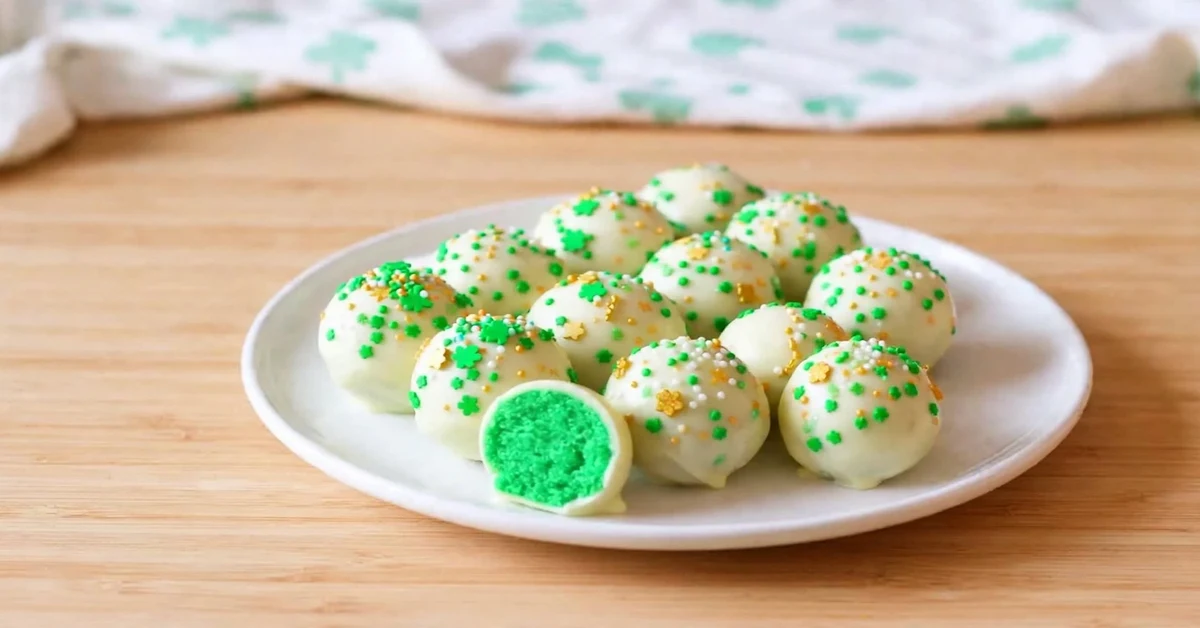
St patricks day cake balls are bright green cake crumbs bound with buttercream, rolled into 1-inch balls, chilled and dipped in white chocolate — and the green crumb is the whole point, because the surprise only shows when you cut one open. One box of white cake mix makes 24 balls with 20 minutes of hands-on work, a 30-35 minute bake and 40 minutes of chilling and setting.
The green centre is the whole point of st patricks day cake balls
Everything about this dessert is built around one moment: someone bites through a plain white shell and finds a vivid green crumb. If the green is pale, the moment falls flat and the balls read as a mistake instead of a joke. So the colour is not decoration, it is the recipe — and for st patricks day cake balls it is decided in the bowl, before the cake ever goes into the oven.
Cake balls are forgiving in every other way. A box mix does the baking, the crumb hides a multitude of sins, and the white chocolate shell covers a ball that is not perfectly round. The two places a batch actually fails are the tint and the ratio: too little colour, or too much buttercream. Get those two right and the rest is rolling and dipping.
Tinting the batter for st patricks day cake balls
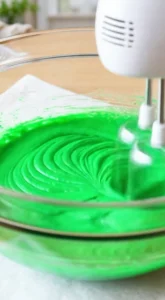
Start with white cake mix, not yellow. Yellow mix carries its own warm colour and it mutes the green into something olive and dull; white mix takes the tint cleanly and gives the bright, almost artificial green the video shows. Prepare one box (15.25 oz / 432 g) with 3 large egg whites, 1/3 cup (80 ml) of vegetable oil and 1 cup (240 ml) of water, or follow your box if its quantities differ.
Use gel food colouring, not liquid: liquid needs far more to reach the same depth and thins the batter, while gel gives a vivid green from about 1 teaspoon. Beat it in a little at a time and stop when the batter looks a shade brighter than the green you want — the colour deepens slightly as the cake bakes, then lightens a touch as it cools, so the batter should look almost too green. Pour into a greased 9×13-inch pan and bake at 350°F (175°C) for 30-35 minutes, until the top springs back when pressed lightly and a skewer comes out clean. Cool completely in the pan, about 1 hour: warm cake crumbles into paste instead of crumbs, and paste will not roll.
The crumb-to-buttercream ratio
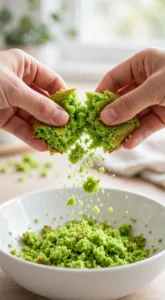
Break the cooled cake into a large bowl and rub it between your fingers until the crumbs are fine and even, like damp sand. Any big pieces left in the bowl become lumps in the finished balls, so take the minute to finish the job properly.
The ratio is one box of cake to 1/2 cup (115 g) of vanilla buttercream — store-bought vanilla frosting works, and so does a quick homemade batch of 1/4 cup (57 g) softened butter beaten with 1 cup (120 g) powdered sugar, 1 tablespoon (15 ml) milk and 1/2 teaspoon vanilla. Add the buttercream to the crumbs and mix with a spoon, then your hands, until the mixture holds together when squeezed. Add more only a tablespoon at a time if it will not hold: too much buttercream is the commonest failure, and it makes greasy balls that slump instead of holding a round shape. The finished mixture should feel like firm cookie dough, not wet, and it should not stick to your palms.
Rolling and dipping st patricks day cake balls
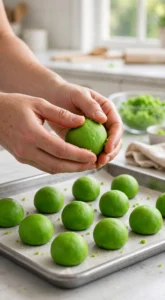
Portion the mixture for st patricks day cake balls with a 1-tablespoon cookie scoop so every ball is the same size; they chill evenly and look like a set. Roll each portion between your palms into a smooth 1-inch ball and set it on a parchment-lined tray with a little space between the balls. Chill 15-30 minutes, until the balls feel firm and cool all the way through. Do not skip the chill: a warm ball sheds its coating in the bowl and leaves a puddle.
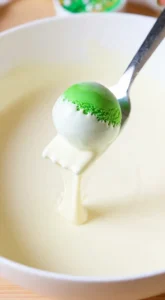
Melt 12 oz (340 g) of white chocolate melting wafers or white candy melts in a microwave-safe bowl in 30-second bursts, stirring between each, and stop while a few small pieces remain — the residual heat finishes the melting without scorching. Working with a few balls at a time straight from the fridge, drop one into the melted chocolate, roll it with a fork until coated, lift it out, tap gently against the rim so the excess drips back, and set it on the parchment. Sprinkle each ball with green and gold sprinkles and shamrock sprinkles while the coating is still wet: white chocolate sets fast, and sprinkles will not stick once it firms. Return the tray to the fridge for 10 minutes until the shells are hard.
When the coating cracks or the green fades
A pale green crumb means the tint was too light, or the mix was yellow. There is no fixing it after baking — the colour has to go in the batter — so next time use white mix and gel colouring, and tint the batter a shade brighter than the target green.
A coating that cracks usually means the balls were too cold when they met chocolate that was too hot. Let the balls sit out of the fridge for 5 minutes before dipping, and let the melted chocolate cool a minute off the heat. A thick, lumpy shell means the chocolate was too hot or the excess was not tapped off; dip, tap, and set the ball down.
Balls that slump after dipping were not chilled long enough, or the mixture had too much buttercream. Chill the tray for the full 30 minutes before dipping, and next time add the buttercream a tablespoon at a time. Sprinkles that slide off went on too late — sprinkle within seconds of each dip, while the coating is still wet and glossy.
White chocolate that seizes into a stiff paste got water in the bowl or was overheated. Keep every utensil dry and melt in short bursts, stirring between each — seized chocolate cannot be rescued for dipping, so start a fresh bowl.
Storing, freezing and making ahead
St patricks day cake balls keep in a sealed container in the fridge for up to 1 week — the white chocolate shell protects the crumb from drying out. Layer them between sheets of parchment so they do not stick. They freeze well for up to 2 months: freeze on a tray first, then move to a freezer bag, and thaw in the fridge for about an hour before serving.
The work splits across two days: bake and crumble the cake the day before and keep the crumbs covered in the fridge; roll, chill, dip and sprinkle on the day. At a party, keep the tray out no more than 2 hours — buttercream and white chocolate both soften in a warm room — then return it to the fridge. Take the balls out 10 minutes before serving so the centres are not fridge-cold.
Serving them on a St Patrick’s Day table
Pile the balls on a white plate and cut one in half to show the green crumb, the way the video ends — that one cut-open ball is what makes people reach for the plate. Gold coins, shamrock picks and green beads belong on the table around the plate, not in the food. Serve st patricks day cake balls cool, straight from the fridge, with coffee or a glass of milk; the white chocolate is sweet enough that they need nothing else on the plate.
More bite-size desserts to try: Peanut Butter Balls with Rice Krispies · No-Bake Salted Caramel Cheesecake Bars · No-Bake Cherry Cheesecake Pie · Strawberry Honey Bun Cake
The easiest next bite-size dessert on the site is the Peanut Butter Balls with Rice Krispies — rolled, chilled and dipped the same way, with a crunchy cereal centre instead of cake. Watch the green crumb come together in the CraveWave Kitchen Short — [Short link to be added once video #10 posts in slot 2 Wed 2026-11-11].
St Patricks Day Cake Balls
Bright green cake balls dipped in white chocolate and sprinkled green and gold — a box-mix shortcut for St Patrick's Day, with the colour surprise inside.
20 minutes
35 minutes
1 hour 35 minutes
24 servings
Ingredients
Instructions
Chef Tips
- Gel food colouring gives the vivid green the video shows; liquid colouring needs much more and thins the batter.
- Cool the cake completely before crumbling — warm cake turns to paste instead of crumbs.
- Add the buttercream a little at a time; too much makes greasy balls that will not hold their shape.
- Dip balls straight from the fridge so the white chocolate sets in minutes instead of sliding off.
- Sprinkle immediately after each dip — white chocolate sets fast and sprinkles will not stick once it firms.
