
 By Jawariya
How to Frost a Cake With Frosting for a Smooth and Beautiful Finish
Learning how to frost a cake with frosting can turn a simple homemade cake into a dessert that looks polished, neat, and celebration-ready. The key is not using complicated decorating techniques but preparing the cake properly, working with frosting at the right consistency, and applying it in layers. A completely cooled and level cake is much easier to frost because warm or uneven layers can cause melting, sliding, and an uneven finish.
The basic process of how to frost a cake with frosting involves stacking the layers, adding filling, applying a thin crumb coat, chilling the cake, and then spreading the final layer of frosting. A crumb coat is particularly useful because it traps loose crumbs before the decorative layer is added. Once the cake is properly prepared, even beginners can create smooth sides, clean edges, and attractive frosting designs.
Prepare the Cake Before You Frost It
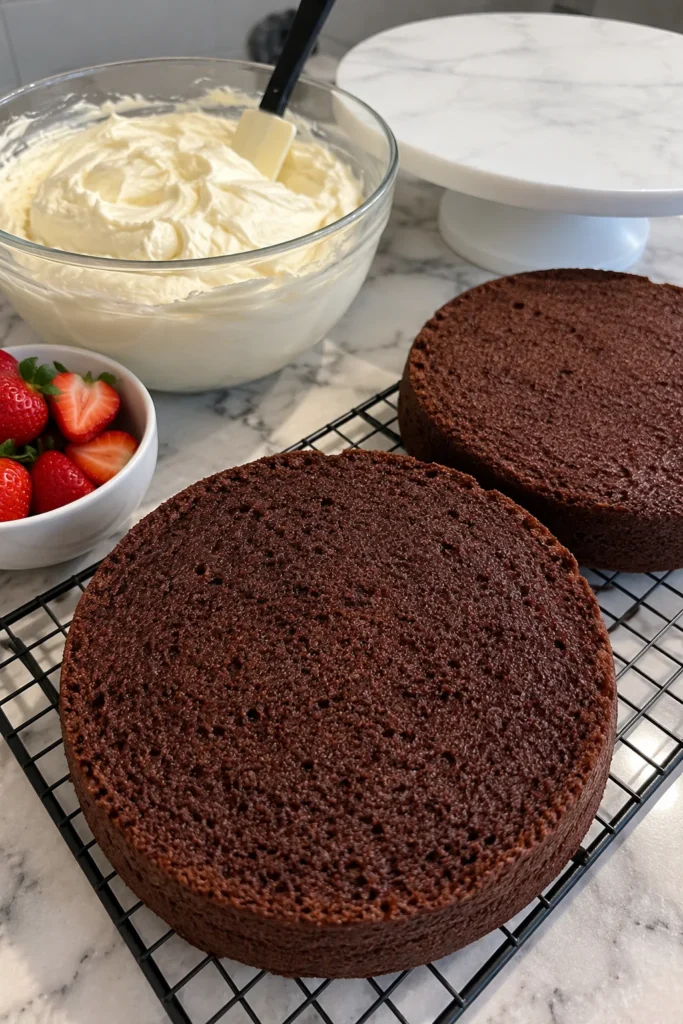
The first step in how to frost a cake with frosting is making sure the cake layers are completely cool. Frosting a warm cake can soften or melt buttercream and make the layers move out of position. If your cake layers have rounded or domed tops, carefully level them with a long serrated knife so they can stack evenly. A flat and stable cake gives you a much easier surface to frost.
For the best results, place the cake on a cake board, serving plate, or turntable before you begin. Adding a small amount of frosting underneath the first cake layer can help keep it from sliding while you work. Gather your frosting, an offset spatula, and a cake scraper or bench scraper if you have one. These tools make the process of how to frost a cake with frosting easier, although a regular spatula can still work for a simple homemade finish.
How to Frost a Cake With Frosting Between the Layers
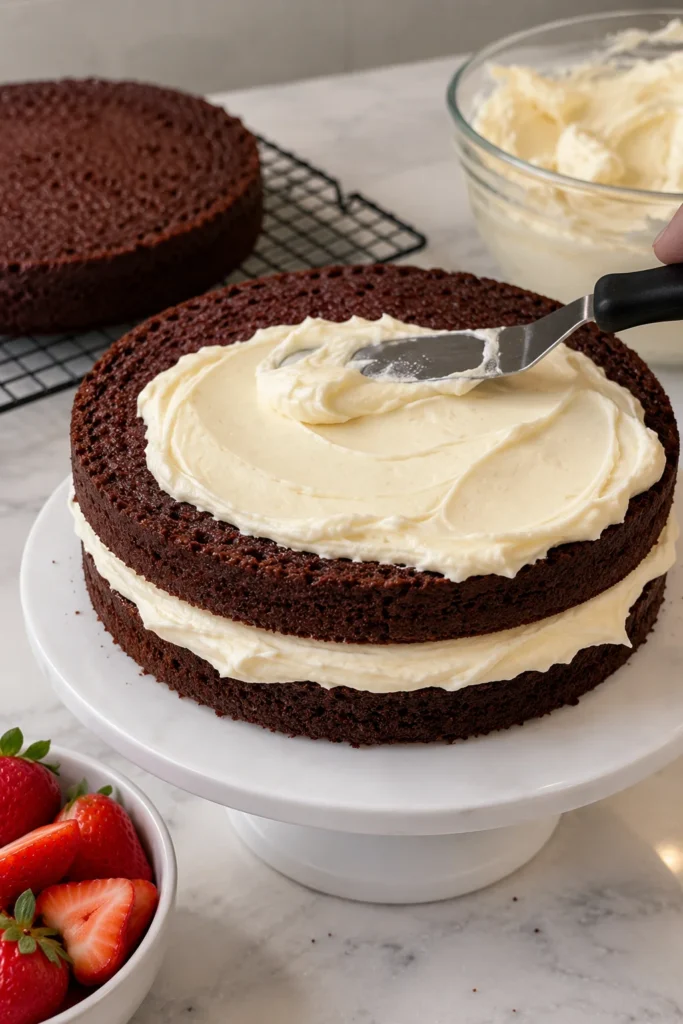
Place the first cake layer securely on your cake board or serving plate and add a generous amount of frosting to the center. Spread the frosting outward with an offset spatula until it forms an even layer. Try not to spread too much frosting over the edge because excessive filling can cause the upper cake layer to slide or create bulges around the sides.
Place the next cake layer carefully on top and press it down gently until it sits evenly. Repeat the process if you are making a cake with additional layers. Check the cake from the side before continuing to make sure it is straight and level. Proper stacking is an important part of learning how to frost a cake with frosting because an uneven cake becomes more difficult to smooth once the outside is covered.
How to Frost a Cake With Frosting Using a Crumb Coat
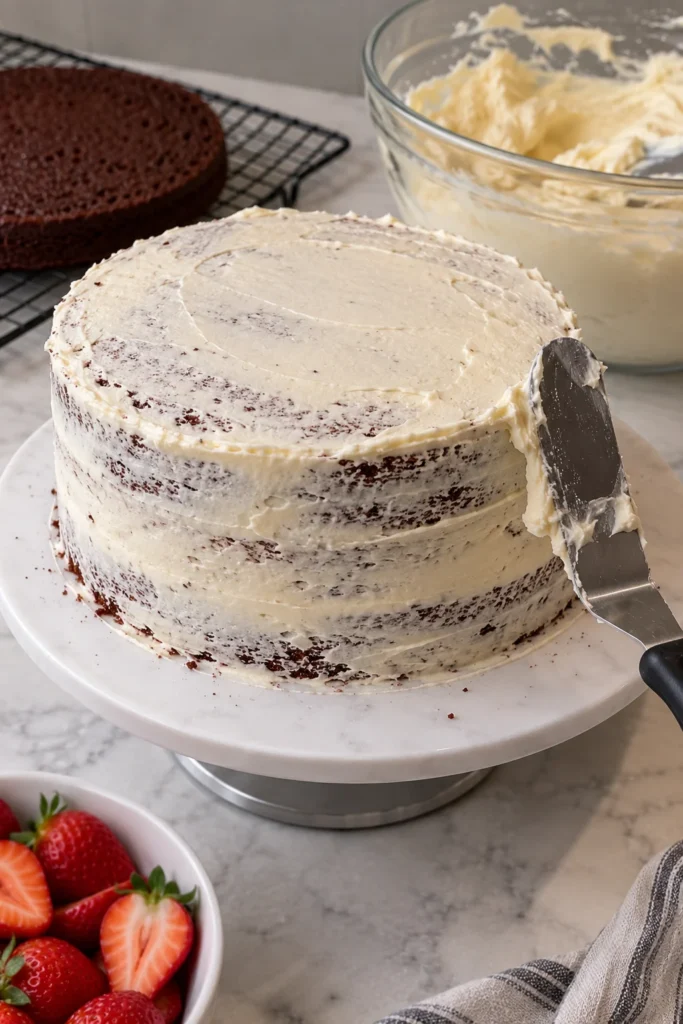
A crumb coat is a very thin layer of frosting applied before the final decorative layer. Its main purpose is to trap loose cake crumbs against the surface so they do not mix into your clean final frosting. Spread a small amount of frosting across the top and sides of the cake, covering the surface lightly. It is completely normal if some cake is still visible through this thin layer.
After applying the crumb coat, chill the cake until the frosting becomes firm. This resting period creates a stable surface for the final layer and helps prevent the frosting from dragging crumbs across the cake. Many cake-decorating guides recommend chilling the crumb-coated cake for roughly 20 to 30 minutes, depending on the frosting and refrigerator temperature.
Why a Crumb Coat Makes Frosting Easier
Without a crumb coat, your spatula can pick up loose crumbs from the cake and drag them through the final frosting layer. This is especially noticeable when using white, light-colored, or smooth buttercream. The crumb coat acts as a protective seal, allowing the final frosting to remain cleaner and easier to smooth.
A crumb coat does not need to look perfect because it will be completely covered later. Focus on filling small gaps, sealing loose crumbs, and creating a reasonably even surface. Once chilled, the thin layer becomes a stable foundation, making the next stage of how to frost a cake with frosting much easier and more controlled.
Apply the Final Frosting Layer
Once the crumb coat is firm, add a generous amount of frosting to the top of the cake. Use an offset spatula to spread it from the center toward the edges, allowing a small amount of frosting to extend slightly over the sides. This extra frosting can then be pulled downward to help cover the upper edges of the cake.
Next, apply frosting around the sides until the entire cake is covered. At this stage, concentrate on creating an even thickness rather than trying to achieve perfect smoothness immediately. Working with enough frosting is important because pressing a spatula directly against a thin layer can expose the crumb coat underneath and make the surface uneven.
How to Frost a Cake With Frosting Smoothly
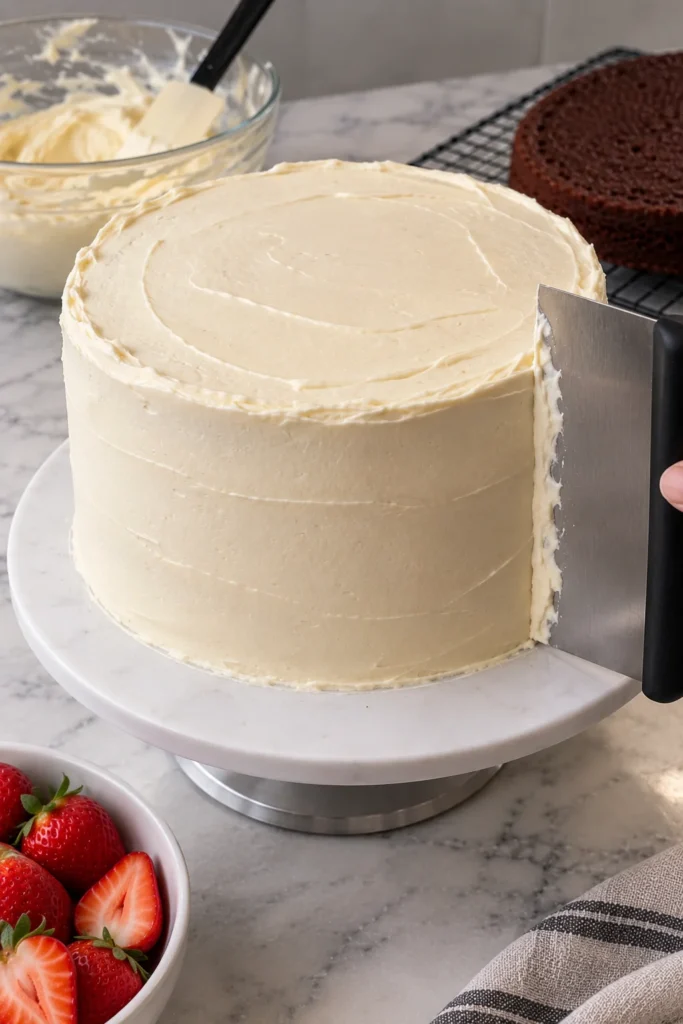
To create smooth sides, hold a cake scraper or bench scraper vertically against the side of the cake while rotating the cake. Keep the scraper steady and use gentle, consistent pressure. Remove excess frosting from the scraper between passes so you do not transfer uneven frosting back onto the cake.
For the top, use an offset spatula to gently pull the frosting from the outer edge toward the center. Continue working around the cake until the top becomes smooth and level. If you notice gaps or low spots, simply add a little more frosting and smooth the area again instead of repeatedly scraping away the existing frosting.
What to Do If the Frosting Is Too Thick or Too Thin
Frosting that is extremely stiff can pull and tear as you spread it, making smooth cake decorating difficult. Allowing buttercream to soften slightly can make it easier to spread, but avoid making it excessively warm or loose. The ideal frosting should be soft enough to glide across the cake while still firm enough to hold its shape.
If the frosting becomes too soft or appears glossy and loose, pause before continuing and allow it to firm up. A cake with overly soft frosting may develop uneven sides or sliding layers. Maintaining the right frosting consistency is one of the most important practical skills when learning how to frost a cake with frosting successfully.
Finish and Decorate Your Frosted Cake
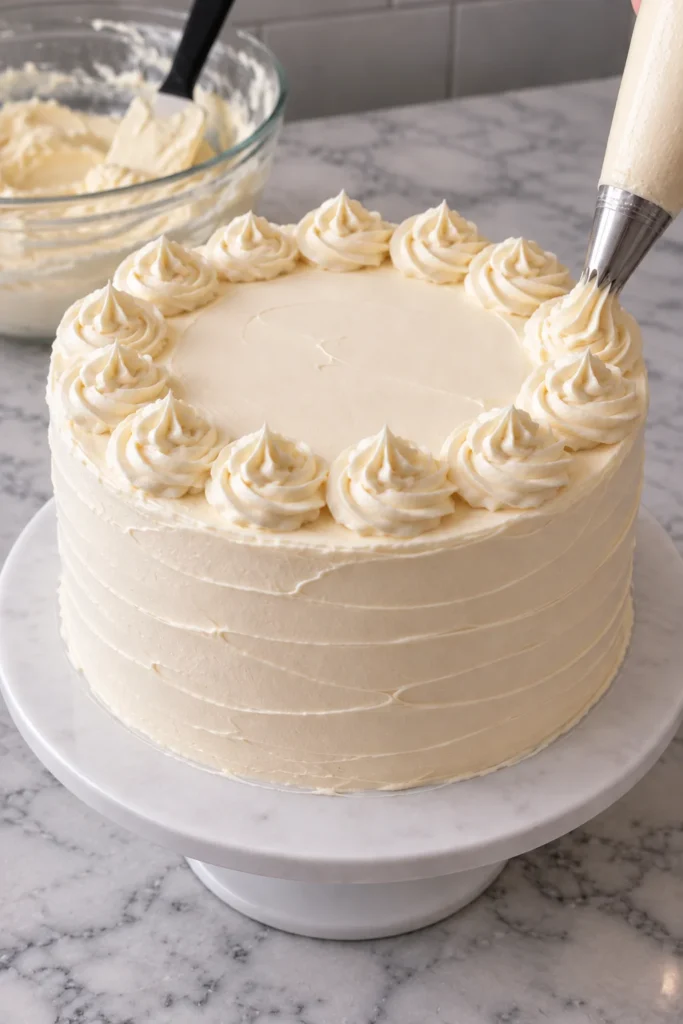
Once the frosting is smooth, you can leave the cake with a simple clean finish or add decorative details. The back of a spoon can create soft swirls, while piping bags can be used to make borders, rosettes, shells, or other designs. Sprinkles, chocolate shavings, fruit, and other toppings can also add visual interest.
Remember that a beautifully frosted cake does not need to be perfectly symmetrical. Small variations often give homemade cakes character, and your technique will naturally improve with practice. The most important part of how to frost a cake with frosting is working patiently, allowing the cake to chill when necessary, and building the frosting in controlled layers.
Common Mistakes to Avoid When You Frost a Cake With Frosting
One of the most common mistakes is frosting the cake before it has completely cooled. Even slightly warm cake layers can soften the frosting and make the entire structure unstable. Another common problem is skipping the crumb coat, particularly when the cake is delicate or produces many crumbs during frosting.
Using too little frosting can also make smoothing difficult because the spatula may pull against the cake surface instead of gliding across a generous layer. Take your time, use clean tools when applying the final layer, and chill the cake whenever the frosting becomes too soft. These simple habits can dramatically improve your results when learning how to frost a cake with frosting.
Cake Recipes Perfect for Your Frosting Skills
Now that you’ve mastered the art of frosting, put your skills to work with our collection of stunning cakes. Our 7UP Pound Cake is a buttery classic that holds frosting beautifully, while our Yellow Cake Mix Recipes offer quick, versatile bases for creative frosting designs. For something richer, try our Easy Coconut Cake with Self-Raising Flour, perfect for layering and frosting to impress.
Frequently Asked Questions About How to Frost a Cake With Frosting
Can I frost a cake while it is still warm?
No, it is best to wait until the cake layers are completely cool before frosting them. Warm cake can melt or soften the frosting, causing the layers to slide and making it difficult to achieve smooth sides.
If you want extra stability, you can chill the cooled cake layers before assembling and frosting them. Firmer layers are generally easier to handle and produce fewer crumbs while frosting.
How much frosting do I need to frost a cake?
The amount depends on the size of the cake, the number of layers, and how thick you want the frosting to be. A simple two-layer cake requires less frosting than a tall multi-layer cake with thick filling and decorative piping.
It is usually better to prepare slightly more frosting than you think you will need because having enough frosting makes smoothing easier. Extra frosting can also be used to repair gaps, uneven areas, or thin spots while decorating the cake.
Why are crumbs getting into my frosting?
Crumbs usually appear when frosting is applied directly onto an unfrosted cake without a protective crumb coat. The spatula can pick up loose crumbs and drag them through the frosting as you spread it.
Apply a thin crumb coat first and chill the cake until the frosting is firm. You can also keep the frosting used for the crumb coat separate from the clean frosting reserved for the final decorative layer.
How do I get perfectly smooth frosting on a cake?
Start with a chilled crumb-coated cake and apply a generous, even layer of frosting. Use an offset spatula to spread the frosting and a bench scraper or cake scraper to smooth the sides while rotating the cake.
Clean your tools between passes and avoid pressing too hard against the frosting. If you create holes or uneven spots, add more frosting to those areas before making another gentle smoothing pass.
Now that you’ve mastered these frosting techniques, check out our easy coconut cake recipe, 7UP pound cake, and yellow cake mix recipes.
Check our Instagram and Facebook pages for more recipes.

[…] If you enjoy this pound cake, you might also like our easy coconut cake recipe, yellow cake mix recipes, or how to frost a cake guide. […]