
 By Elina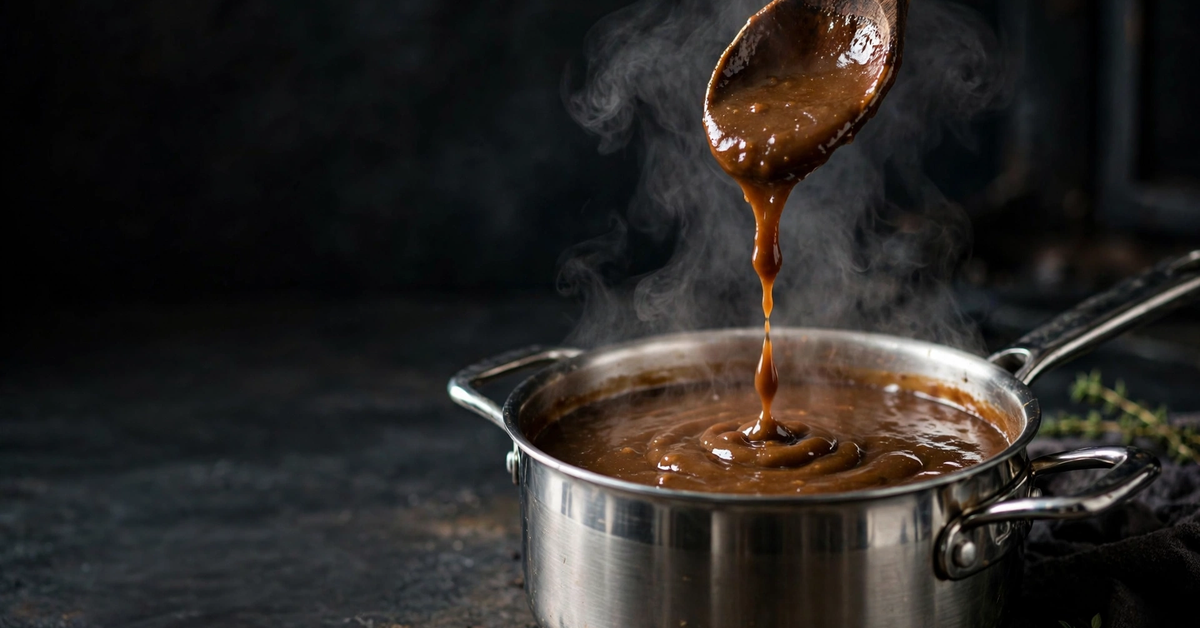
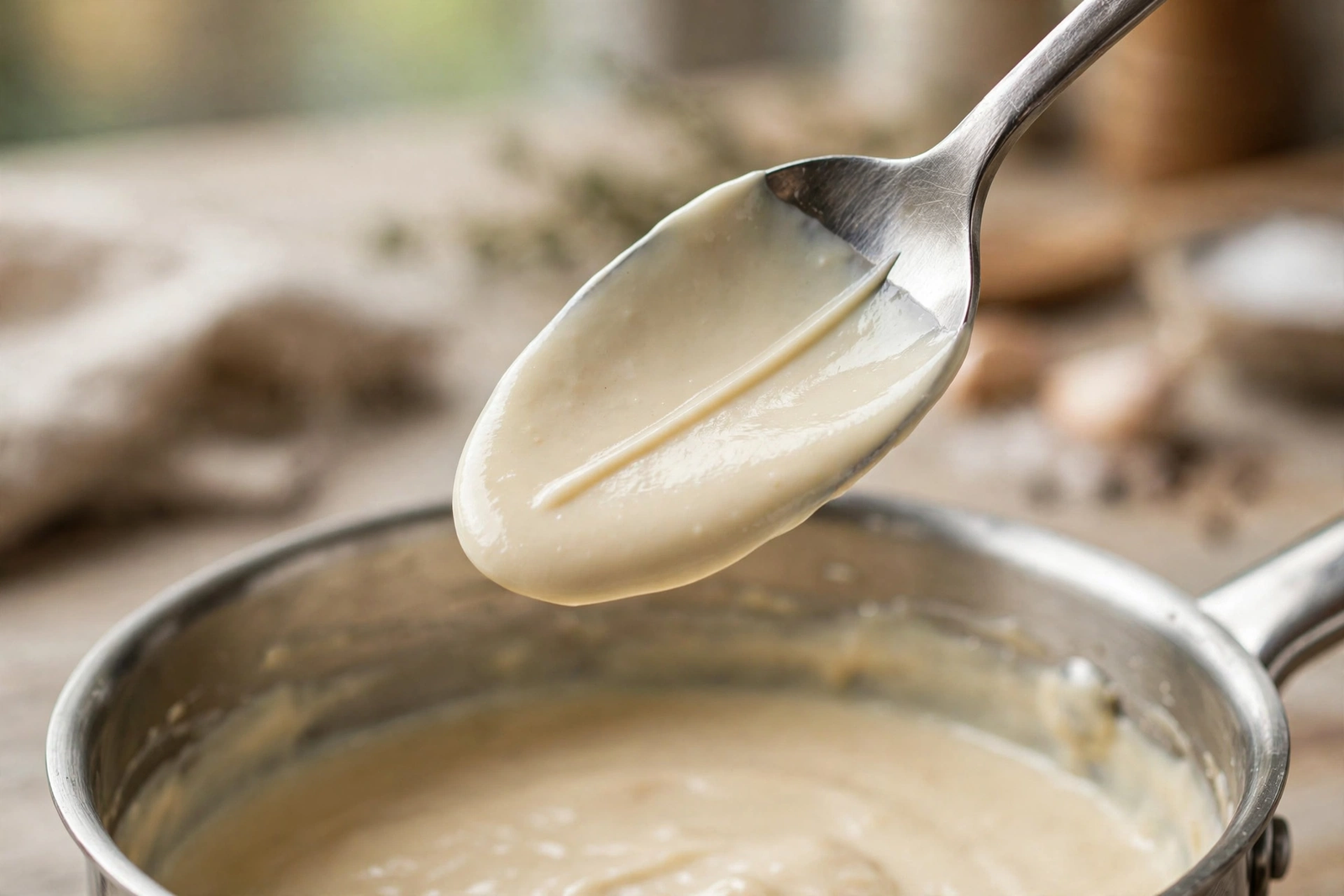
Learning how to thicken a sauce comes down to matching the method to the sauce: a cornstarch slurry thickens glossy stir-fry sauces in seconds, a flour roux builds body for gravies, and simple reduction concentrates flavor with no added starch at all. Here are 7 reliable methods with exact ratios, when to use each, and how to fix lumps.
7 Easy Methods: How to Thicken a Sauce
1. Cornstarch Slurry (Fastest)
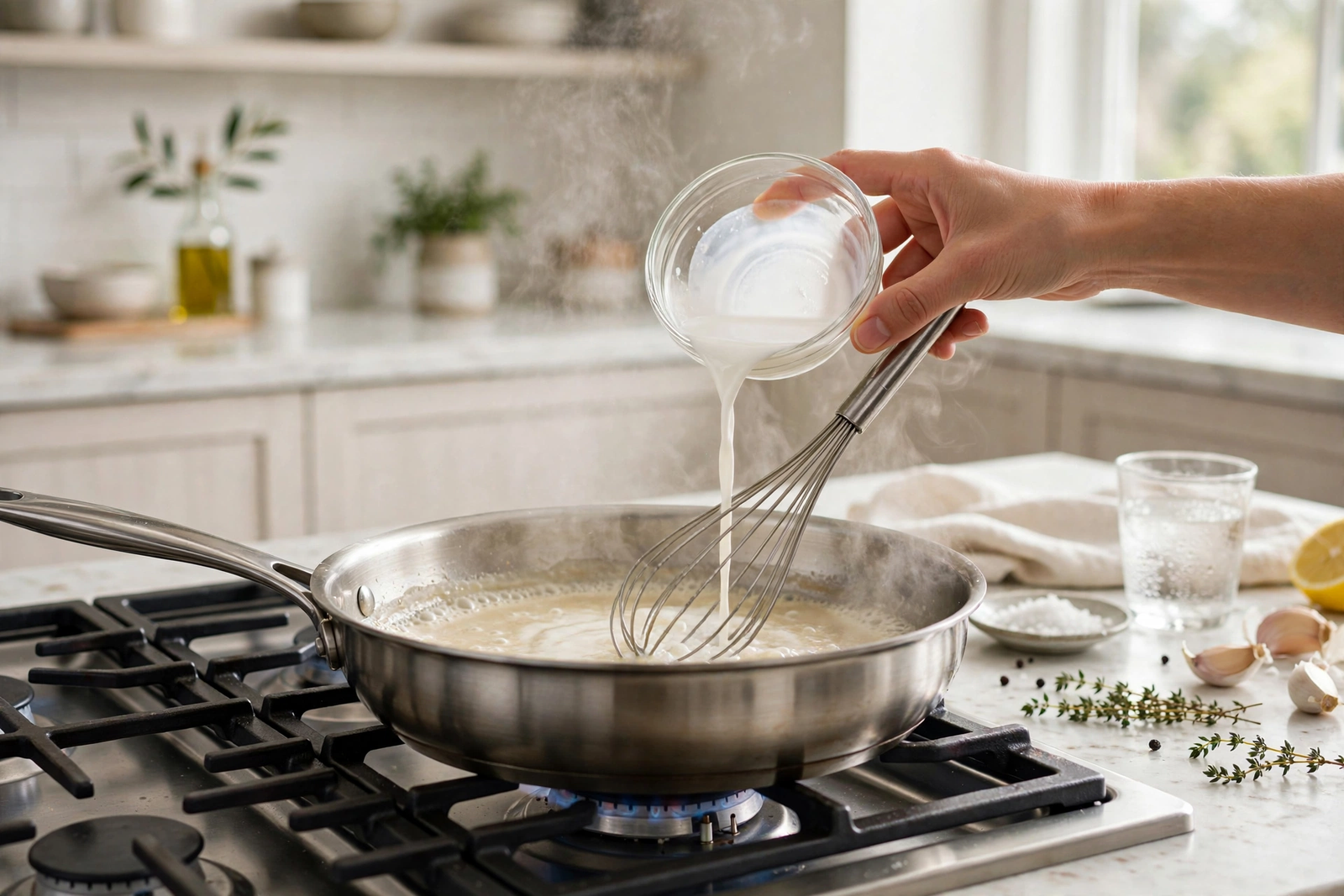
Whisk 1 tablespoon cornstarch with 2 tablespoons cold water until completely smooth, then drizzle it into 2 cups of simmering sauce while whisking. Let it bubble gently for 1–2 minutes — cornstarch only reaches full thickness at a simmer. Best for glossy Asian-style sauces, sweet-and-sour sauce, and fruit sauces. Note: it can thin out again if boiled for a long time, so add it near the end of cooking.
2. Flour Roux (Classic)
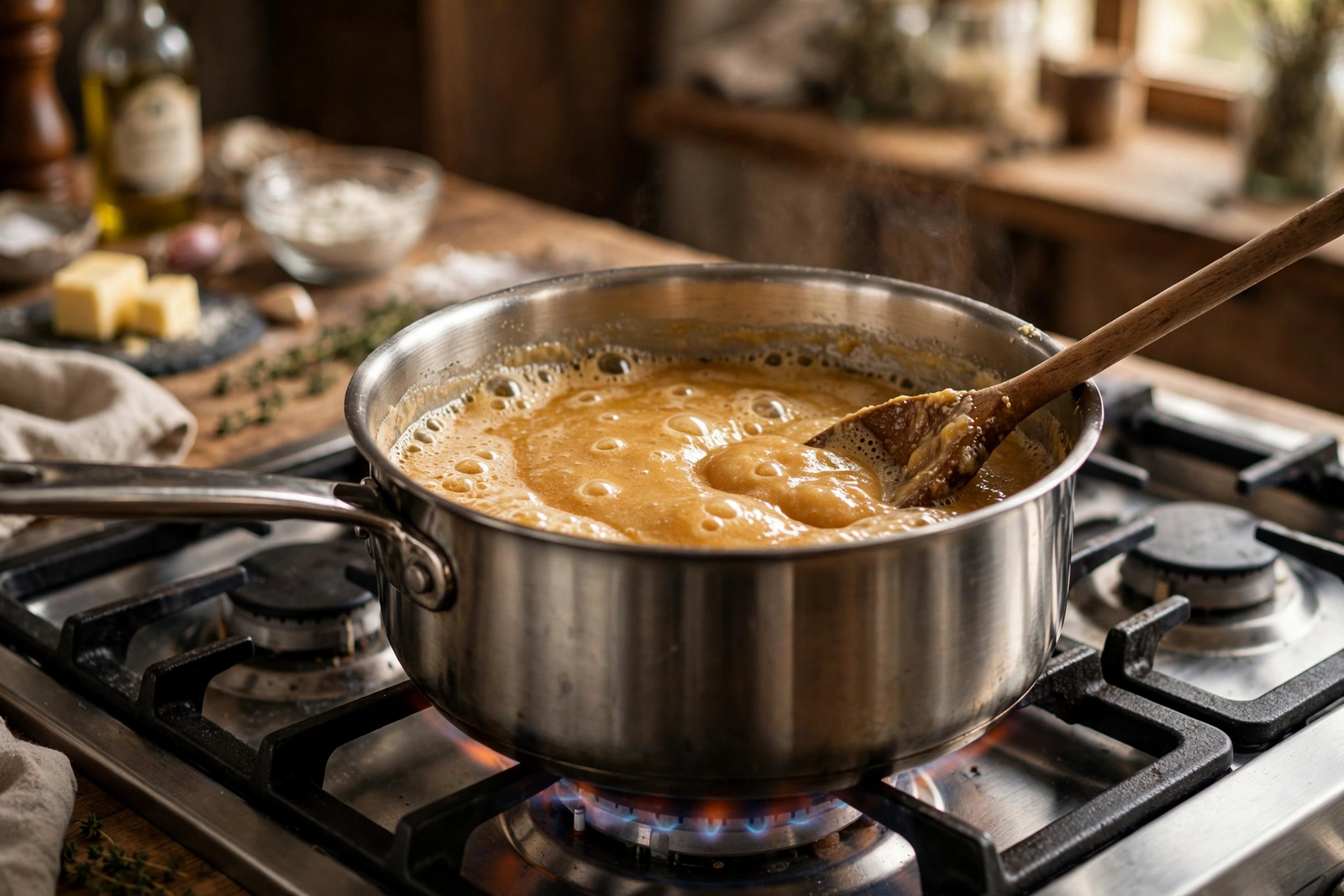
Melt 2 tablespoons butter, whisk in 2 tablespoons plain flour, and cook for 2–3 minutes until it smells nutty and turns pale gold — this cooks out the raw flour taste. Then whisk in 2 cups of warm liquid a little at a time. Best for gravies, cheese sauces, and béchamel. A roux gives an opaque, velvety body and reheats better than cornstarch.
3. Beurre Manié (Last-Minute Rescue)
Knead equal parts softened butter and flour (start with 1 tablespoon of each) into a smooth paste. Whisk pea-sized bits into the simmering sauce one at a time, waiting a minute between additions. Best for rescuing a thin stew or pan sauce at the last minute — the butter melts away and leaves just the thickening power of the flour behind.
4. Reduction (No Starch Needed)
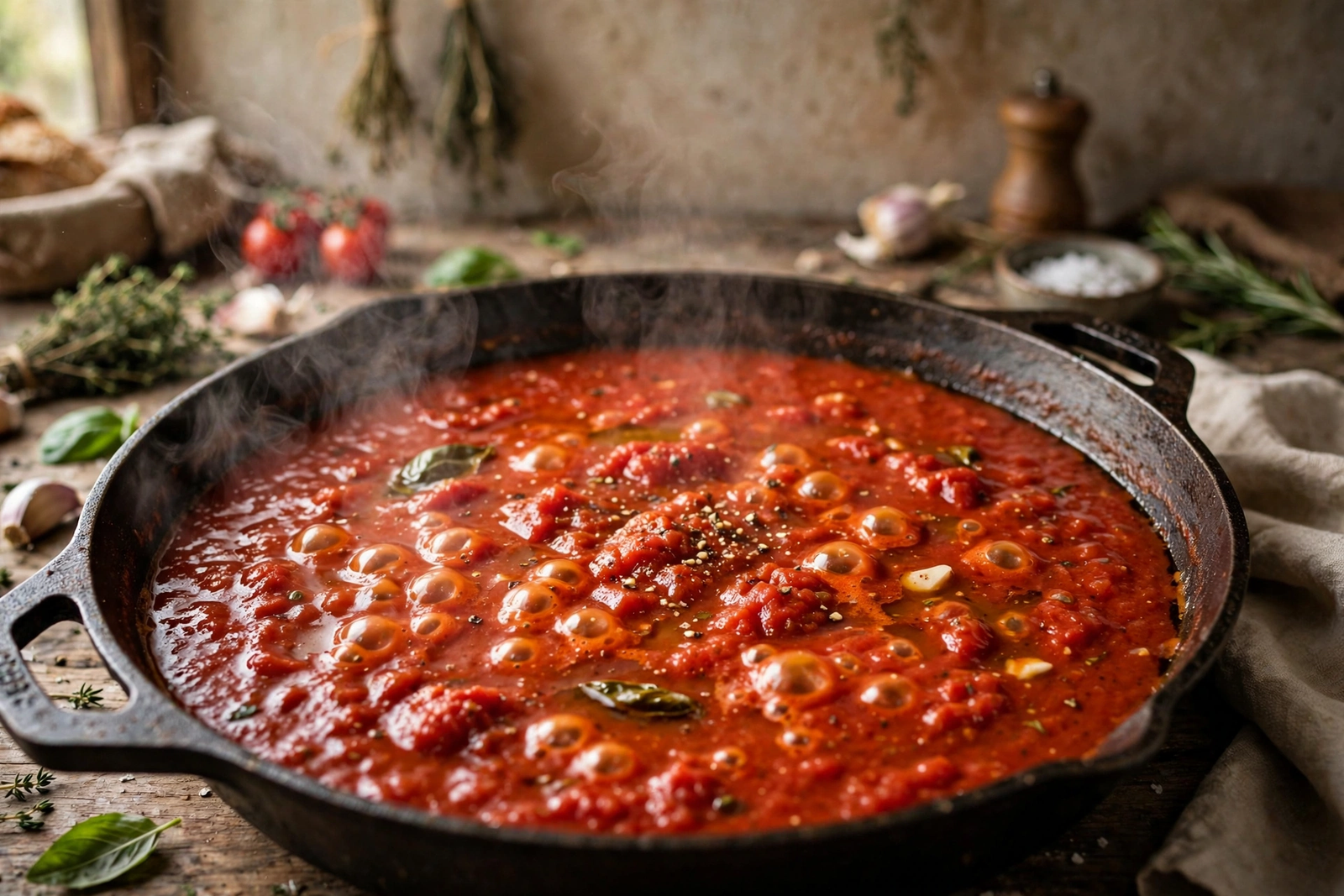
Simmer the sauce uncovered until it reduces by about one-third to one-half. As water evaporates, everything else — flavor included — concentrates. Best for pan sauces, wine sauces, and tomato sauces. It takes longer (10–20 minutes), but the flavor payoff is unmatched and there is nothing to go lumpy.
5. Egg Yolk Liaison (Silky Finish)
Whisk 1–2 egg yolks per cup of sauce in a bowl, then slowly drizzle in a ladle of the hot sauce while whisking constantly — this “tempers” the yolks so they don’t scramble. Stir the mixture back into the pan and warm gently. Never let it boil afterward (keep it below 82°C / 180°F) or it will curdle. Best for creamy soups and velvety finishing sauces.
6. Puréed Vegetables (Healthy Option)
Scoop out 1–2 ladles of the cooked vegetables from the pot (potatoes, carrots, cauliflower, and white beans all work beautifully), blend until smooth, and stir back in. Best for soups and rustic stews — it adds body with no extra starch and boosts the vegetable content at the same time. For more soup ideas, browse our soup recipes.
7. Breadcrumbs (Rustic Thickener)
Stir 2–3 tablespoons of fine dry breadcrumbs into 2 cups of simmering sauce and cook for 5 minutes, stirring often. Best for hearty, rustic stews and classic dishes like romesco. It won’t give a glossy finish, but it adds satisfying body and a little texture.
Troubleshooting: Lumps, Thin Spots, and Over-Thickening
Lumpy sauce? It happens when starch hits hot liquid before it is dissolved. Strain the sauce through a fine sieve, or blitz it briefly with an immersion blender. Next time, always dissolve starch in cold liquid first.
Sauce too thick? Whisk in warm stock, water, or milk a splash at a time until it loosens — never cold liquid, which can make starch seize.
Sauce tastes floury? Flour-based thickeners need 2–3 minutes of simmering after adding. If it still tastes raw, it simply needs more time on the heat.
Frequently Asked Questions
Can I thicken a sauce without flour or cornstarch?
Yes. Reduction works for almost any sauce, puréed vegetables thicken soups and stews, and an egg yolk liaison gives creamy sauces a silky body — no starch required.
Why does my sauce go lumpy when I add flour?
Dry flour clumps the moment it touches hot liquid. Always mix flour or cornstarch with cold water (a slurry), cook it into a roux with fat first, or knead it into a beurre manié before it meets the heat.
Can you thicken a sauce after it is already cooked?
Absolutely. A cornstarch slurry or beurre manié can be whisked into a finished sauce in the last few minutes of cooking — just bring it back to a gentle simmer so the starch activates.
Does sauce get thicker as it cools?
Yes — starches continue to set as the temperature drops. If you are serving the sauce hot, aim for just slightly thinner than your target; it will reach perfect consistency on the plate.
[INTERNAL LINK: creamy bearnaise sauce recipe]
[INTERNAL LINK: 3 irresistible soup recipes]
