
 By Elina
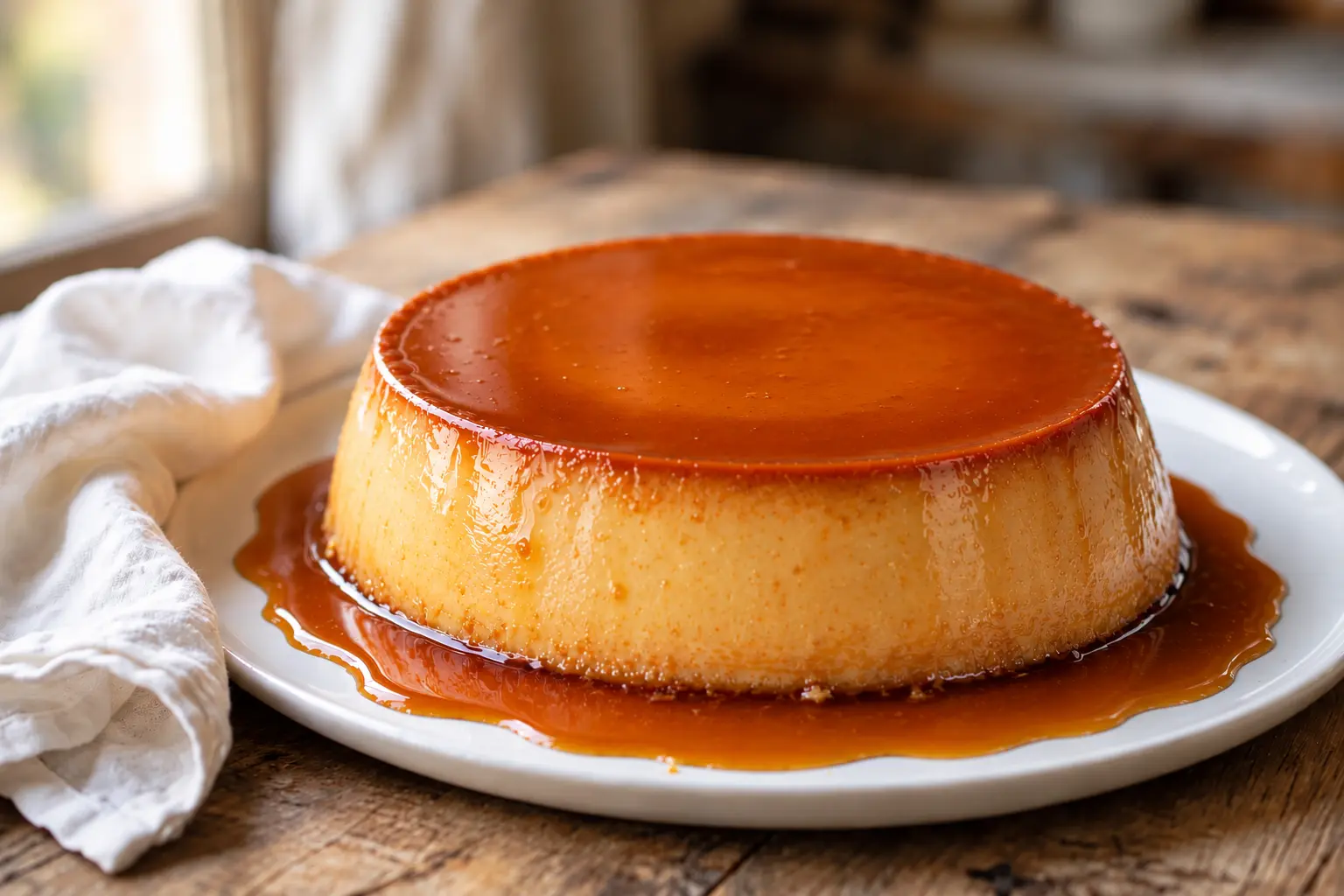
This caramel flan recipe makes one round, satin-smooth custard under a deep-amber caramel that turns into sauce the moment you invert it. It serves 8, needs no special mold, and the whole thing comes down to two skills: pulling the caramel at the right color, and baking gently enough that the custard sets without turning spongy. Get those two right and the flan unmolds cleanly every time.
Flan is a baked custard, not a stirred one. The caramel goes into the pan first and hardens; the custard bakes on top of it in a water bath; then you flip the whole thing and the caramel becomes the sauce. There is no gelatin, no cream cheese, and no shortcut that gives the same texture — the water bath and the chill are doing the real work.
Why Most Flans Fail (and How This One Doesn’t)
Three things ruin flan more than anything else. First, caramel taken too far: past deep amber it turns bitter in seconds, and there is no way to rescue burnt sugar — you start over. Second, bubbles: whisking the custard hard or baking it hot whips air into it, and the air sets as tiny holes. Third, impatience at the unmold: a warm or barely chilled flan tears, while a fully chilled one slides out in one piece.
This recipe is built around those three fixes. The caramel is made with a no-stir rule — you swirl the pan, never stir — so it colors evenly. The custard is whisked gently and strained, which takes out both lumps and bubbles. And the bake uses the jiggle test: when the edges are set and the center still trembles like jelly, it is done, even if it looks underdone. It finishes setting as it cools.
Ingredients
- 3/4 cup (150 g) granulated sugar, for the caramel
- 3 tablespoons (45 ml) water
- 4 large eggs + 2 large egg yolks
- 1 can (14 oz / 397 g) sweetened condensed milk
- 1 can (12 oz / 354 ml) evaporated milk
- 2 teaspoons vanilla extract
- Pinch of fine sea salt
- Chocolate curls, for serving (optional, as pictured)
On substitutions: whole milk can replace the evaporated milk, but the custard will be lighter and a little less rich — keep the condensed milk, because it is doing most of the sweetening and body here. Egg yolks are not optional if you want a dense, sliceable custard; all-white eggs give a lighter, more trembling set that is harder to unmold cleanly.
Before You Start
Use a 9-inch round metal cake pan or flan pan — not a springform, which leaks in a water bath. You also need a larger roasting pan it fits inside with room for water, and a kettle of hot water ready. Heat the oven to 325°F (165°C) and put the rack in the middle. Everything after the caramel moves fast, so measure the custard ingredients before the sugar goes on the heat.
Caramel Flan Recipe: Step by Step
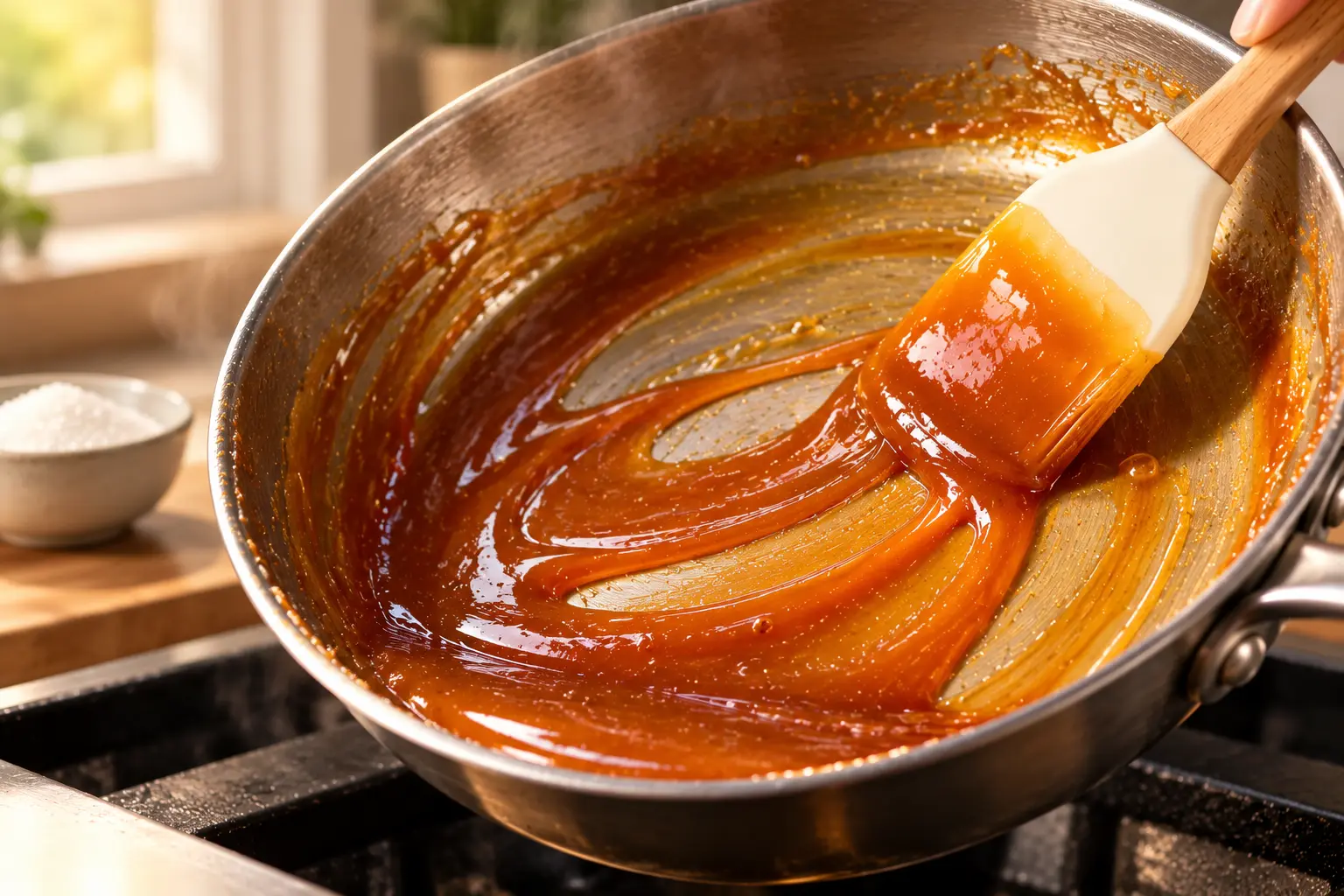
Step 1: Make the caramel — and don’t stir it. Put the sugar and water in a heavy saucepan over medium heat. Let it sit until the edges start to color, then swirl the pan gently — never stir, or the sugar crystallizes. In 8–10 minutes it turns deep amber, the color of maple syrup. Pull it the moment it gets there; caramel keeps darkening off the heat.
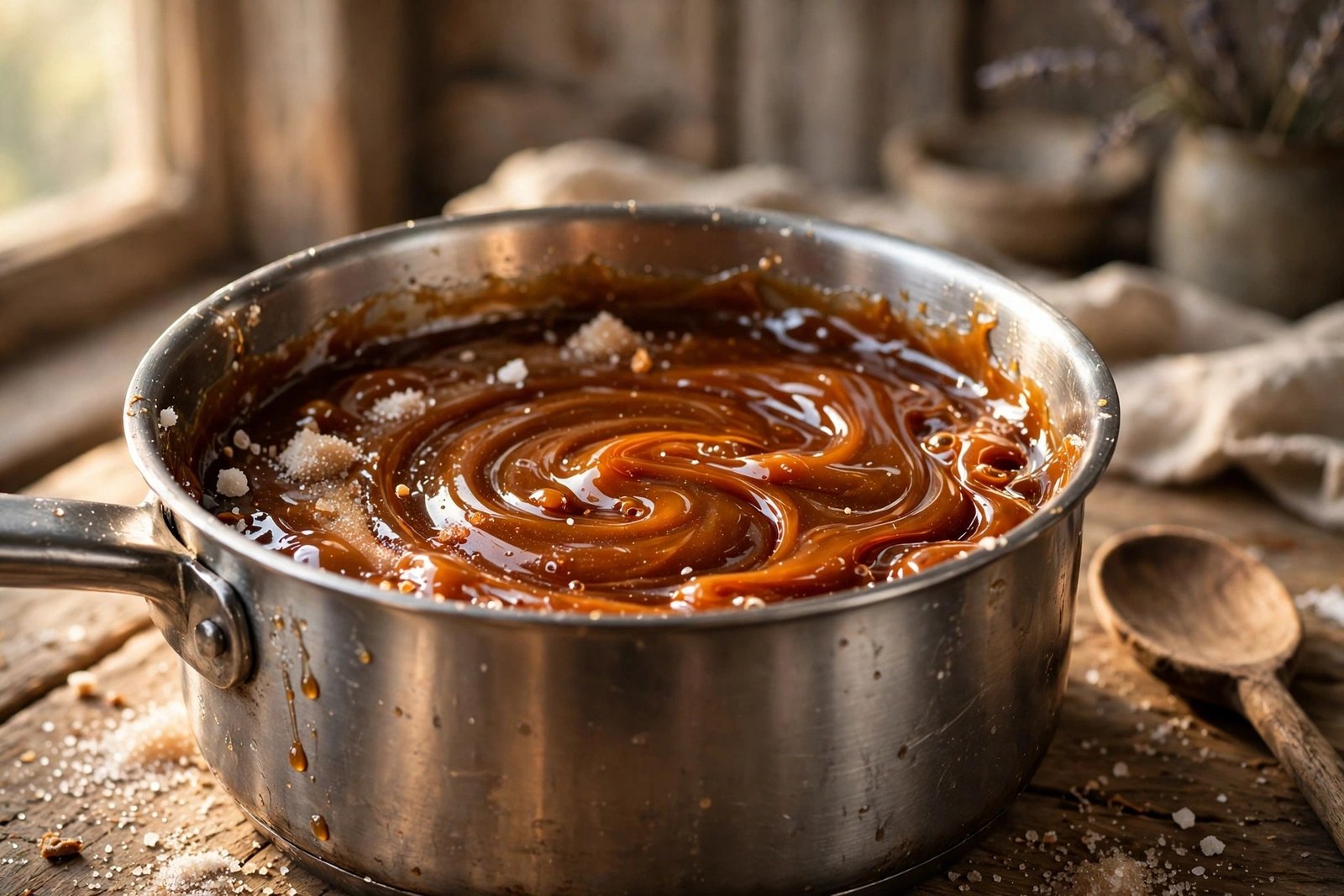
Step 2: Coat the pan while the caramel is hot. Pour the caramel into the round pan immediately and tilt it so the bottom is evenly coated. It will harden and crackle as it cools — that is normal, and it melts back into sauce during the bake. Set the pan aside; do not grease it.
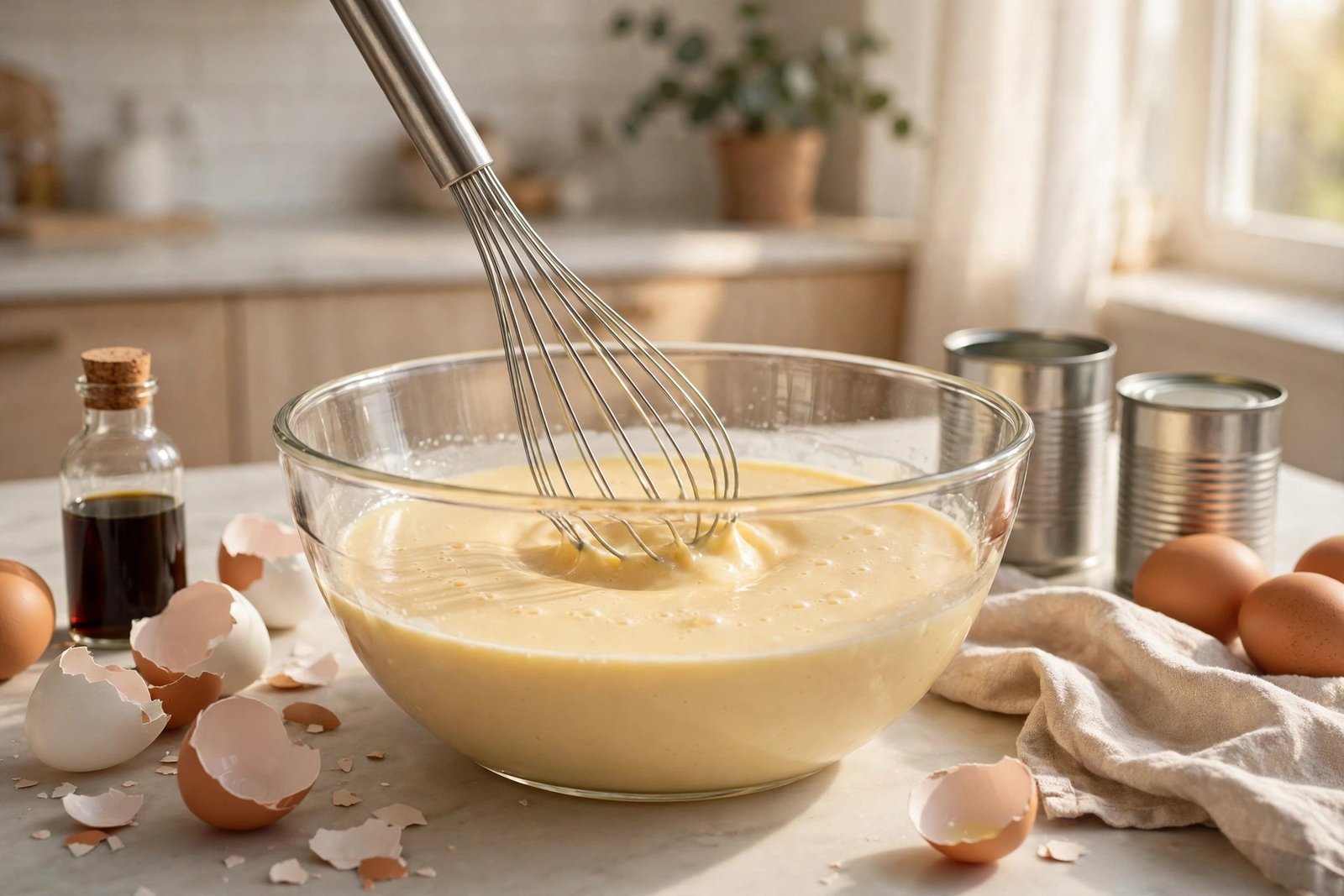
Step 3: Whisk the custard gently. In a large bowl, whisk the eggs and yolks just until blended, then whisk in the condensed milk, evaporated milk, vanilla, and salt. Stir slowly and stop as soon as it is smooth — you are combining, not whipping. A foamy top now means holes later.
Step 4: Strain and pour. Pour the custard through a fine mesh strainer into the caramel-lined pan. Straining catches any chalazae and the last bubbles. Skim off any foam on the surface with a spoon, and do not let water splash into the pan from here on.
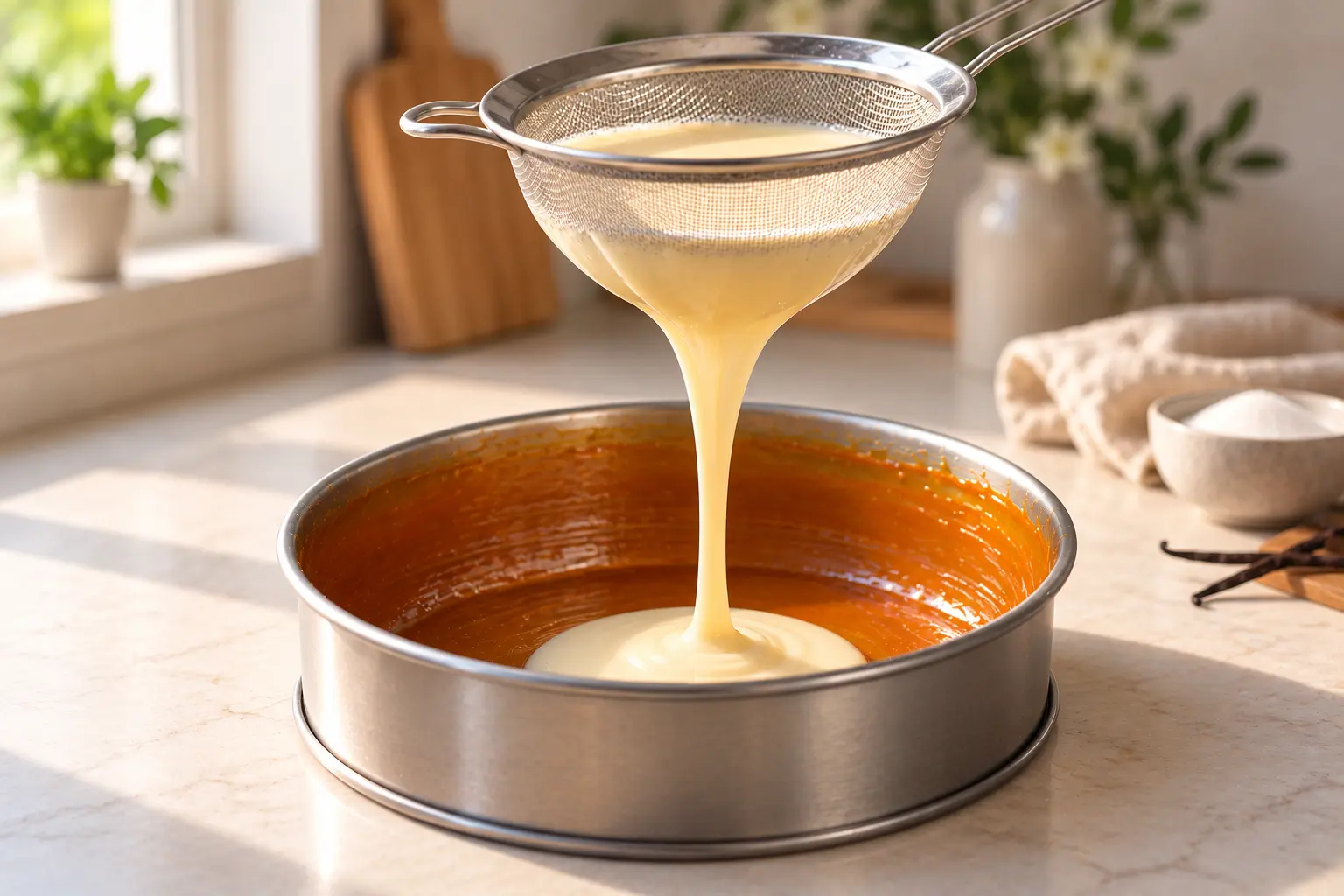
Step 5: Bake low in a water bath. Set the flan pan inside the roasting pan, then pour hot water into the roasting pan until it comes halfway up the flan pan’s sides. Bake at 325°F for 50–60 minutes. It is done when the edges are set and the center still trembles when you nudge the pan — a knife should come out mostly clean, not wet. If the top is browning, tent it loosely with foil.
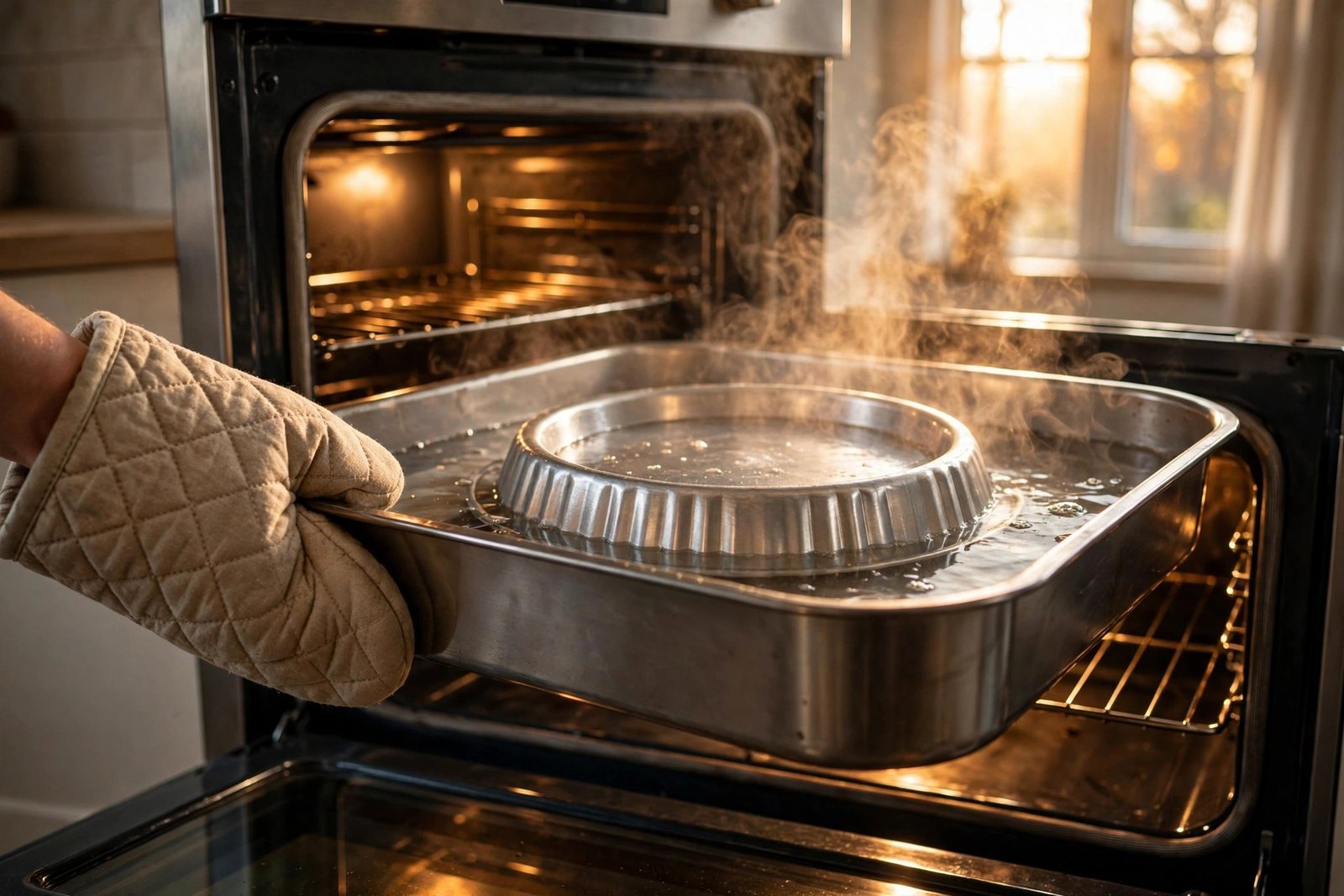
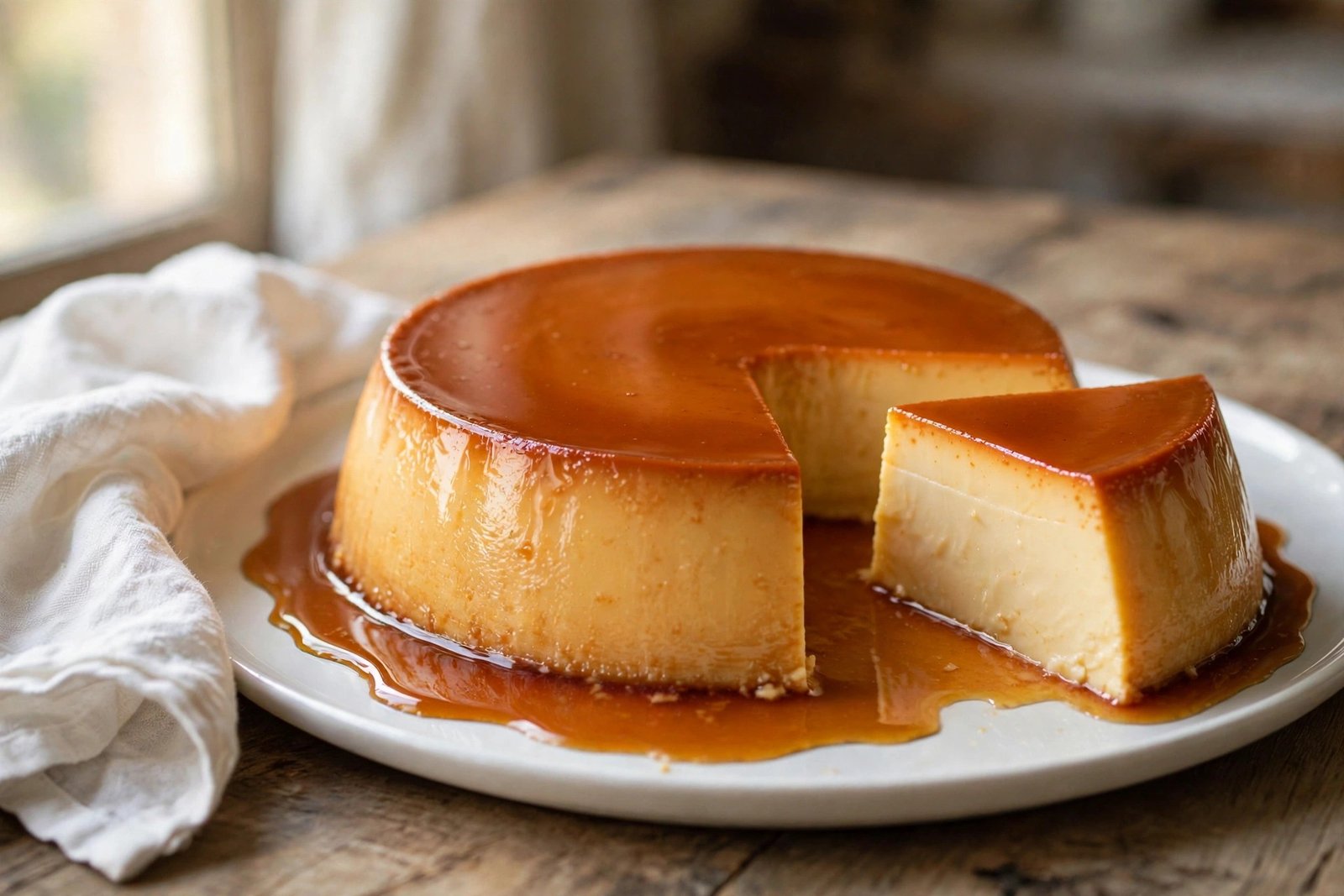
Step 6: Cool, chill, and unmold. Lift the flan pan out of the water bath, cool on a rack for 1 hour, then cover and refrigerate for at least 4 hours, or overnight. To unmold, run a thin knife around the edge, dip the pan base in warm water for 30 seconds, set a rimmed serving plate on top, and invert in one confident motion. Lift the pan off slowly so the caramel cascades. Add chocolate curls if you like, and serve chilled.
When It Goes Wrong
Caramel tastes bitter. It went past amber. There is no fix — pour it out (carefully, it is blisteringly hot) and start the sugar again, pulling it one shade earlier.
Flan is full of tiny holes. The custard was whisked too hard or the oven ran hot. Next time, whisk gently, strain, and check the oven with a thermometer — 325°F, not 350°F, is what keeps it silky.
Top cracked or rubbery. It baked too long. The jiggle test matters more than the clock: a trembling center is done, because carryover heat finishes it.
Flan won’t slide out. It is almost always under-chilled. Give it the full 4 hours, run the knife all the way around, and use the warm-water dip on the pan base before inverting.
Watery layer or it never set. Either it was underbaked, or water got into the custard. Keep the bath at halfway up the pan, pour the water in after the pan is placed, and bake to the jiggle test, not to a fixed minute.
If you enjoy gentle custards like this, the milk pudding on this site uses the same low-and-slow idea with a simpler set.
Chilling, Slicing, and Storing
Flan is a make-ahead dessert by nature: it needs the chill anyway, and it slices cleanest on day two, straight from the fridge, with a hot, dry knife wiped between cuts. Leftovers keep covered in the fridge for up to 4 days — the caramel sauce will thin slightly, which is fine spooned over each slice. Do not freeze flan; thawing turns the custard grainy and weepy. If you need it for a party, bake it the day before and unmold just before serving so the caramel stays glossy.
More Recipes You’ll Love
If this one worked for you, try the tres leches cake next — another custard-soaked classic — or the caramel apple cookies for the same deep-amber caramel flavor in a handheld form.
Follow us on Instagram for more recipes: Follow us on Instagram
Frequently Asked Questions
Can I make caramel flan without condensed milk?
Yes. Replace both canned milks with 3 cups of whole milk and add 3/4 cup of sugar to the custard. The texture will be lighter and less dense, and the bake may need an extra 5–10 minutes — use the jiggle test, not the clock.
Why is my flan full of tiny holes?
Air got in during whisking or the oven was too hot. Whisk gently, strain the custard, and bake at 325°F in a water bath. Holes are cosmetic — the flan still tastes right — but the strain-and-gentle-bake routine prevents them.
Why won’t my flan come out of the pan?
It is usually under-chilled. Give it at least 4 hours in the fridge, run a thin knife fully around the edge, dip the pan base in warm water for 30 seconds, then invert onto a rimmed plate in one motion.
Can I bake this in ramekins instead?
Yes. Divide the caramel and custard among six 6-oz ramekins, set them in the same water bath, and bake 35–45 minutes at 325°F. Chill and unmold each one the same way.
