
 By Elina
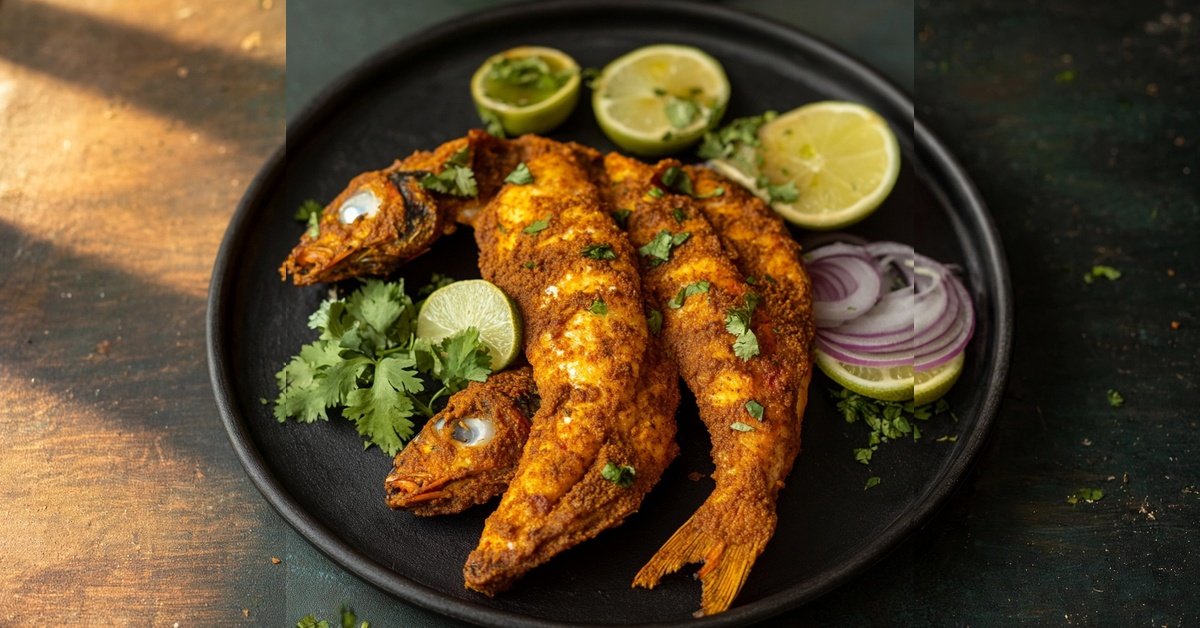
This masala fried fish recipe makes whole fish with a thick, chili-red spice crust that stays on the fish instead of washing off into the oil: scored, rubbed with a paste that is thick enough to cling, marinated for 30 minutes, and shallow-fried without being touched until the first side is crisp. It serves 4, takes about an hour including the marinade, and the single skill that decides it is patience in the pan — move the fish too early and the masala comes off in sheets.
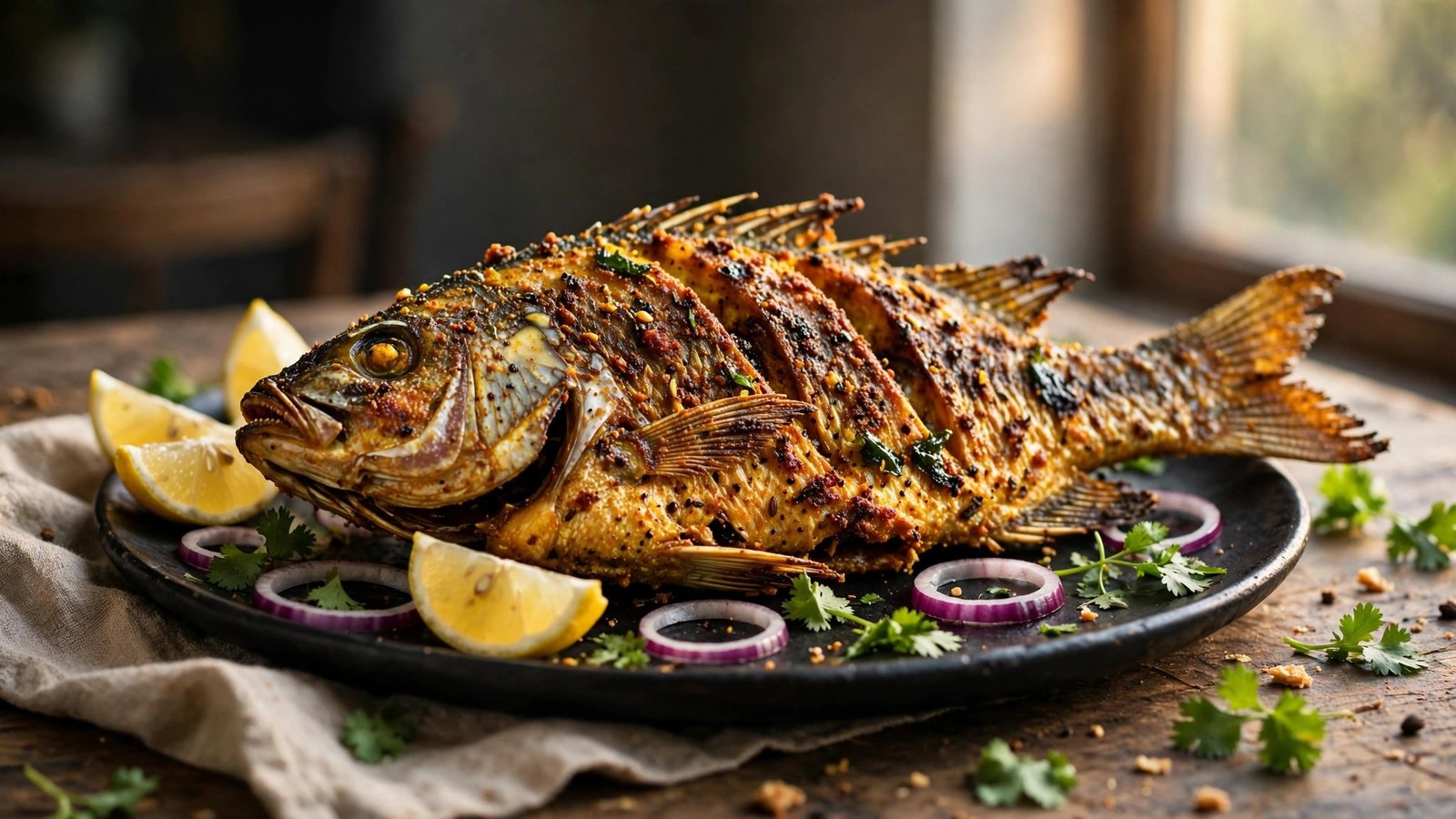
The fish in the photo is fried whole, head and tail on, which is the point: the skin and the scored flesh crisp together, the spices get into the cuts, and the finished fish looks like something from a restaurant pass. Any small whole white fish works — tilapia, snapper, mackerel, or pomfret — as long as it is fresh, cleaned, and properly dried before the masala goes on. Fillets are a fallback, not the plan; they cook faster and lose the drama of the scored whole fish.
A Paste Thick Enough to Stay Put
The masala here is a paste, not a marinade liquid, and that distinction is everything. A thin, watery spice wash slides off wet fish and burns in the oil before the fish cooks through. This paste is bound with just enough lemon juice and oil to hold together, plus a spoonful of rice flour that dries the surface and helps the crust crisp. When you rub it on, it should sit in the scores like grout, not run off the sides.
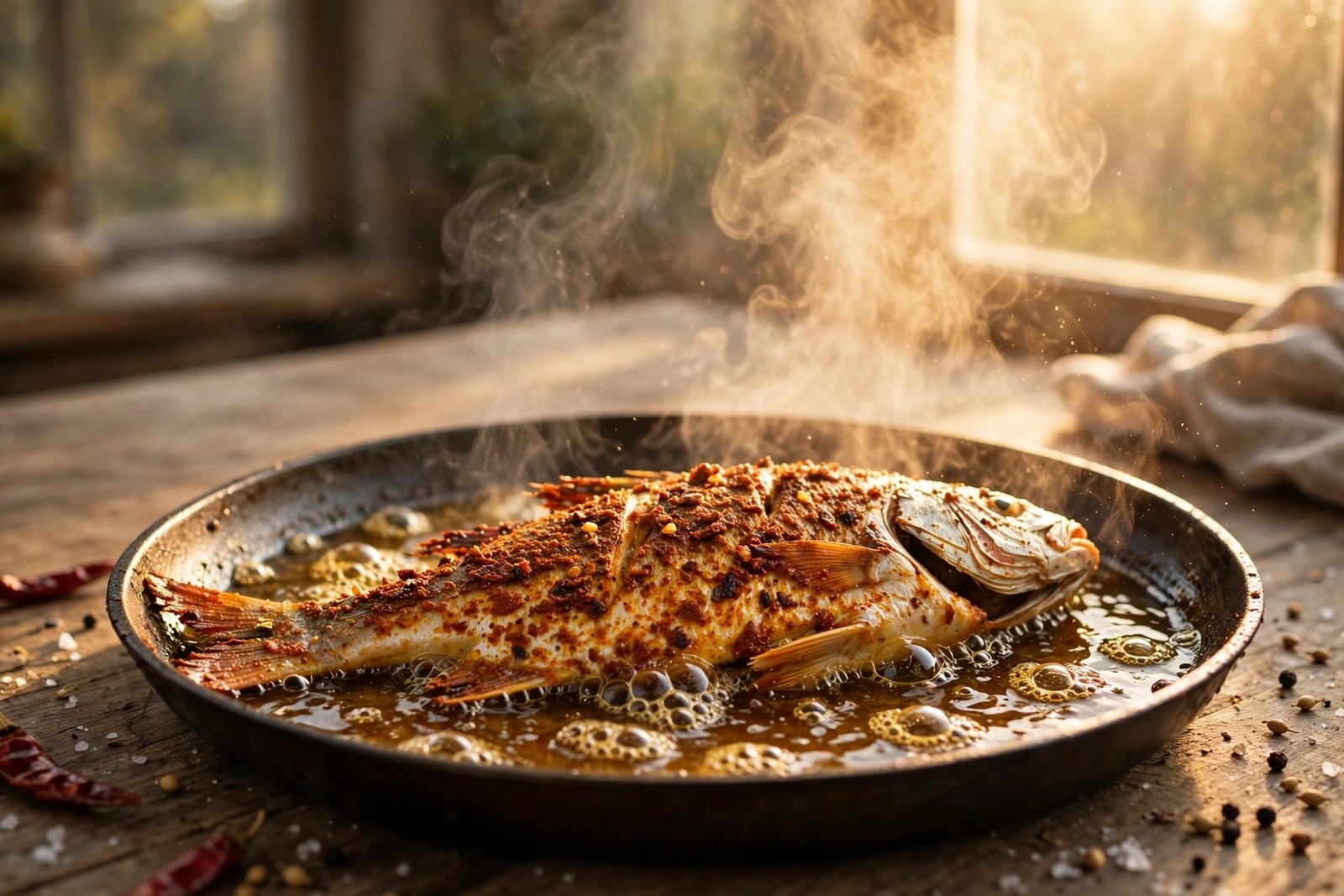
Two more rules keep the crust where it belongs. First, the fish must be dry — pat it inside and out with paper towels, twice if needed, because water is what loosens a spice coating. Second, once the fish hits the oil, do not touch it for a full 4–5 minutes. The crust needs that undisturbed time to set against the hot pan; nudging it early tears the masala off and there is no way to put it back neatly. Medium heat, not high, is the other half of this: the spices in the paste scorch quickly, so a ripping-hot pan gives you blackened masala over undercooked fish.
On heat and timing: small whole fish (about 6–8 oz each) need roughly 4–5 minutes per side in a shallow fry. The fish is done when the flesh flakes easily at the thickest part and the internal temperature reaches 145°F (63°C). If the crust is darkening too fast, turn the heat down rather than pulling the fish early — a pale, undercooked center is a worse failure than a slightly darker crust.
Ingredients
- 4 small whole white fish (about 1 1/2 lb / 700 g total, e.g. tilapia, snapper, mackerel or pomfret), cleaned, scaled and gutted
- 1 tablespoon Kashmiri red chili powder
- 1 teaspoon turmeric powder
- 1 tablespoon coriander powder
- 1 teaspoon cumin powder
- 1/2 teaspoon black pepper, freshly ground
- 2 teaspoons ginger-garlic paste
- 1 tablespoon lemon juice, plus lemon wedges for serving
- 1 tablespoon neutral oil, for the paste
- 2 tablespoons rice flour
- 1 1/2 teaspoons fine salt
- 1/2 cup (120 ml) neutral oil, for shallow frying
- Red onion rings and fresh cilantro, for serving
On the chili: Kashmiri chili powder gives the deep red color without extreme heat. If you only have regular hot chili powder, use half the amount and make up the color with a teaspoon of sweet paprika — otherwise the crust will be hotter than the photo suggests. Rice flour is not optional if you want a crisp crust; without it the paste stays soft and peels.
Masala Fried Fish Recipe: Step by Step
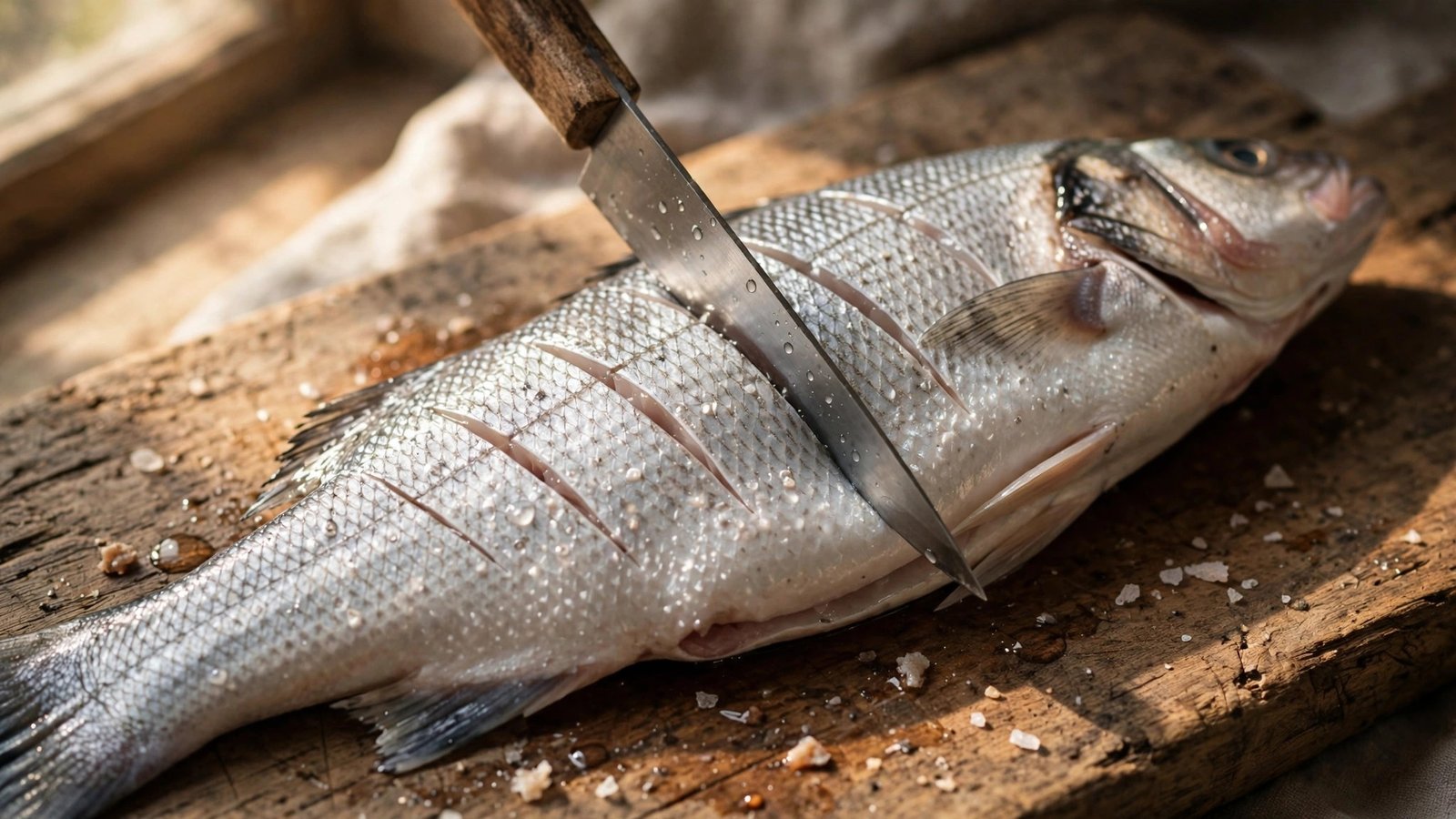
Step 1: Score the fish. Rinse the cleaned fish and pat them completely dry inside and out with paper towels. With a sharp knife, cut 3–4 shallow diagonal slashes into each side, about 1/4 inch deep — deep enough for the masala to sit in, not so deep that you cut to the bone. Scoring is what lets the spice flavor reach the flesh instead of sitting only on the skin.
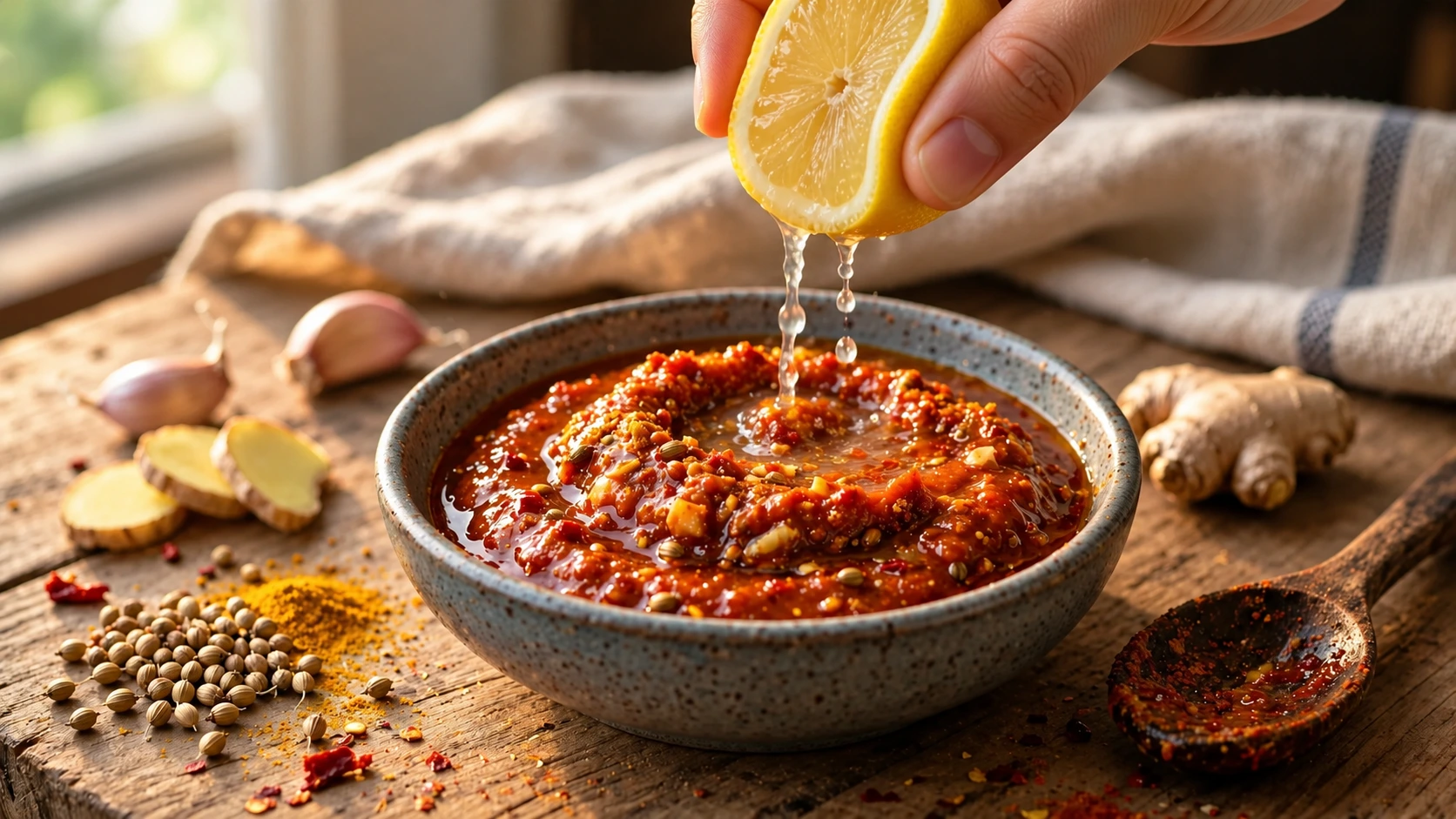
Step 2: Mix a thick masala paste. Stir the chili powder, turmeric, coriander, cumin, black pepper and salt together, then add the ginger-garlic paste, lemon juice and the tablespoon of oil. Mix in the rice flour last, a little at a time, until you have a thick paste that holds its shape on a spoon — it should spread like soft butter, not pour. If it is runny, add rice flour by the half-teaspoon until it thickens.
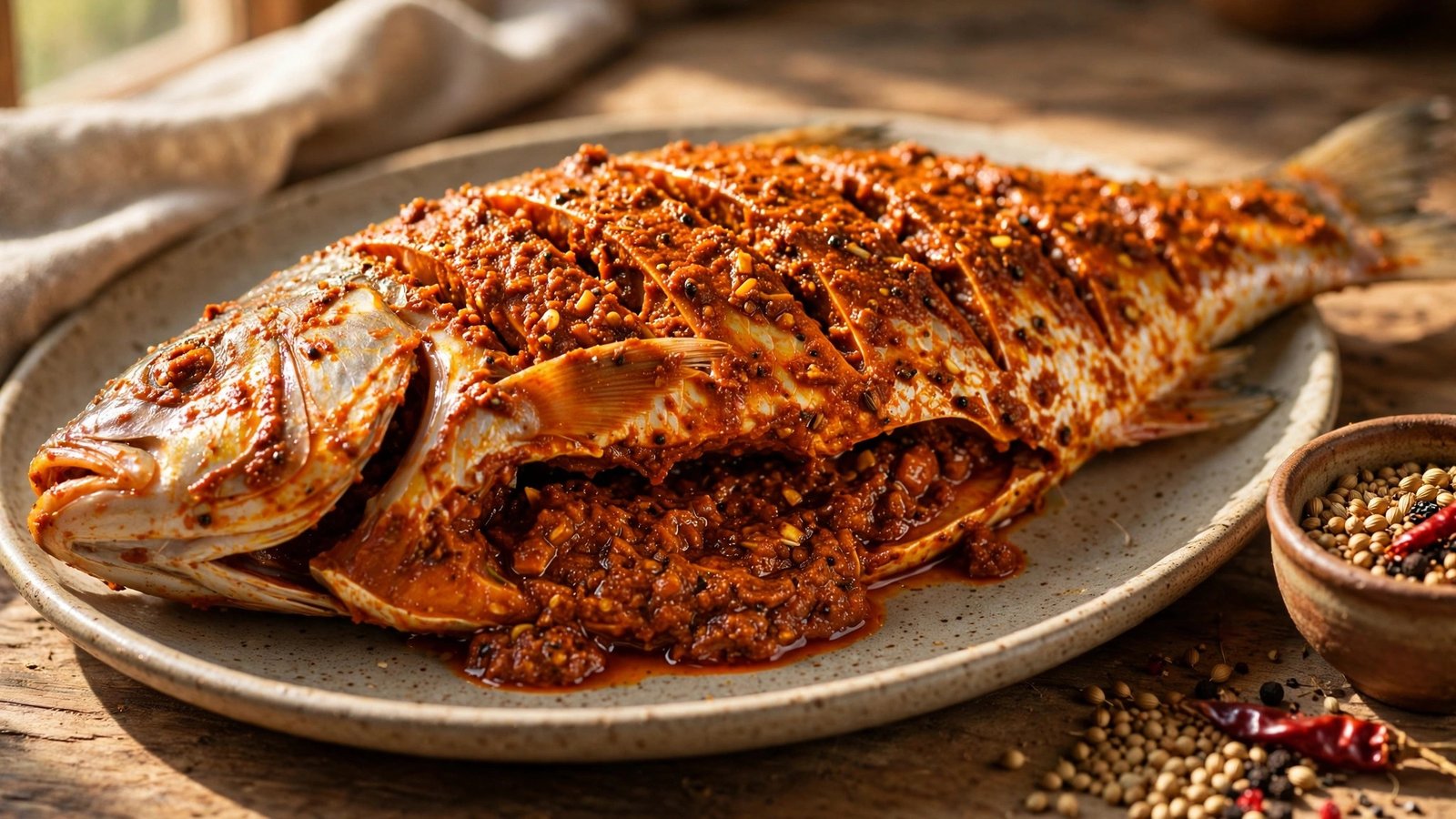
Step 3: Rub it in and marinate. Rub the paste all over each fish, working it into the slashes and the cavity, and coating the head and tail too. Set the fish on a plate, cover, and refrigerate for 30 minutes. The rest lets the salt and spices season the flesh and lets the rice flour hydrate, which is what makes the crust grip during frying.
Step 4: Fry the first side — untouched. Heat the 1/2 cup of oil in a large skillet over medium heat until it shimmers. Lay the fish in gently, away from you, and do not move them for 4–5 minutes. The crust will set and release on its own; if you try to lift a fish and it resists, it is not ready. When the first side is deep golden-red and crisp at the edges, it is time to turn.
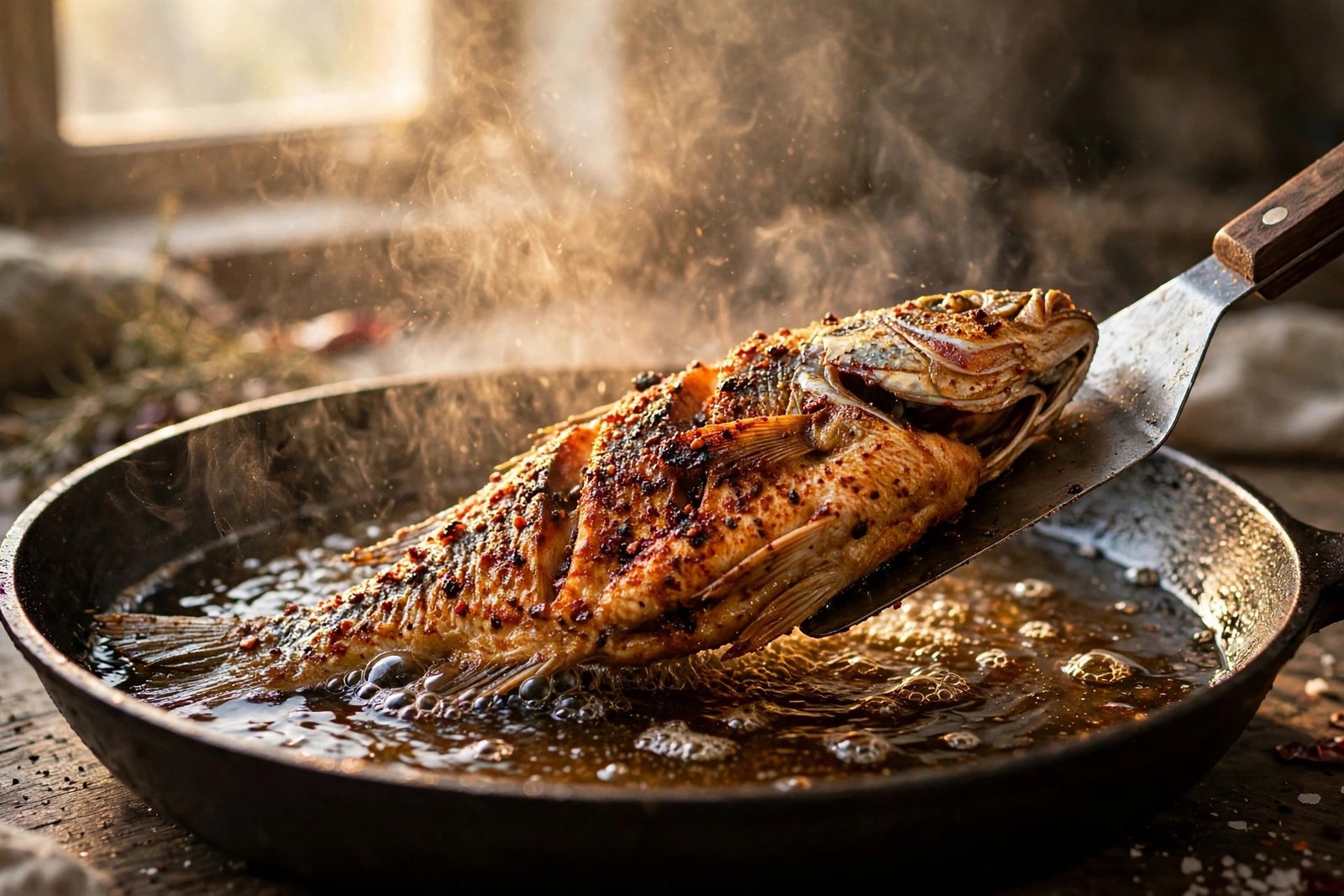
Step 5: Flip once and finish. Turn each fish carefully with a wide spatula, supporting the body so it does not break. Fry the second side for another 4–5 minutes, until the flesh flakes easily at the thickest part and the internal temperature reaches 145°F (63°C). Lift the fish onto a wire rack or paper towels and rest for 2 minutes — the crust firms up as it cools slightly.
Step 6: Plate it like the photo. Set the fish on a warm plate with lemon wedges, red onion rings and a scattering of fresh cilantro. Serve immediately — fried fish waits for no one, and the crust is at its best in the first ten minutes out of the pan, while it is still crackling.
When the Crust Won’t Cooperate
Masala fell off in the pan. The fish was moved too early, the fish was wet, or the paste was too thin. Next time: pat the fish drier, thicken the paste with rice flour, and leave the fish completely alone for the first 4–5 minutes.
Spices burned before the fish cooked. The heat was too high. Masala paste scorches fast — medium heat, and turn it down the moment the crust colors quickly. A slightly longer fry at lower heat beats a burnt crust.
Fish sticks to the pan. The oil was not hot enough when the fish went in, or the pan was crowded. Wait for the shimmer, fry in batches if needed, and let the crust set before attempting to lift.
Center still raw while the outside is done. The fish were too large for a shallow fry. Choose smaller whole fish (6–8 oz each), or finish larger fish in a 400°F (200°C) oven for 5–8 minutes after frying both sides.
What to Serve It With
Fried fish this bold wants simple, cooling sides. The creamy garlic baby potatoes are a natural partner — the site’s own potato page calls them out for grilled fish, and the same logic holds here — with plain rice or flatbread to catch the spiced oil. A squeeze of lemon over the fish at the table is not optional garnish; the acid cuts the richness of the fried crust.
More Recipes You’ll Love
If this seafood dinner worked for you, the cucumber shrimp salad is the lighter, cold seafood option for the next night — seared shrimp, crisp cucumber and a lime-herb dressing — and it uses the same dry-and-sear discipline as this fish.
Follow us on Instagram for more recipes: Follow us on Instagram
Frequently Asked Questions
Which fish is best for masala fried fish?
Small whole white fish that hold their shape when fried: tilapia, snapper, mackerel or pomfret, about 6–8 oz each. Ask the fishmonger to clean, scale and gut them, and check the eyes are clear and the flesh springs back — that is fresh fish.
Can I use fish fillets instead?
Yes, but reduce the fry time to 3–4 minutes per side and skip the scoring — fillets do not need it. The crust will still work, though you lose the scored whole-fish presentation.
Can I air-fry masala fish?
Yes. Spray the coated fish generously with oil and air-fry at 400°F (200°C) for 12–15 minutes, flipping once. The crust will be crisp but less deeply colored than the shallow-fried version, and you should still let it rest 2 minutes before serving.
How do I know the fish is done?
The flesh flakes easily with a fork at the thickest part, and the internal temperature is 145°F (63°C). Opaque flesh that still resists flaking needs another minute or two.
