
 By Esha Kamran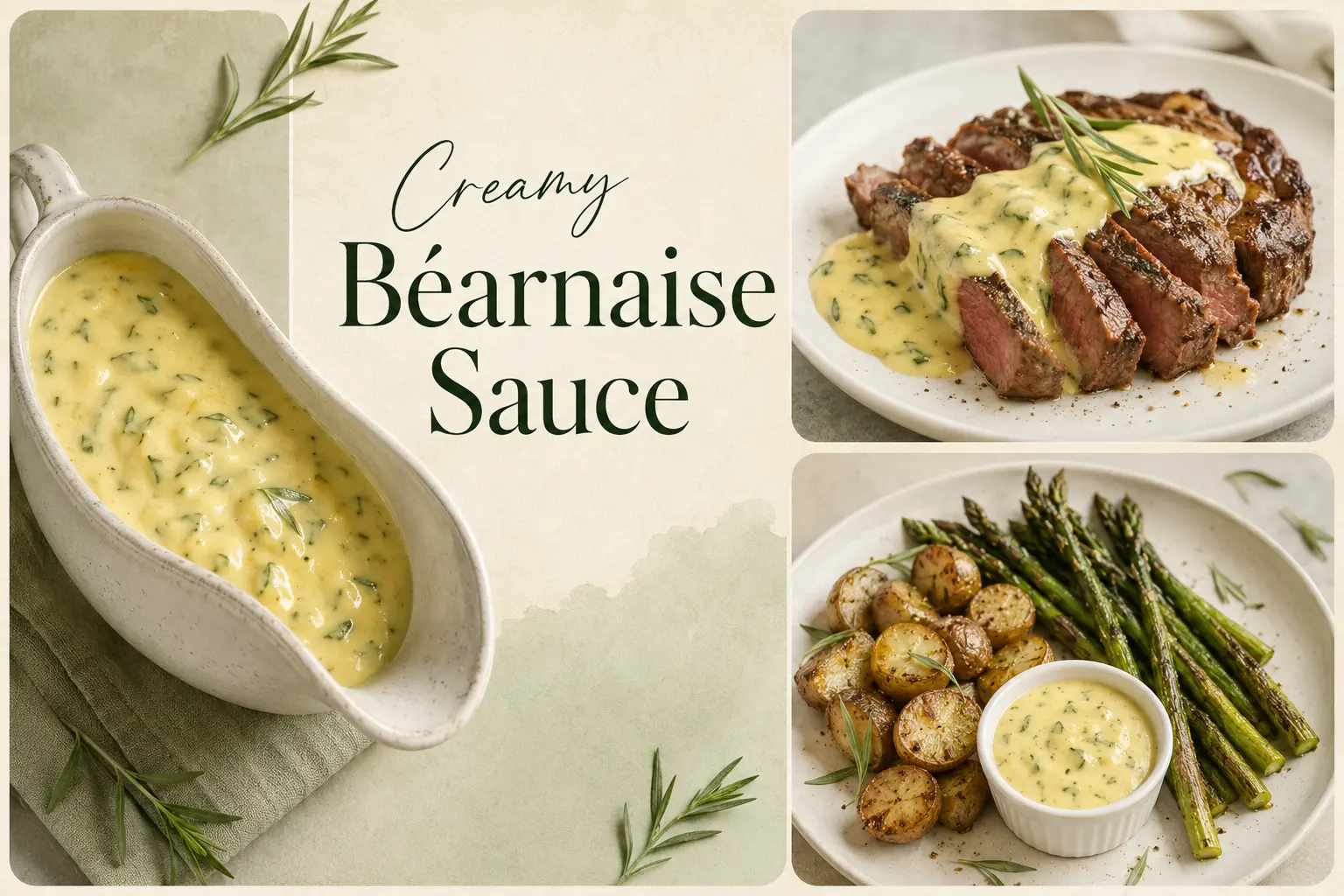
Béarnaise sauce is one of those luxurious sauces that can instantly make a homemade meal feel restaurant-worthy. Rich, buttery, slightly tangy, and filled with the delicate flavour of fresh tarragon, it pairs beautifully with steak, chicken, fish, roasted vegetables, and even eggs. Although this classic French sauce has an elegant reputation, you do not need professional training to prepare it at home. The secret is controlling the heat, adding the butter gradually, and whisking continuously. Once you understand these simple techniques, making homemade béarnaise sauce becomes surprisingly manageable. This recipe creates a smooth, creamy sauce with a fresh herbal aroma and just enough acidity to balance its richness. Serve it warm over a perfectly cooked steak, and you may never want to use bottled sauce again.
What Is Béarnaise Sauce?
Béarnaise sauce is a classic French sauce made by emulsifying egg yolks with warm clarified butter. It is flavoured with a reduction of white wine vinegar, shallots, tarragon, and black pepper. It is closely related to hollandaise sauce. Both sauces have a rich base of egg yolks and butter, but their flavours are different. Hollandaise is usually seasoned with lemon juice, while béarnaise gets its distinctive taste from vinegar, shallots, and tarragon. The finished sauce should be creamy and pourable, with a texture similar to a light mayonnaise or thickened cream. Its buttery richness makes it especially popular as a sauce for steak.
Why You Will Love This Recipe

This homemade béarnaise sauce offers everything you want from a classic French sauce:
- Rich, creamy, and velvety texture
- Fresh and aromatic tarragon flavour
- Tangy shallot and vinegar reduction
- Ready in approximately 25 minutes
- Perfect for steak, chicken, fish, and vegetables
- Made with simple, recognisable ingredients
- Easy to adjust according to your taste
It is an excellent recipe to prepare when you want to make an ordinary dinner feel more special.
Ingredients for Béarnaise Sauce
For the Tarragon Reduction
- 3 tablespoons white wine vinegar
- 2 tablespoons dry white wine
- 1 small shallot, finely chopped
- 1 teaspoon crushed black peppercorns
- 2 fresh tarragon sprigs
- 1 tablespoon finely chopped fresh tarragon
For the Sauce
- 3 large egg yolks
- 170 grams unsalted butter
- 1 teaspoon lemon juice
- ¼ teaspoon salt, or according to taste
- Pinch of cayenne pepper, optional
- 1 tablespoon finely chopped fresh tarragon
- 1 teaspoon finely chopped fresh chervil, optional
- 1–2 teaspoons warm water, if needed
Choosing the Right Ingredients
Butter
Use good-quality unsalted butter so you can control the amount of salt in the finished sauce. Clarified butter produces the smoothest and most stable result because its water and milk solids have been removed. You can clarify the butter at home by melting it gently. Allow the white milk solids to settle, skim away the foam, and carefully pour the clear golden butter into another container.
Fresh Tarragon
Fresh French tarragon gives béarnaise sauce its signature flavour. It has a delicate anise-like aroma that works wonderfully with butter and vinegar. Dried tarragon may be used when fresh tarragon is unavailable, but its taste is more concentrated. Use approximately one teaspoon of dried tarragon in place of one tablespoon of fresh tarragon.
Egg Yolks
Large egg yolks create the creamy base of the sauce. Bring them closer to room temperature before cooking, as very cold yolks can make emulsification more difficult.
Vinegar and Wine
White wine vinegar supplies the essential acidity, while dry white wine softens its sharpness and adds depth. If you prefer not to cook with wine, replace it with additional white wine vinegar and a tablespoon of water.
How to Make Béarnaise Sauce
1. Clarify the Butter
- Place the butter in a small saucepan and melt it slowly over low heat. Do not stir it.
- As the butter melts, foam will rise to the surface while the milk solids settle at the bottom. Remove the foam with a spoon. Carefully pour the clear golden butter into a heatproof jug, leaving the pale solids behind.
- Keep the clarified butter warm, but do not allow it to become extremely hot.
2. Prepare the Tarragon Reduction
- Add the white wine vinegar, dry white wine, chopped shallot, peppercorns, tarragon sprigs, and one tablespoon of chopped tarragon to a small saucepan.
- Bring the mixture to a gentle simmer. Cook until the liquid has reduced to approximately two tablespoons. This concentrates the acidity and herbal flavour.
- Strain the reduction into a clean heatproof bowl. Press the shallots and herbs gently to extract as much flavour as possible. Allow the liquid to cool slightly.
3. Set Up a Double Boiler
- Fill a small saucepan with a few centimetres of water and bring it to a gentle simmer. Place the heatproof bowl containing the reduction over the saucepan.
- The base of the bowl should not touch the water. The steam will provide gentle heat, reducing the risk of scrambling the egg yolks.
4. Whisk the Egg Yolks
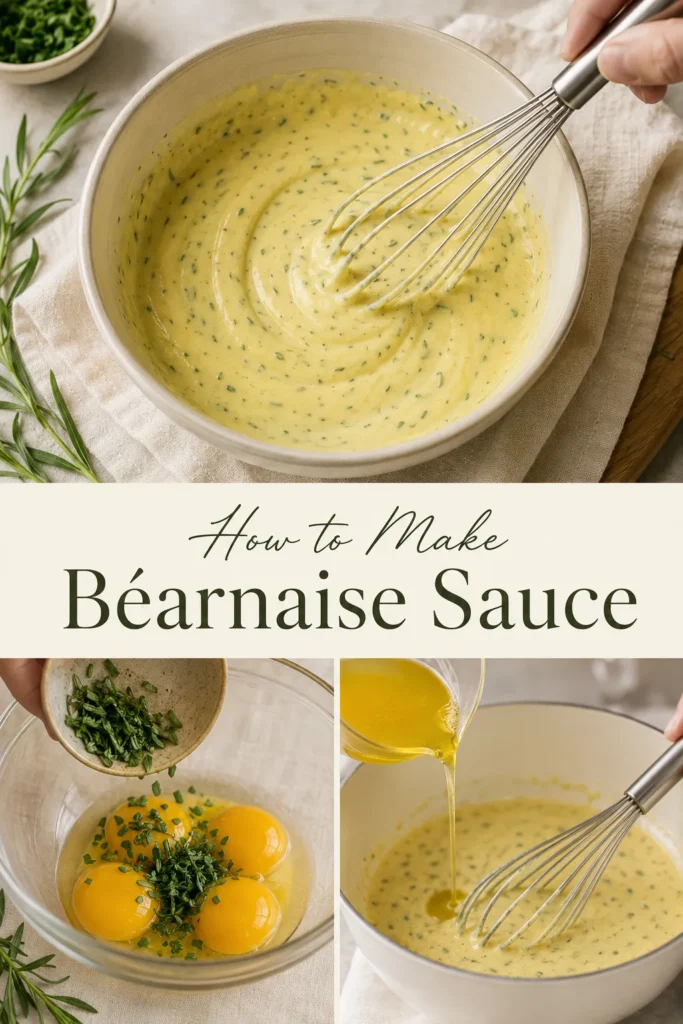
- Add the egg yolks to the cooled reduction. Whisk continuously over the gently simmering water.
- Continue whisking until the mixture becomes pale, slightly thicker, and creamy. When the whisk leaves visible trails for a moment, the yolks are ready for the butter.
- If the bowl becomes too hot or the eggs begin thickening too quickly, immediately lift it away from the saucepan and continue whisking.
5. Add the Butter Slowly
- Remove the bowl from the heat. Begin adding the warm clarified butter one drop at a time while whisking constantly.
- Once the mixture begins to thicken and the emulsion looks stable, add the butter in a very thin, steady stream. Continue whisking until all the butter has been incorporated.
- The sauce should become glossy, thick, and smooth.
6. Finish the Sauce
- Stir in the lemon juice, salt, cayenne pepper, remaining fresh tarragon, and chervil, if using.
- If the béarnaise sauce is thicker than you prefer, whisk in warm water one teaspoon at a time until it reaches the desired consistency. Taste and adjust the salt, lemon juice, or tarragon before serving.
How to Prevent Béarnaise Sauce from Splitting
An emulsion can separate when the butter is added too quickly or the mixture becomes too hot. These tips will help keep your sauce smooth:
- Add the first portion of butter one drop at a time.
- Whisk continuously while incorporating the butter.
- Keep the heat low and gentle.
- Make sure the clarified butter is warm, not scorching hot.
- Remove the bowl from the heat if the yolks begin cooking too quickly.
- Add warm water if the sauce becomes excessively thick.
Patience is especially important during the first minute of adding the butter. Once a stable emulsion forms, the remaining butter can be incorporated more easily.
How to Fix a Broken Béarnaise Sauce
- If your sauce looks oily, grainy, or separated, do not throw it away. It can often be rescued.
- Place one fresh egg yolk and one teaspoon of warm water in a clean bowl. Whisk them together, then slowly add the broken sauce as though it were the butter. Begin with a few drops and continue whisking until the sauce becomes smooth again.
- For a sauce that has only started to separate, vigorously whisking in one teaspoon of warm water may be enough to restore it.
What to Serve with Béarnaise Sauce

Béarnaise sauce is traditionally served with grilled or pan-seared steak, but it is much more versatile than that. Try it with:
- Beef tenderloin or ribeye steak
- Grilled chicken breast
- Roasted or grilled salmon
- Seared white fish
- Lamb chops
- Roasted asparagus
- Steamed green beans
- Crispy roasted potatoes
- Poached eggs
- Eggs Benedict
- Grilled mushrooms
- Artichokes
Its combination of butter, herbs, and acidity works particularly well with foods that are roasted, grilled, or lightly seasoned.
Storage and Reheating
- Béarnaise sauce is best served immediately while it is warm, smooth, and freshly emulsified.
- If necessary, keep it warm for up to 30 minutes by placing the bowl over lukewarm water. Do not place it directly over high heat because the eggs may scramble and the sauce may separate.
- Store leftovers in an airtight container in the refrigerator for up to two days. The sauce will become firm as the butter chills.
- To reheat it, place the container in a bowl of warm water and whisk gently. Add a teaspoon of warm water if needed. Avoid reheating béarnaise sauce in a microwave because sudden heat can break the emulsion.
Helpful Recipe Tips
- Finely chop the shallot so it releases plenty of flavour into the reduction.
- Use French tarragon when possible for the most authentic result.
- Prepare all your ingredients before beginning to whisk the egg yolks.
- Keep a teaspoon of warm water nearby to adjust the consistency.
- Avoid boiling the sauce after adding the egg yolks.
- Serve it on warm plates so the butter does not solidify too quickly.
- Double the recipe for a dinner party, but prepare it in two batches for easier emulsification.
Frequently Asked Questions
Is béarnaise sauce the same as hollandaise?
No. Both sauces contain egg yolks and butter, but hollandaise is generally flavoured with lemon juice. Béarnaise sauce includes a vinegar, shallot, pepper, and tarragon reduction.
Can I make béarnaise sauce without wine?
Yes. Replace the wine with one additional tablespoon of white wine vinegar and one tablespoon of water. The flavour will be slightly sharper but still delicious.
Can I use dried tarragon?
You can use dried tarragon when fresh is unavailable. Because dried herbs are more concentrated, use approximately one-third of the amount specified for fresh tarragon.
Why did my sauce become too thick?
The sauce may thicken as it cools or when too much moisture evaporates. Whisk in warm water, one teaspoon at a time, until it becomes smooth and pourable.
Can béarnaise sauce be made in advance?
It is best prepared shortly before serving. You may make the tarragon reduction several days in advance and refrigerate it. Finish the sauce with egg yolks and butter when you are ready to serve.
Béarnaise Sauce Recipe Card

Preparation Time: 10 minutes
Cooking Time: 15 minutes
Total Time: 25 minutes
Servings: 6
Category: Sauce
Cuisine: French
Ingredients
- 3 tablespoons white wine vinegar
- 2 tablespoons dry white wine
- 1 small shallot, finely chopped
- 1 teaspoon crushed black peppercorns
- 2 fresh tarragon sprigs
- 2 tablespoons finely chopped fresh tarragon, divided
- 3 large egg yolks
- 170 grams unsalted butter, clarified
- 1 teaspoon lemon juice
- ¼ teaspoon salt
- Pinch of cayenne pepper, optional
- 1 teaspoon chopped fresh chervil, optional
- 1–2 teaspoons warm water, if needed
Instructions
- Melt the butter gently and separate the clear golden butter from the milk solids. Keep it warm.
- Add the vinegar, wine, shallot, peppercorns, tarragon sprigs, and half of the chopped tarragon to a saucepan.
- Simmer until the liquid reduces to approximately two tablespoons. Strain it into a heatproof bowl.
- Add the egg yolks and whisk the mixture over gently simmering water until pale and slightly thick.
- Remove the bowl from the heat. Slowly whisk in the clarified butter, beginning with individual drops.
- Once the emulsion becomes stable, add the remaining butter in a thin stream while whisking continuously.
- Stir in the lemon juice, salt, cayenne, remaining tarragon, and optional chervil.
- Add warm water one teaspoon at a time if the sauce needs thinning.
- Taste, adjust the seasoning, and serve warm.
Notes
Keep the heat gentle throughout the recipe. If the bowl feels extremely hot, remove it from the saucepan and continue whisking. The sauce should be served warm rather than piping hot.
Final Thoughts
Making béarnaise sauce at home may sound ambitious, but the process becomes straightforward when you work slowly and control the temperature. The combination of warm butter, tangy vinegar, shallots, and fragrant tarragon creates a wonderfully balanced sauce that can transform even a simple meal. Pour it over steak, spoon it beside roasted vegetables, or serve it with grilled fish. Once you taste its fresh, homemade flavour, this creamy French classic is sure to earn a regular place in your cooking collection.
Check our Instagram and Facebook pages for more recipes.
