
 By Jawariya
There is something wonderfully nostalgic about a homemade pineapple upside down cake. With golden pineapple rings, bright cherries, and a rich brown sugar glaze, this classic dessert looks impressive the moment it is flipped onto a serving plate. Underneath the glossy fruit topping is a soft, buttery cake that absorbs just enough pineapple flavor without becoming heavy or soggy. A properly baked pineapple upside down cake offers the perfect balance of caramelized fruit and tender vanilla cake. Despite its beautiful appearance, this cake is surprisingly simple to prepare. You do not need special decorating skills, frosting, or complicated equipment. The pan creates the decoration for you while the cake bakes.
This recipe balances the sweetness of brown sugar with the slight tanginess of pineapple and buttermilk. The result is a moist, tender cake with caramelized edges and a colorful retro-style finish. Because pineapple upside down cake already has a decorative fruit topping, it can be served without any additional frosting.
Why You’ll Love This Recipe
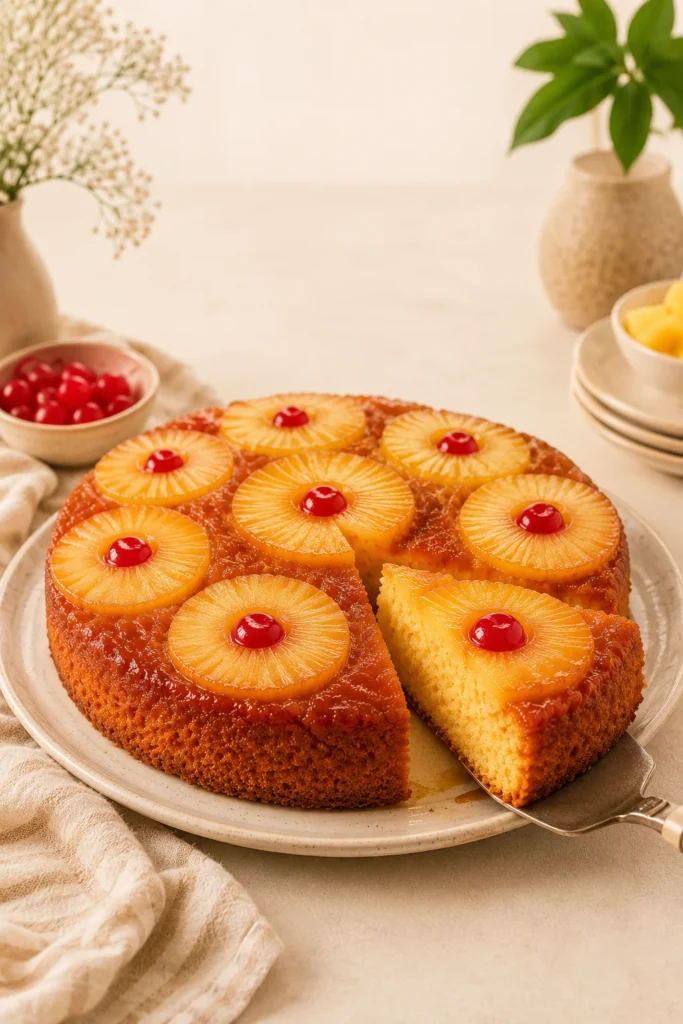
This homemade pineapple upside down cake is ideal for family gatherings, afternoon tea, birthdays, and casual celebrations. Here are a few reasons it deserves a place in your recipe collection:
- The cake is soft, buttery, and moist.
- The fruit topping decorates the cake naturally.
- It uses simple, easily available ingredients.
- No frosting or additional decoration is required.
- It can be prepared with canned or fresh pineapple.
- The caramelized topping gives every slice a rich flavor.
- It is easy enough for beginners but attractive enough for special occasions.
Ingredients
For the Pineapple Topping
- ¼ cup (57 g) unsalted butter, melted
- ½ cup (100 g) packed light brown sugar
- 7 pineapple rings, drained and gently dried
- 7–10 maraschino cherries, stems removed
For the Cake Batter
- 1½ cups (188 g) all-purpose flour
- 1½ teaspoons baking powder
- ¼ teaspoon baking soda
- ¼ teaspoon salt
- ½ cup (113 g) unsalted butter, softened
- ¾ cup (150 g) granulated sugar
- 2 large eggs, at room temperature
- 1 teaspoon vanilla extract
- ½ cup (120 ml) buttermilk, at room temperature
- ¼ cup (60 ml) pineapple juice
- ¼ teaspoon almond extract, optional
Kitchen Equipment
You will need:
- One 9-inch round cake pan, at least 2 inches deep
- Two mixing bowls
- Electric hand mixer or stand mixer
- Whisk
- Rubber spatula
- Measuring cups and spoons
- Wire cooling rack
- Large serving plate
Avoid using a springform pan because the melted butter and sugar mixture can leak through the bottom. A solid-sided pan also helps the pineapple upside down cake bake evenly without losing any of its caramel topping.
How to Make Pineapple Upside Down Cake
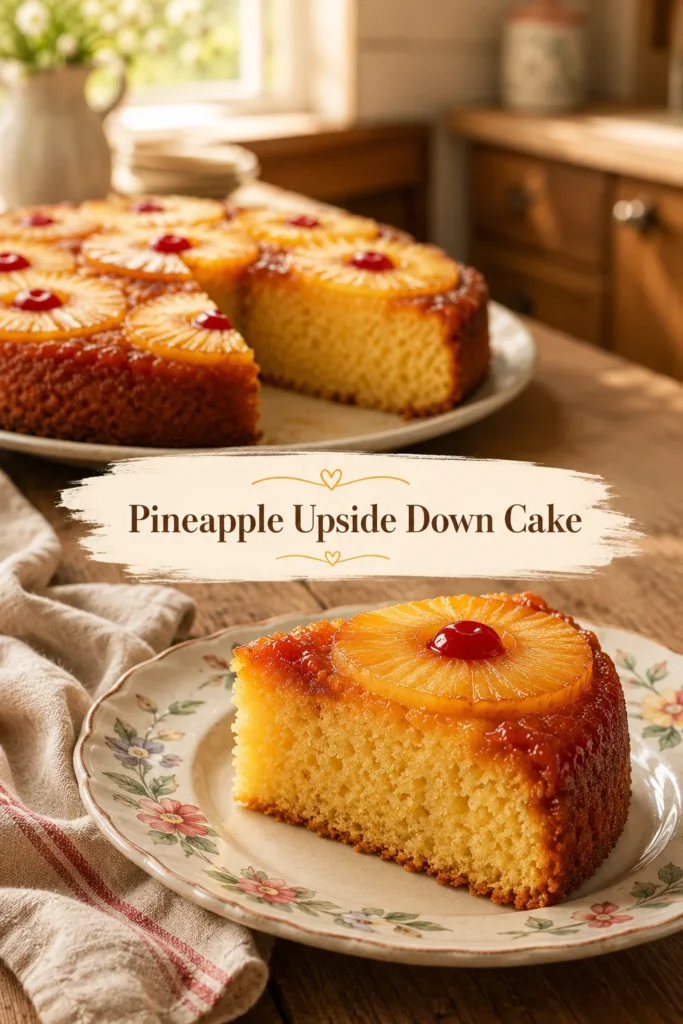
1. Prepare the Oven and Pan
Preheat your oven to 350°F (175°C). Lightly grease the sides of a 9-inch round cake pan. Pour the melted butter into the bottom and tilt the pan gently so the butter covers the entire surface. Sprinkle the brown sugar evenly over the melted butter. Use the back of a spoon to spread it into a level layer without mixing it excessively.
2. Arrange the Pineapple and Cherries
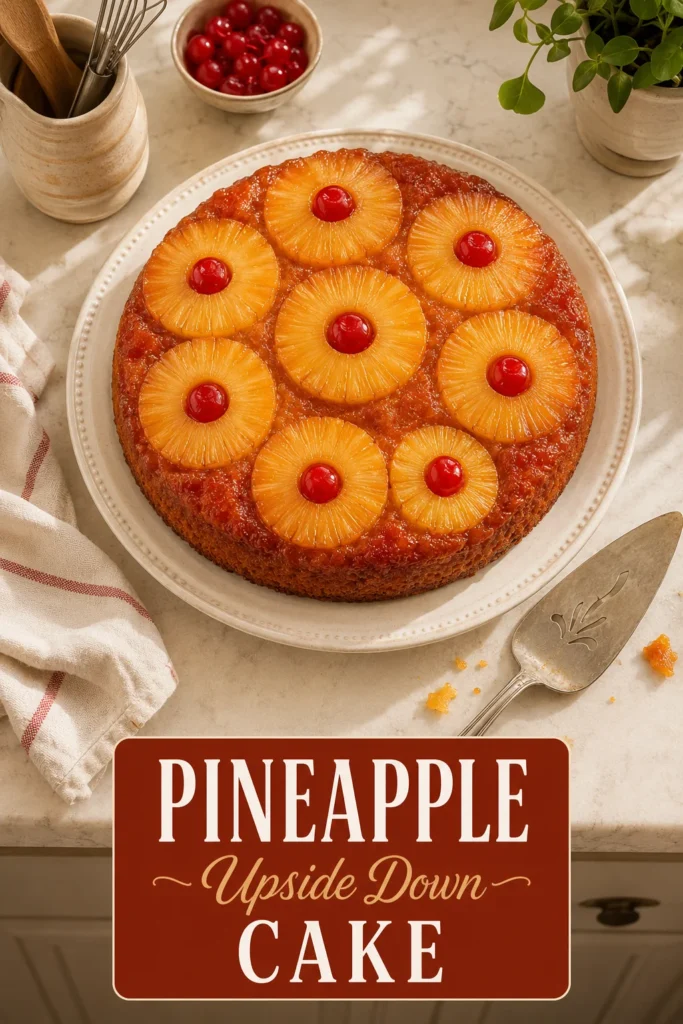
Drain the pineapple rings thoroughly and pat them dry with paper towels. Removing excess moisture is important because wet pineapple can make the topping watery. Arrange one pineapple ring in the center of the pan. Place the remaining rings around it, trimming them slightly if necessary. Put one cherry in the center of each pineapple ring. You can also place extra cherries in the empty spaces between the rings. This traditional arrangement gives pineapple upside down cake its colorful and instantly recognizable appearance. Set the prepared pan aside while you make the batter.
3. Combine the Dry Ingredients
In a medium bowl, whisk together the flour, baking powder, baking soda, and salt. Mixing the dry ingredients separately helps distribute the raising agents evenly throughout the cake. Set the bowl aside.
4. Cream the Butter and Sugar
Place the softened butter and granulated sugar in a large mixing bowl. Beat with an electric mixer for approximately two to three minutes or until the mixture becomes pale, light, and fluffy. Proper creaming adds air to the batter and helps create a softer cake texture. This step is particularly important when you want a pineapple upside down cake with a light and tender crumb.
5. Add the Eggs and Flavorings
Add the eggs one at a time, beating well after each addition. Scrape down the sides and bottom of the bowl when necessary. Mix in the vanilla extract and optional almond extract. Almond extract has a strong flavor, so only a small amount is needed. It complements the pineapple and cherries beautifully.
6. Add the Dry and Wet Ingredients
Combine the buttermilk and pineapple juice in a small jug. Add one-third of the dry ingredients to the butter mixture and mix on low speed. Pour in half of the buttermilk mixture and mix again. Continue alternating the dry and wet ingredients, beginning and ending with the dry ingredients. Mix only until the ingredients are combined. Do not overmix the batter. Excessive mixing develops too much gluten and may produce a dense or rubbery cake.
7. Fill the Cake Pan
Carefully spoon the batter over the arranged fruit. Begin by placing small amounts around the pineapple rings so they do not move. Once the fruit is lightly covered, add the remaining batter and spread it evenly with a spatula. Gently tap the pan once or twice on the counter to release large air pockets.
8. Bake the Cake
Bake for 38–45 minutes, or until the top is golden and a toothpick inserted into the center comes out clean or with a few moist crumbs. The pineapple upside down cake is ready when the center feels set and gently springs back when touched. If the surface starts browning too quickly, loosely cover the pan with aluminum foil during the final 10 minutes.
9. Cool and Flip
Place the baked cake on a wire rack and allow it to cool in the pan for 10–15 minutes. Run a thin knife around the edge of the cake. Place a large serving plate upside down over the pan. Using oven gloves, hold the plate and pan firmly together and flip them in one confident movement. Slowly lift the pan. If any pineapple or cherry sticks to the pan, carefully return it to its original position on the cake. Do not leave the cake in the pan until completely cool. The caramelized topping may harden and make the cake difficult to release.
Tips for the Best Pineapple Upside Down Cake
Dry the Pineapple Properly
Excess liquid is one of the main causes of a wet or soggy topping. Drain canned pineapple well and pat every ring dry before arranging it in the pan. This simple step helps your pineapple upside down cake develop a glossy topping instead of a watery surface.
Use Room-Temperature Ingredients
Room-temperature butter, eggs, and buttermilk combine more evenly. This helps produce a smooth batter and a tender cake crumb.
Measure the Flour Accurately
Adding too much flour can make the cake dry. For the best result, use a kitchen scale. If using measuring cups, spoon the flour into the cup and level it with a knife rather than scooping directly from the bag.
Do Not Overmix
Once the flour is added, mix the batter gently and only until no dry streaks remain. Overmixing can make the finished cake tough.
Flip at the Right Time
Wait 10–15 minutes after baking. Flipping immediately can cause the hot cake to break, while waiting too long can cause the topping to stick.
Use a Deep Cake Pan
The batter rises during baking, and the topping may bubble around the edges. A pan that is at least 2 inches deep helps prevent spills.
Fresh Pineapple vs. Canned Pineapple
Canned pineapple rings are the easiest choice for a traditional pineapple upside down cake. They have a consistent shape, sweetness, and texture, making them simple to arrange. Fresh pineapple can also be used, but it should be sliced evenly and not too thickly. Very ripe fresh pineapple may release additional juice, so dry the slices carefully before placing them in the pan. Both fresh and canned fruit can produce a delicious pineapple upside down cake when excess moisture is removed properly. If using canned pineapple, choose rings packed in juice rather than heavy syrup. The reserved juice can then be added to the cake batter for extra flavor.
Delicious Variations
Pineapple Upside Down Cupcakes
Divide the butter and brown sugar between lined or well-greased muffin cups. Add a small pineapple piece and cherry to each cup, then cover with batter. Reduce the baking time to approximately 18–22 minutes.
Coconut Pineapple Cake
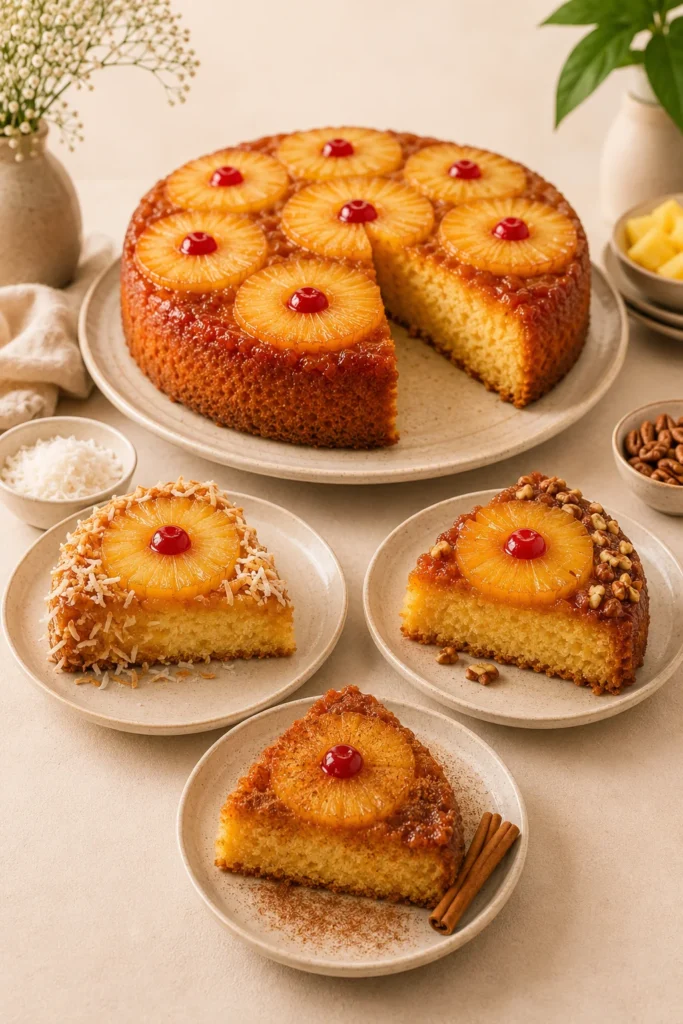
Add ½ cup of shredded coconut to the cake batter. Coconut gives the dessert a light tropical flavor and pairs naturally with pineapple.
Spiced Pineapple Cake
Add ½ teaspoon of cinnamon and a small pinch of nutmeg to the dry ingredients. The warm spices make this variation especially suitable for autumn and winter gatherings.
Nutty Caramel Topping
Scatter chopped pecans or walnuts between the pineapple rings before adding the batter. The nuts add texture and deepen the caramelized flavor.
Serving Suggestions
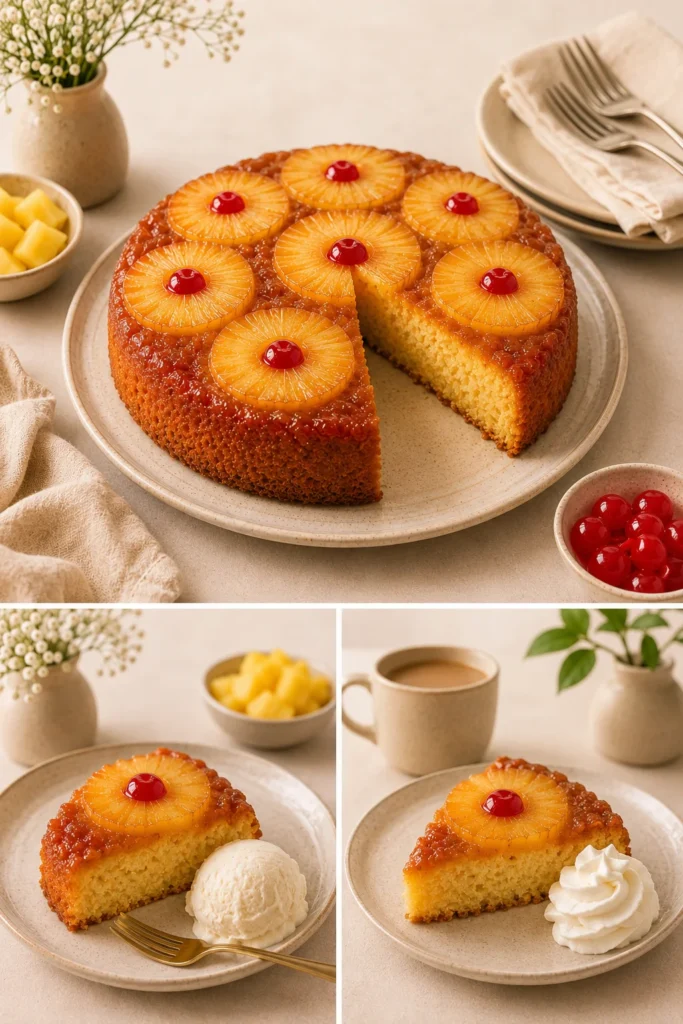
Allow the cake to cool slightly before slicing. Pineapple upside down cake can be served warm, at room temperature, or chilled.
For an extra-special dessert, serve each slice with:
- Lightly whipped cream
- Vanilla ice cream
- Toasted coconut
- Fresh berries
- A spoonful of pineapple compote
- A drizzle of warm caramel sauce
The cake is already sweet and flavorful, so heavy frosting is unnecessary.
How to Store Pineapple Upside Down Cake
Cover the cake tightly or place it in an airtight container. Once your pineapple upside down cake has cooled completely, it can remain at room temperature for up to one day if the room is cool. For longer storage, refrigerate it for up to four days. Let refrigerated slices sit at room temperature for approximately 20 minutes before serving, or warm them briefly in the microwave. To freeze the cake, wrap individual slices in plastic wrap and place them in a freezer-safe container. Freeze for up to two months. Thaw the slices overnight in the refrigerator before serving.
Frequently Asked Questions
Why did my pineapple upside down cake become soggy?
The pineapple may not have been drained properly, or too much liquid may have been added to the batter. Pat the pineapple rings dry and measure the juice accurately.
Why did the topping stick to the pan?
The cake may have cooled for too long before being inverted. Flip it after approximately 10–15 minutes, while the caramel topping is still warm. This allows the pineapple upside down cake to release from the pan before the brown sugar layer becomes firm.
Can I make this cake without cherries?
Yes. The cherries are mainly used for color and traditional presentation. You can leave them out or replace them with pecans, walnuts, or berries.
Can I make pineapple upside down cake in advance?
Yes. You can prepare it one day before serving. Store it covered at room temperature in a cool room or refrigerate it if your kitchen is warm.
Can I use regular milk instead of buttermilk?
Yes. Mix ½ cup of regular milk with 1½ teaspoons of lemon juice or white vinegar. Let it stand for five minutes before using it as a buttermilk substitute.
Pineapple Upside Down Cake Recipe Card
Preparation Time: 20 minutes
Baking Time: 38–45 minutes
Cooling Time: 15 minutes
Total Time: Approximately 1 hour 15 minutes
Servings: 8 slices
Course: Dessert
Cuisine: American
Method: Baking
Instructions
- Preheat the oven to 350°F (175°C).
- Pour melted butter into a 9-inch round cake pan.
- Sprinkle brown sugar evenly over the butter.
- Arrange dried pineapple rings and cherries over the sugar.
- Whisk together flour, baking powder, baking soda, and salt.
- Beat softened butter and granulated sugar until light and fluffy.
- Add the eggs individually, followed by the vanilla and optional almond extract.
- Alternate adding the dry ingredients with the buttermilk and pineapple juice.
- Spread the batter carefully over the arranged fruit.
- Bake for 38–45 minutes or until a toothpick comes out clean.
- Cool in the pan for 10–15 minutes.
- Invert the cake onto a serving plate and serve.
Final Thoughts
This classic pineapple upside down cake combines a buttery vanilla crumb with juicy pineapple, colorful cherries, and a glossy caramelized topping. It is simple enough for an everyday dessert but beautiful enough to serve at a celebration. The most important steps are draining the pineapple thoroughly, avoiding overmixing, and flipping the cake while the topping is still warm. Follow those tips, and you will have a moist, golden cake that releases cleanly and looks every bit as delicious as it tastes.
Check our Instagram and Facebook pages for more recipes.
