
 By Elina
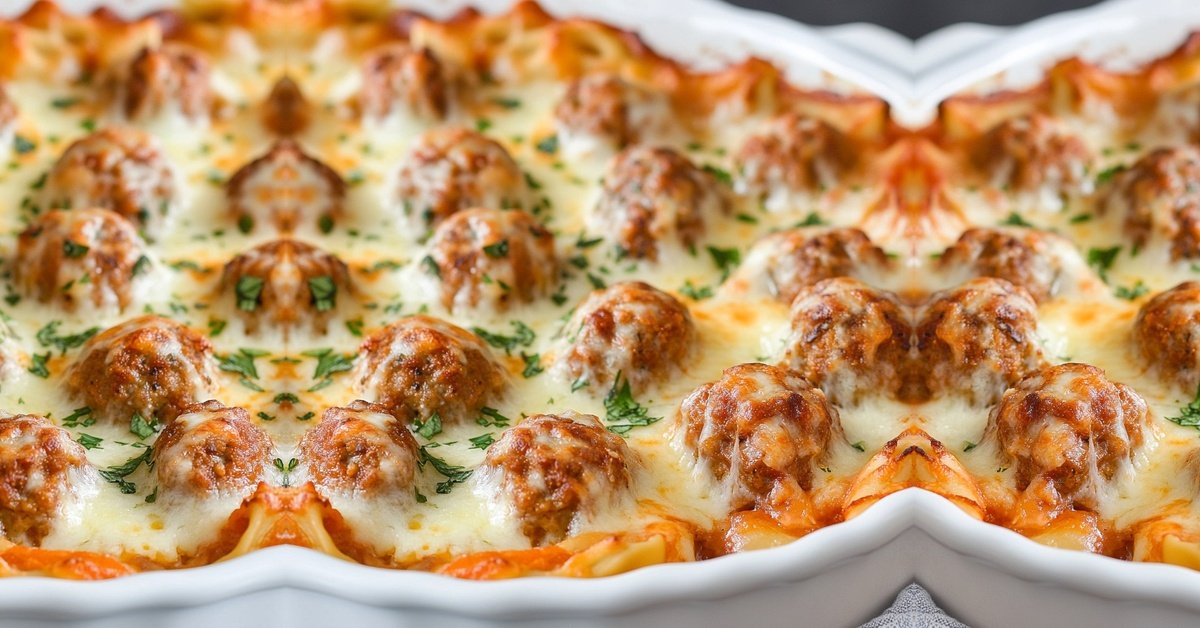
This meatball casserole recipe turns a bag of frozen meatballs, a box of penne and a jar of marinara into a bubbling baked dinner in about an hour, and the part that decides whether it works is not the cheese — it is the liquid and the two-stage bake. Pasta baked in sauce keeps drinking up liquid in the oven, so a casserole assembled with just enough sauce to coat comes out dry on top and gluey underneath, while one with too much sauce turns to mush. This version fixes both: the penne goes in two minutes shy of al dente, the sauce is loosened with starchy pasta water, and the dish bakes covered first, then uncovered under the cheese. It serves 6, and the finished dish looks like the photo: meatballs sitting proud in tomato sauce under a golden, melted mozzarella blanket.
Start with thawed meatballs, not frozen ones straight from the bag. Frozen meatballs go into the dish cold, so they chill the sauce around them, throw off water as they thaw in the oven, and can still be lukewarm in the middle when the pasta is already overcooked. Thawed overnight in the refrigerator, they heat through in the same time the pasta finishes, and they do not water down the sauce. If you forgot to thaw, it is not a disaster — add 10 minutes to the covered bake and check the center of a meatball before you move on — but the overnight thaw is the single easiest upgrade in this recipe.
Why This Bake Works in Two Stages
The foil-covered bake is where the pasta actually finishes cooking. Trapped steam and the thinned sauce let the penne soften gently without drying out, and the meatballs heat through evenly. If you baked the whole thing uncovered from the start, the top layer of pasta would dry into hard curls long before the middle was hot. The uncovered second bake has the opposite job: it drives off surface moisture and lets the mozzarella bubble and spot-brown. Cheese added at the start of a covered bake melts into a pale, steamy layer and never gets that golden finish; cheese added for the last 15 minutes uncovered gets both melt and color. Keep the foil tight — a loose tent lets steam escape and defeats the point of the first stage.
The liquid ratio is the other half. One jar of marinara plus one can of undrained diced tomatoes plus 1/2 cup of reserved pasta water sounds like a lot of sauce for 12 ounces of penne, and that is deliberate: the pasta will absorb roughly that extra half-cup during the bake. The pasta water matters because its starch helps the sauce cling instead of pooling. If your sauce looks thin before baking, do not panic — it thickens as the pasta drinks it up, and the 10-minute rest at the end firms everything further.
Ingredients
- 12 ounces penne pasta
- 24 frozen Italian-style meatballs (about 1 1/2 lb), thawed overnight in the refrigerator
- 1 tablespoon olive oil
- 3 cloves garlic, minced
- 1 jar (24 ounces) marinara sauce
- 1 can (14.5 ounces) diced tomatoes, undrained
- 1/2 cup reserved pasta water
- 1 teaspoon Italian seasoning
- 1/2 teaspoon fine salt
- 1/4 teaspoon black pepper, freshly ground
- 2 cups (8 ounces) shredded low-moisture mozzarella cheese, divided
- 1/2 cup (50 g) grated Parmesan cheese
- 2 tablespoons chopped fresh basil, for garnish
On the meatballs: any frozen Italian-style beef, pork, or beef-and-pork meatball works, about 1 inch across. Homemade meatballs work too — use 24 small ones, browned first so they hold their shape in the sauce. On the pasta: penne, rigatoni, or ziti all hold up; skip spaghetti or other long shapes, which clump in a baked dish, and skip small shapes like orzo, which overcook fast. On the cheese: low-moisture mozzarella is the right call here. Fresh mozzarella releases water as it melts and can make the top soupy, while pre-shredded low-moisture mozzarella melts into the even, golden blanket in the photo.
Meatball Casserole Recipe: Step by Step
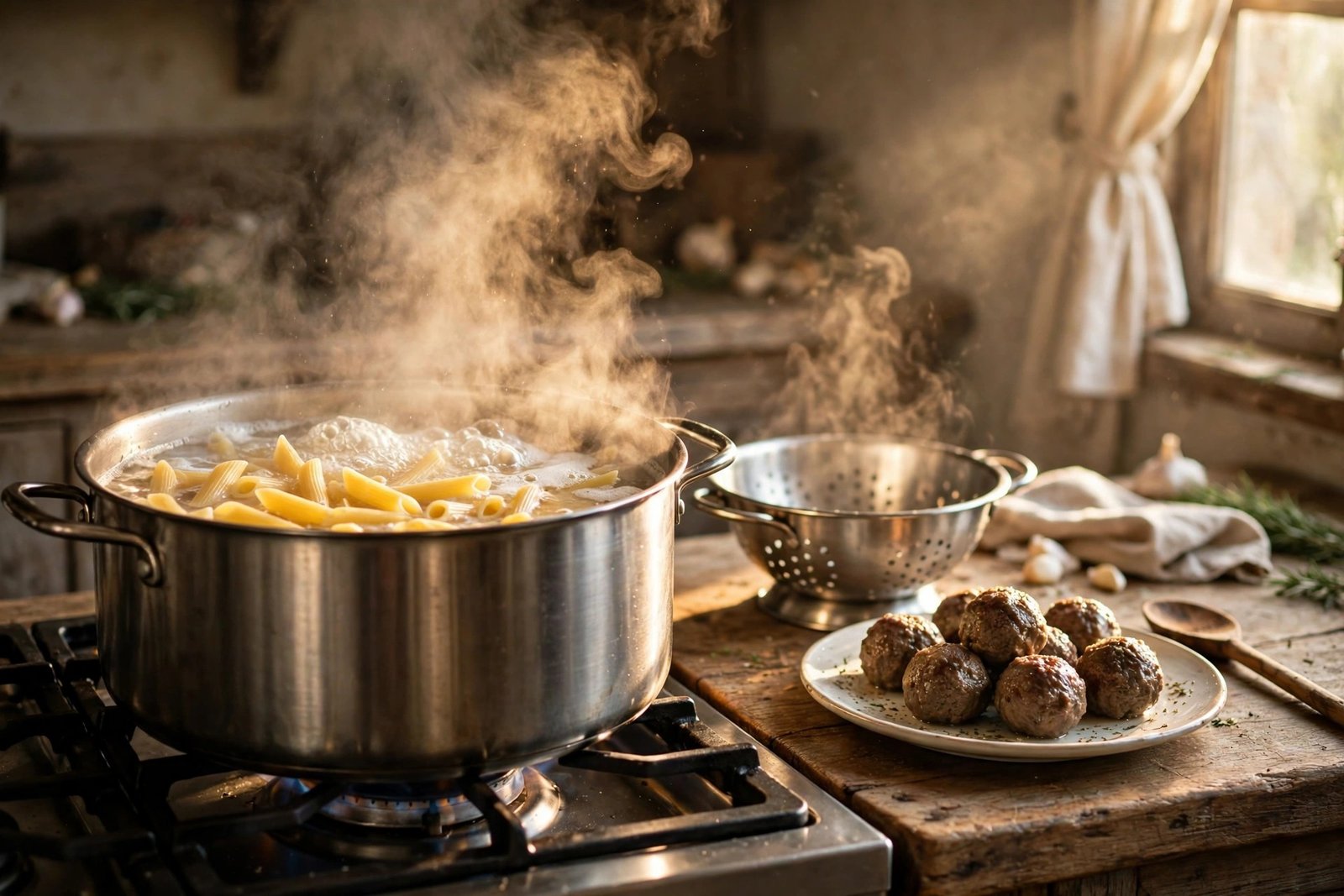
Step 1: Thaw, boil, and hold back the pasta water. Heat the oven to 375°F (190°C). Bring a large pot of salted water to a boil and cook the 12 ounces of penne for 2 minutes less than the package time — about 8 minutes — so it is still firm in the middle. Before draining, scoop out 1/2 cup of the starchy pasta water and set it aside. Drain the pasta; do not rinse it, since the surface starch helps the sauce cling.
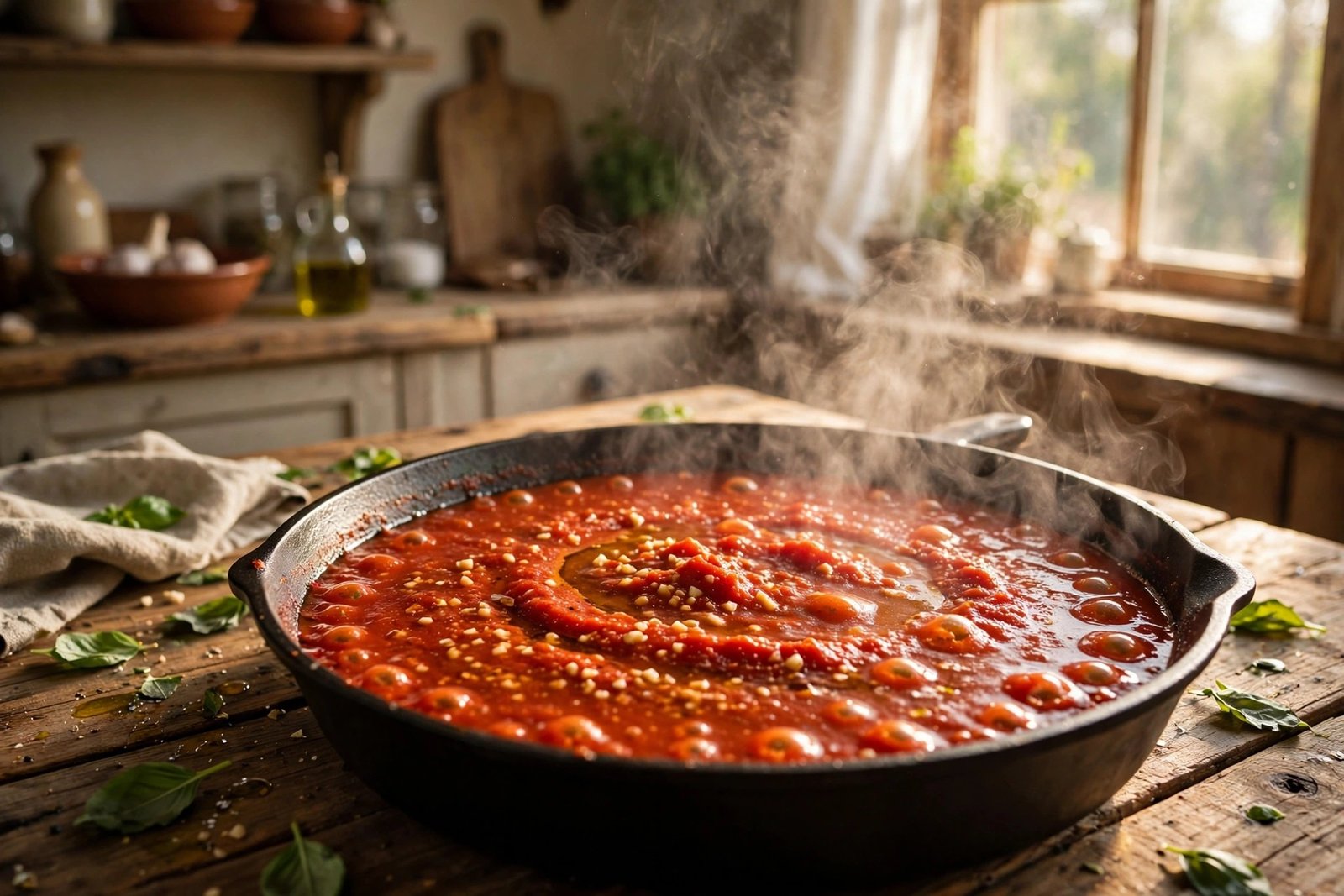
Step 2: Simmer a sauce that is deliberately a little loose. Warm the tablespoon of olive oil in a large skillet over medium heat, add the 3 cloves of minced garlic, and cook for 30 seconds until fragrant — no longer, or it turns bitter. Pour in the jar of marinara, the can of undrained diced tomatoes, the 1/2 cup of reserved pasta water, the teaspoon of Italian seasoning, the 1/2 teaspoon of salt and the 1/4 teaspoon of black pepper. Simmer for 5 minutes, stirring once or twice. The sauce should look slightly thinner than you would serve over plain pasta; the bake will take care of the rest.
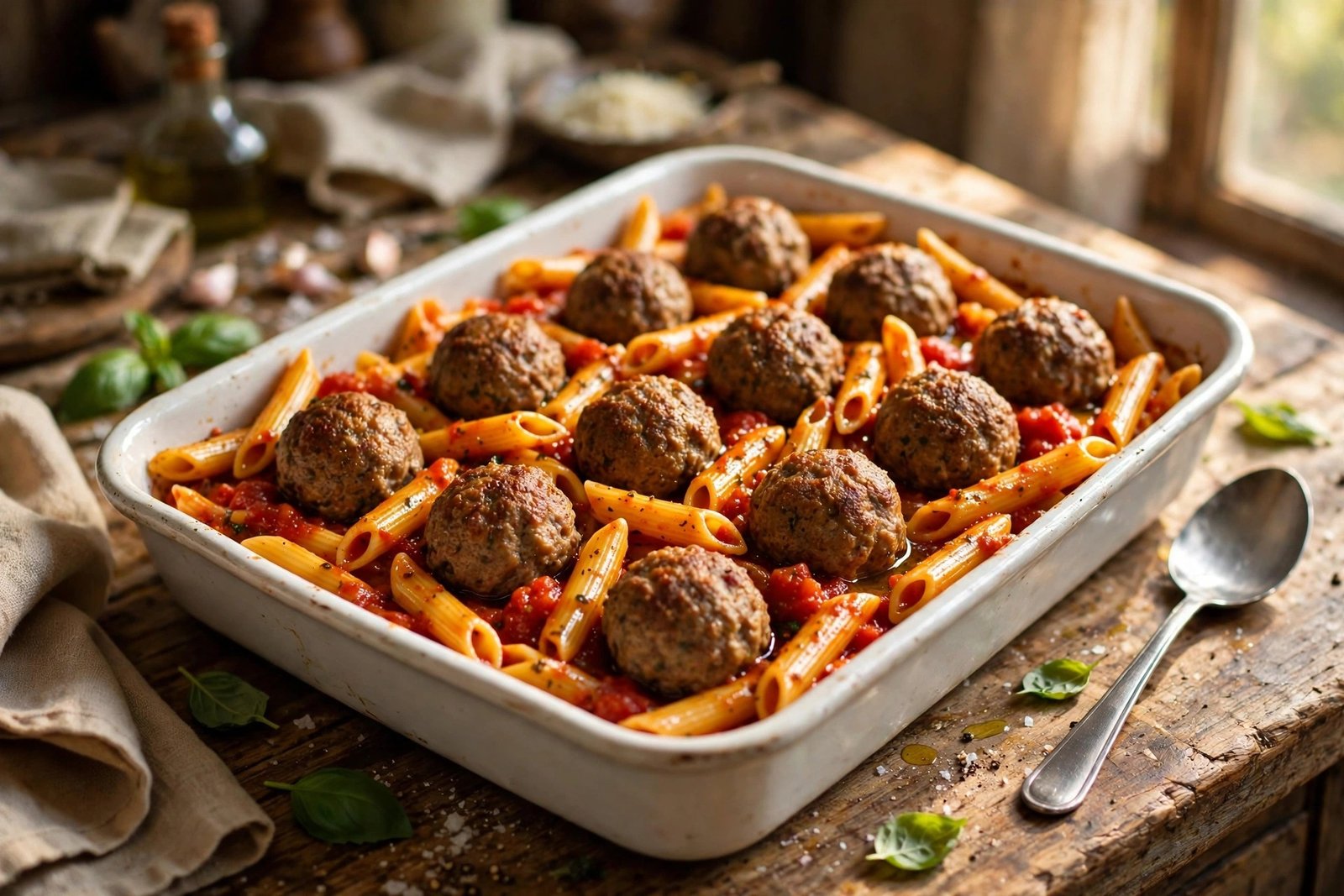
Step 3: Assemble with the meatballs on top of the pasta, not buried. Toss the drained penne with the sauce in the skillet or a large bowl until every tube is coated, then spread it evenly in a 9×13-inch baking dish. Nestle the 24 thawed meatballs into the pasta in rows, pushing them down just enough that they sit in the sauce rather than rolling on top. Do not add the cheese yet — it goes on for the uncovered finish, and adding it now would leave it pale and steamy.
Step 4: Bake covered until everything is hot through. Cover the dish tightly with aluminum foil, crimping the edges so steam stays in. Bake at 375°F (190°C) for 25 minutes. When you lift a corner of the foil, the sauce should be bubbling at the edges and the pasta should be nearly tender. If you started with meatballs that were still partly frozen, give this stage 35 minutes and check that a meatball is hot in the center before continuing.
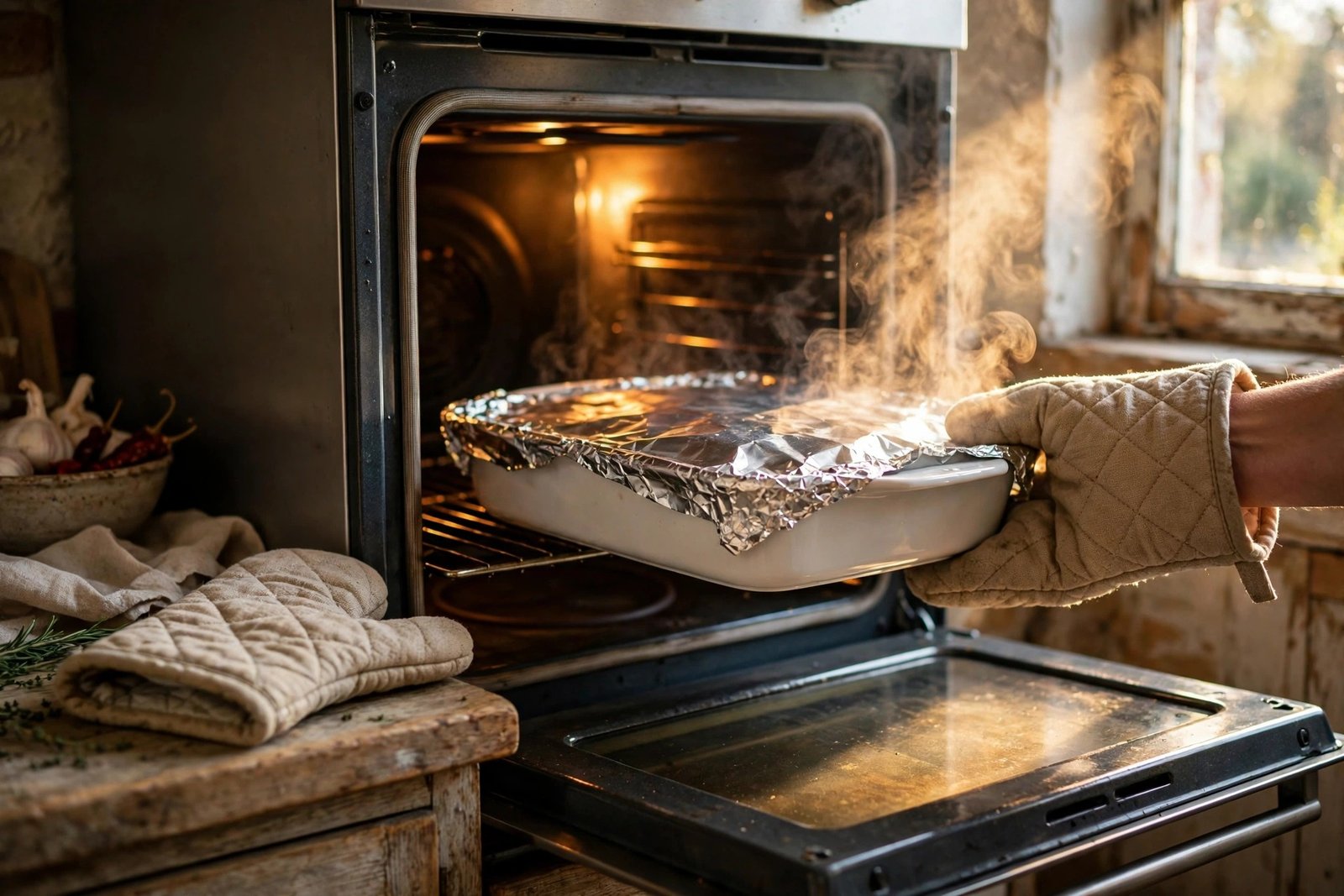
Step 5: Uncover, cheese it, and bake until golden. Remove the foil and scatter the 2 cups of shredded mozzarella and the 1/2 cup of grated Parmesan evenly over the top. Return the dish to the oven uncovered for 15 minutes, until the cheese is fully melted, bubbling, and spotted golden. If you want deeper browning, switch to broil for the final 1 to 2 minutes and watch it the whole time — mozzarella goes from golden to burnt fast.
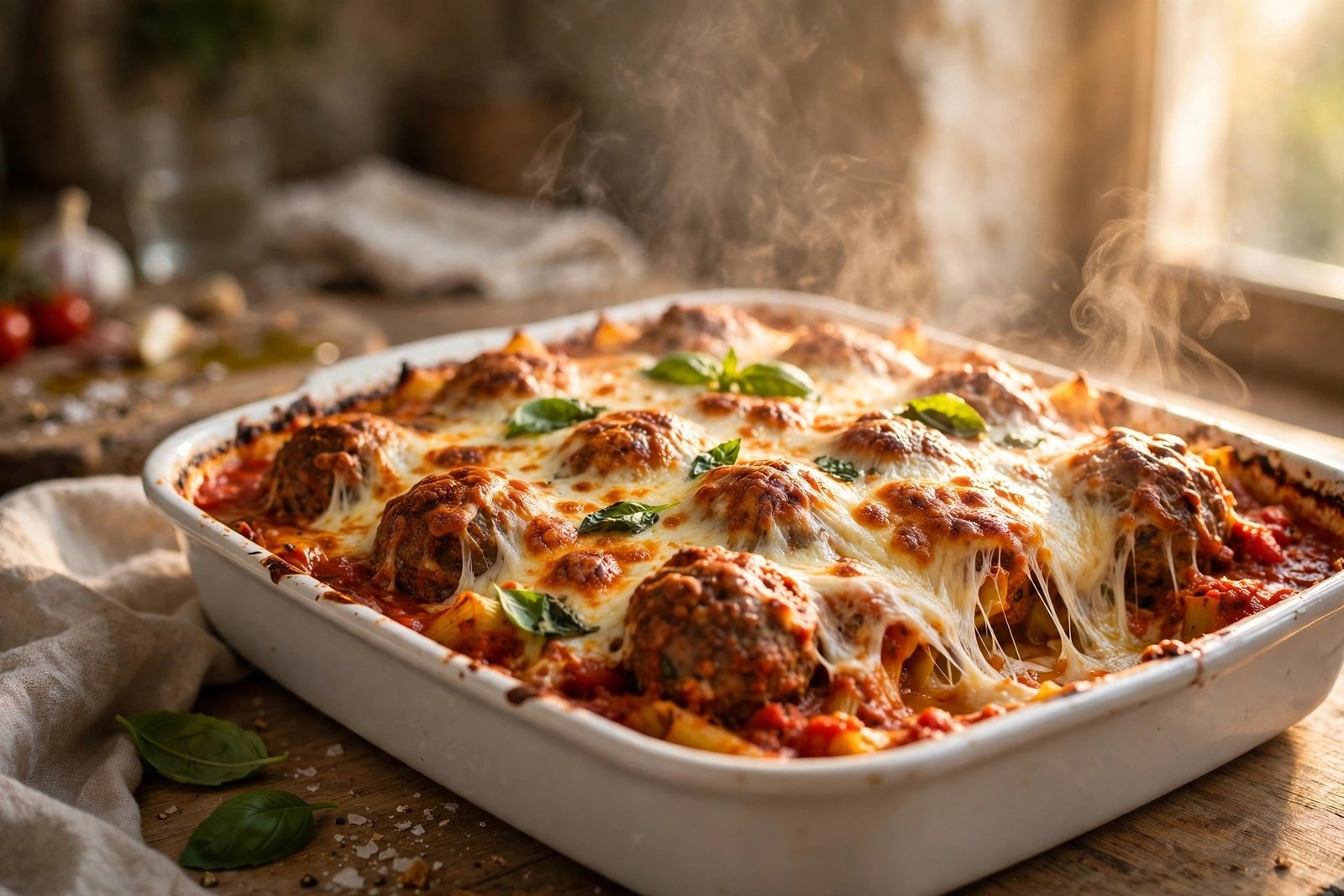
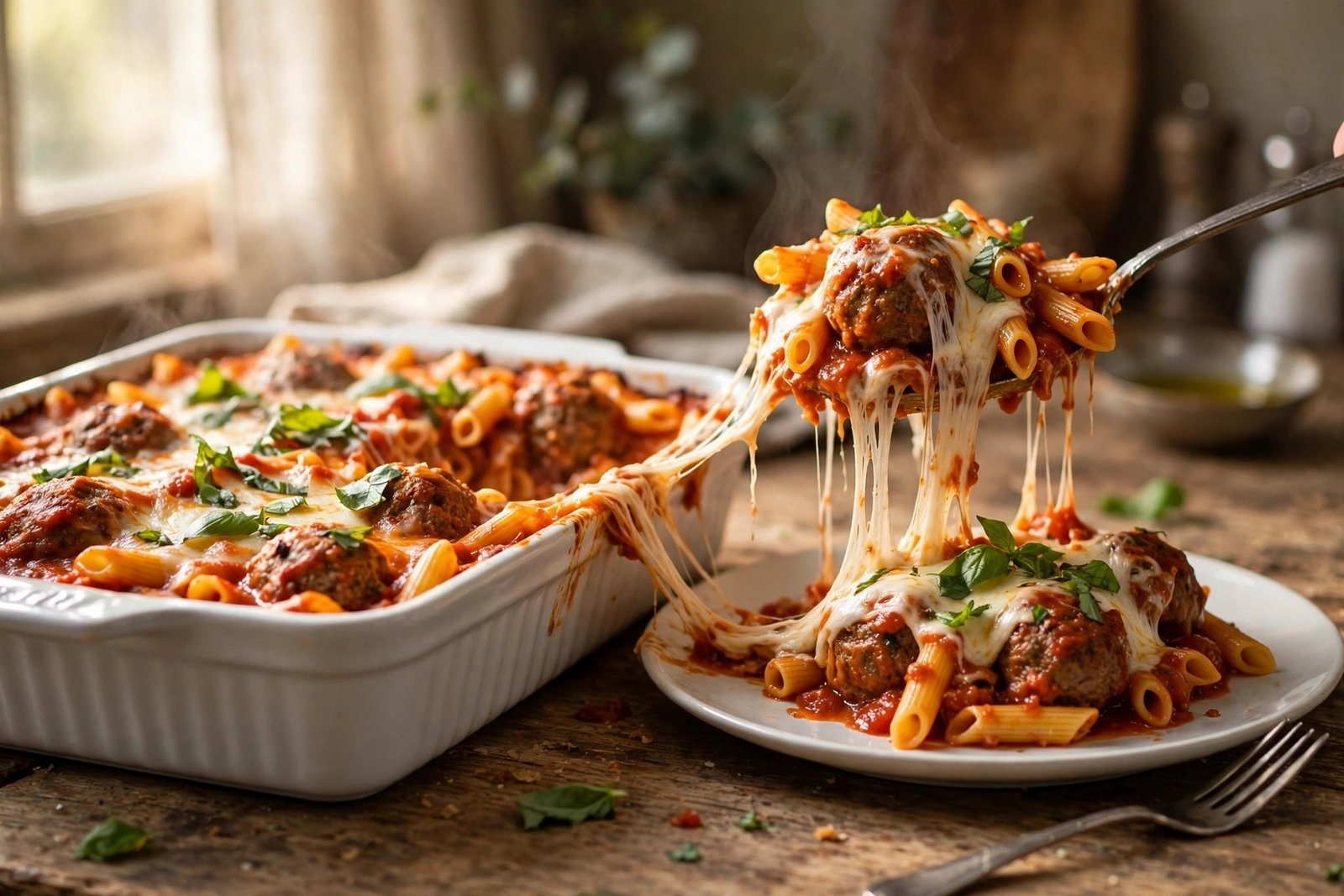
Step 6: Rest, garnish, and serve. Let the casserole rest for 10 minutes before scooping — this is when the sauce firms up and servings hold their shape instead of sliding apart. Scatter the 2 tablespoons of chopped fresh basil over the top and serve while the cheese still pulls. A wide spoon or spatula lifts servings cleanest, meatballs and all.
When It Goes Wrong
Pasta turned mushy. It went into the dish fully cooked, or the sauce was too thin. Cook the penne 2 minutes shy of al dente and measure the pasta water — more than 1/2 cup tips the ratio toward mush. Rigatoni holds up better than penne if your brand runs soft.
Top layer dried out. The foil was loose or the covered bake ran uncovered. Crimp the foil tightly around the dish edges, and keep the cheese off until the uncovered stage — an uncovered pasta top dries in minutes.
Meatballs cold in the middle. They went in frozen or straight from the fridge in a cold dish. Thaw overnight, and if you are ever unsure, cut one open before serving — it should be steaming and hot all the way through, not just warm on the outside.
Cheese went greasy instead of golden. Fresh mozzarella or too much cheese is usually the cause. Low-moisture mozzarella, the full 15 uncovered minutes, and a brief broil only if needed will give you the browned blanket rather than an oil slick.
Sauce pooled at the bottom. The dish was served straight from the oven. The 10-minute rest is not optional garnish time — it is when the pasta finishes absorbing sauce and the whole dish sets.
Serving, Storing, and Making Ahead
Serve it straight from the dish with garlic bread and a simple green salad — the casserole is rich enough that it does not need a heavy side. Leftovers keep covered in the refrigerator for up to 4 days; reheat covered at 350°F (175°C) until hot through, then uncover for 5 minutes to re-crisp the cheese. It also freezes well: cool completely, wrap the dish tightly, and freeze for up to 3 months. Thaw overnight in the refrigerator and reheat the same way, adding 10 minutes to the covered time.
To make it ahead, assemble through step 3, cover tightly, and refrigerate for up to 24 hours. Add 10 minutes to the covered bake since it starts cold, then finish with the cheese stage as written. If baked casseroles are your weeknight style, the cheesy hamburger rice casserole uses the same one-dish logic with seasoned beef and rice instead of pasta. For a lighter dinner the next night, the cucumber shrimp salad is the cold, crunchy counterpoint to a heavy bake. And if this is heading to a potluck table, the Hawaiian pineapple cake is an easy make-ahead dessert that travels in the same 9×13 dish.
Follow us on Instagram for more recipes: Follow us on Instagram
Frequently Asked Questions
Can I use frozen meatballs without thawing them first?
Yes, but add 10 minutes to the covered bake and check that a meatball is hot in the center before adding the cheese. Frozen meatballs also release water as they thaw, so the sauce may end up slightly thinner — the overnight thaw avoids both problems.
Can I use homemade meatballs instead?
Yes. Use 24 small meatballs, about 1 inch across, and brown them in a skillet first so they hold their shape in the sauce. Raw meatballs dropped straight into the dish can fall apart during the long bake.
What pasta shapes work besides penne?
Rigatoni and ziti are the best swaps — short, sturdy tubes that hold sauce and survive a second cook in the oven. Avoid long pasta like spaghetti, which clumps, and tiny shapes like orzo, which overcook quickly.
Why is my pasta mushy even though I followed the times?
The most common cause is fully cooking the pasta before baking. The bake itself is a second cook, so the penne must go in 2 minutes shy of al dente. The other cause is too much liquid — measure the 1/2 cup of pasta water rather than pouring freely.
Can I assemble this the day before?
Yes. Assemble through step 3, cover tightly, and refrigerate for up to 24 hours. Add 10 minutes to the covered bake to account for the cold start, then finish with the cheese stage as written.
