
 By Elina
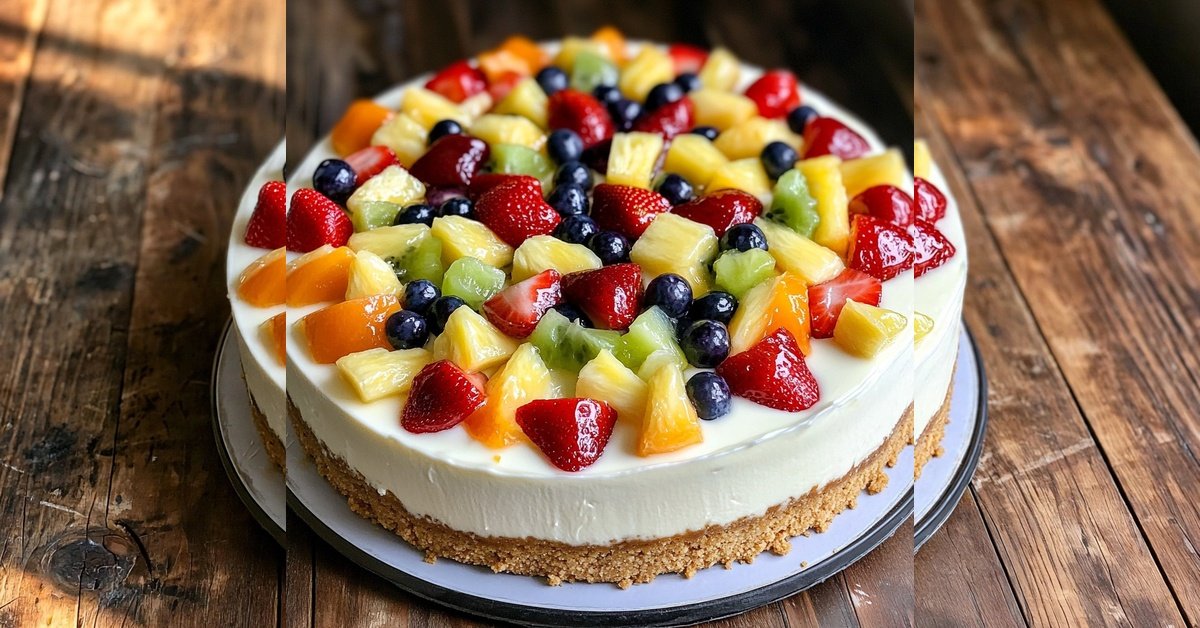
This fruit salad cheesecake recipe makes a no-bake cheesecake that actually slices clean: a firm graham crust, a dense cream-cheese filling that sets in the fridge, and a crown of fresh fruit brushed with a clear glaze so it stays glossy instead of weeping onto the plate. It serves 12, needs no oven, and the whole dessert comes down to two disciplines — dry fruit, and a full chill. Get those right and the cake unmolds in one piece and cuts into neat wedges.
One clarification before you start, because the name causes confusion: this is a whole cheesecake with fruit arranged on top, not a bowl of fruit folded into whipped topping. The fruit stays where you put it, the filling stays white and clean underneath, and each slice carries its own little mosaic of strawberries, blueberries, pineapple, kiwi and mandarin. If you want the folded-salad version, this is not that recipe — and that distinction is exactly why the topping rules below matter.
The Topping Decides Everything
Most fruit cheesecakes fail on the top, not in the filling. Wet fruit is the culprit: berries rinsed and piled on while still damp release juice as they sit, and that juice runs down the sides, softens the top layer of filling, and turns the glaze cloudy. So every piece of fruit here gets patted dry with paper towels before it touches the cake — not roughly dried, properly blotted, including the cut faces of the strawberries and the pineapple chunks. It takes five extra minutes and it is the difference between a bakery-looking cake and a soggy one.
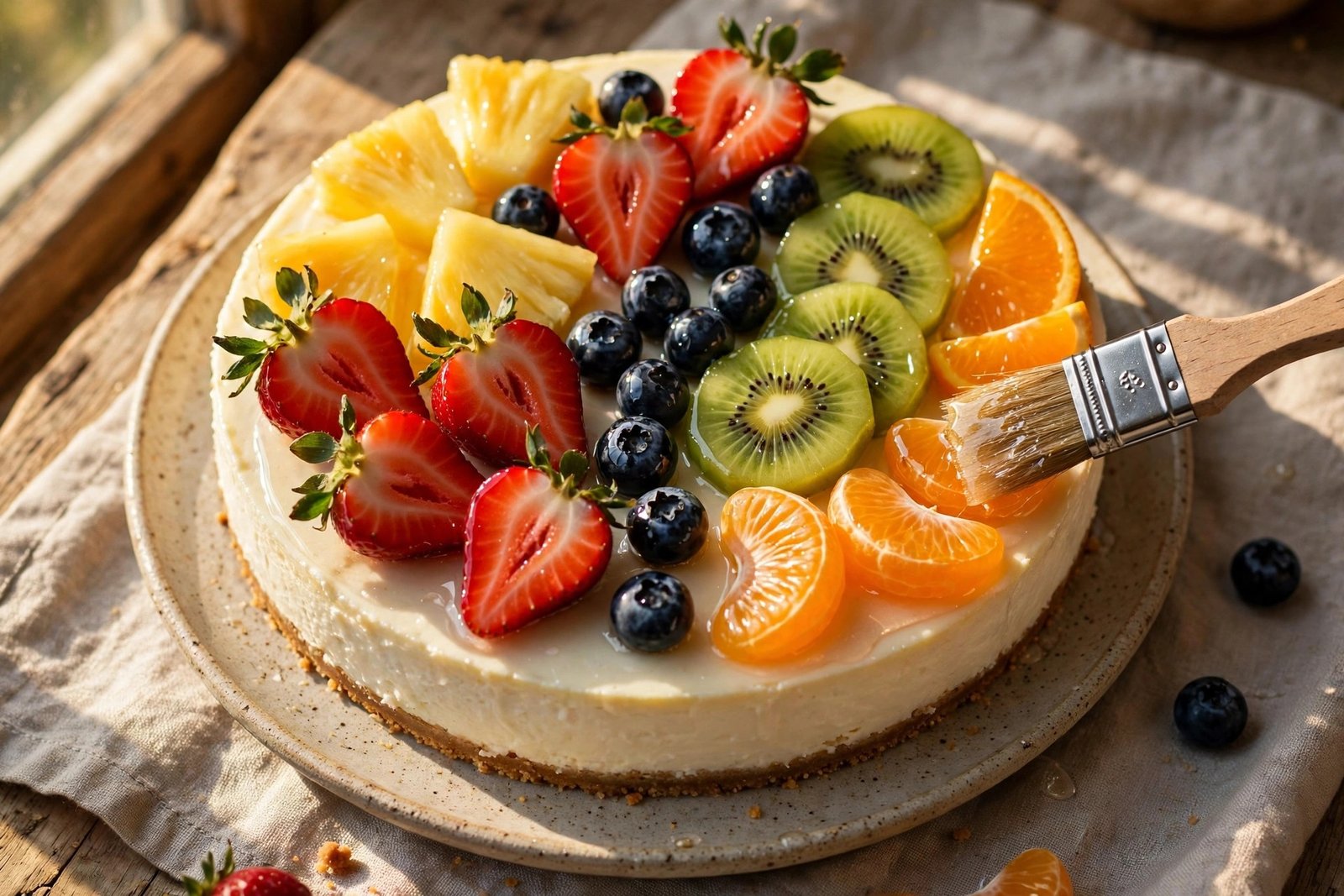
The glaze does the second job. A thin brush of warmed apricot jam thinned with a teaspoon of water seals the cut fruit, keeps the berries from drying out in the fridge, and gives the whole top that just-glazed shine you see in the photo. It is flavor-neutral enough not to fight the fruit, and it buys you time: a glazed cake holds its looks for a full day in the fridge, while unglazed fruit dulls within hours.
On fruit choice: use fruit that is ripe but still firm. Soft berries collapse under the glaze, overripe kiwi goes mushy, and canned fruit — even drained — is wetter than fresh and will undo your drying work. If a fruit in the list is out of season, swap it for something equally firm (grapes, mango, or extra berries) rather than forcing a soft substitute.
Ingredients
- 2 cups (200 g) graham cracker crumbs
- 1/2 cup (115 g) unsalted butter, melted
- 2 tablespoons granulated sugar
- Pinch of fine salt
- 24 oz (680 g) full-fat cream cheese, softened to room temperature
- 1 cup (120 g) powdered sugar
- 1 teaspoon vanilla extract
- 1 tablespoon fresh lemon juice
- 1 cup (240 ml) heavy whipping cream, cold
- 1 cup strawberries, hulled and halved
- 1 cup blueberries
- 1 cup pineapple chunks, fresh
- 1 kiwi, peeled and sliced
- 1/2 cup mandarin orange segments, drained and patted dry
- 2 tablespoons apricot jam, for the glaze
- 1 teaspoon water, for the glaze
On the cream cheese: brick-style, full-fat, at room temperature. Spreadable tub cheese and low-fat cheese both hold extra water, and that water is what keeps a no-bake filling soft. The cream must be cold — warm cream will not whip to stiff peaks, and the whipped cream is doing half the setting work here alongside the chill.
Fruit Salad Cheesecake Recipe: Step by Step
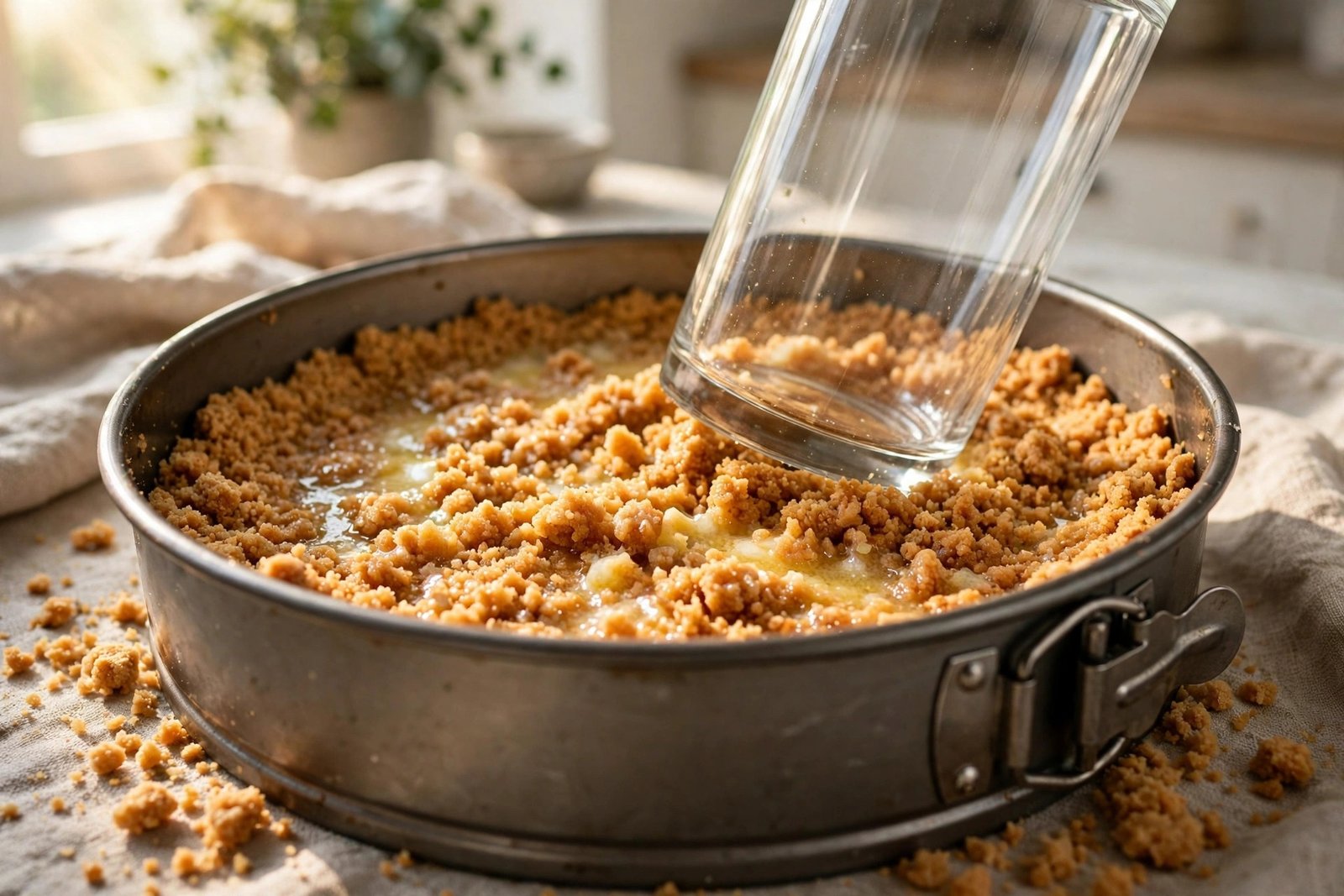
Step 1: Press the crust and chill it. Stir the graham crumbs, sugar and salt together, then pour in the melted butter and mix until the crumbs look like wet sand. Tip the mixture into a 9-inch springform pan and press it into a firm, even layer across the bottom — the flat bottom of a measuring cup or glass does this better than fingers. Refrigerate while you make the filling, at least 20 minutes, so the crust sets hard.
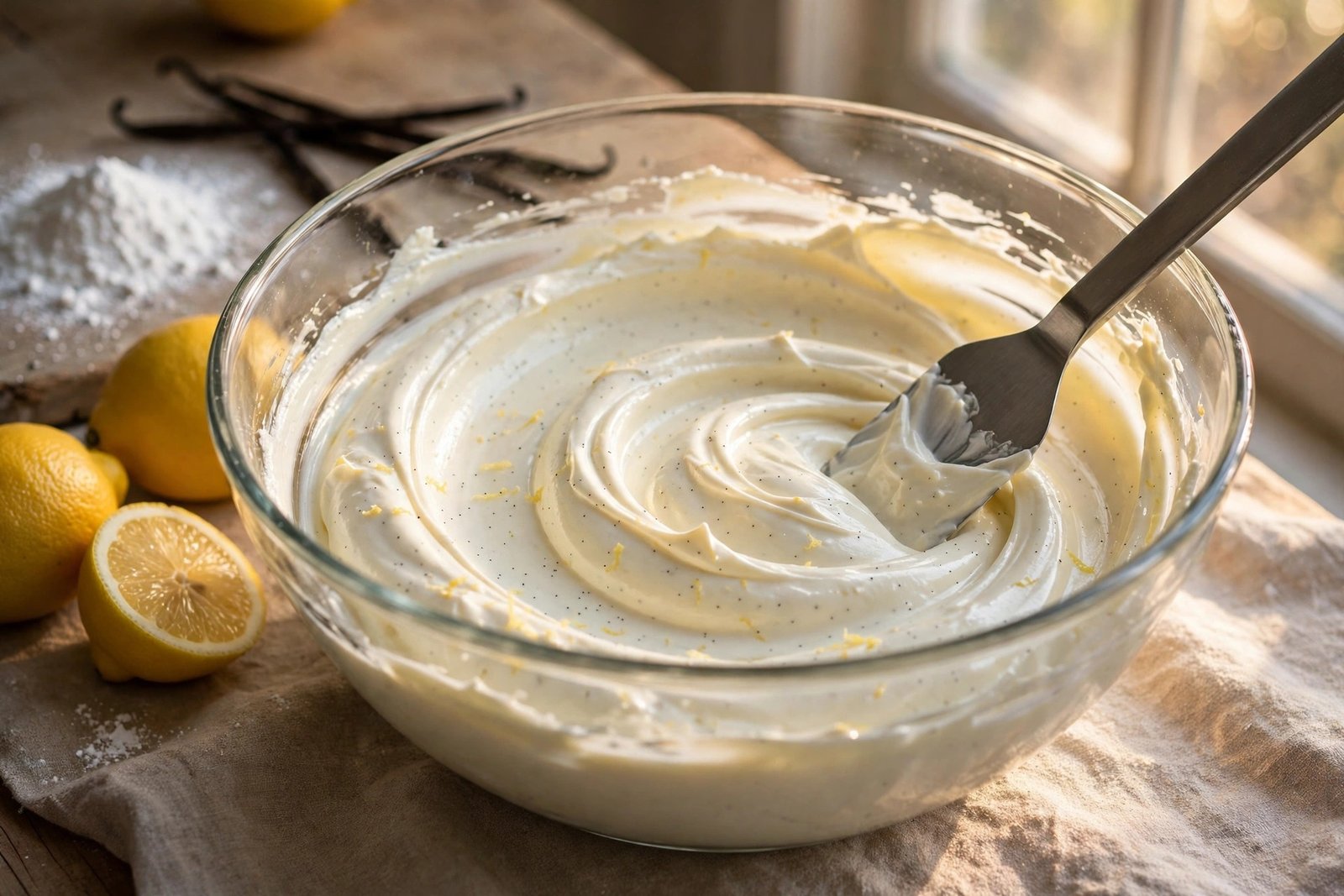
Step 2: Beat the cream cheese base. Beat the softened cream cheese on medium speed until completely smooth, scraping the bowl once — any lump now stays a lump later. Add the powdered sugar, vanilla and lemon juice and beat just until combined and silky. Do not whip it into a froth; you want dense and smooth, not airy.
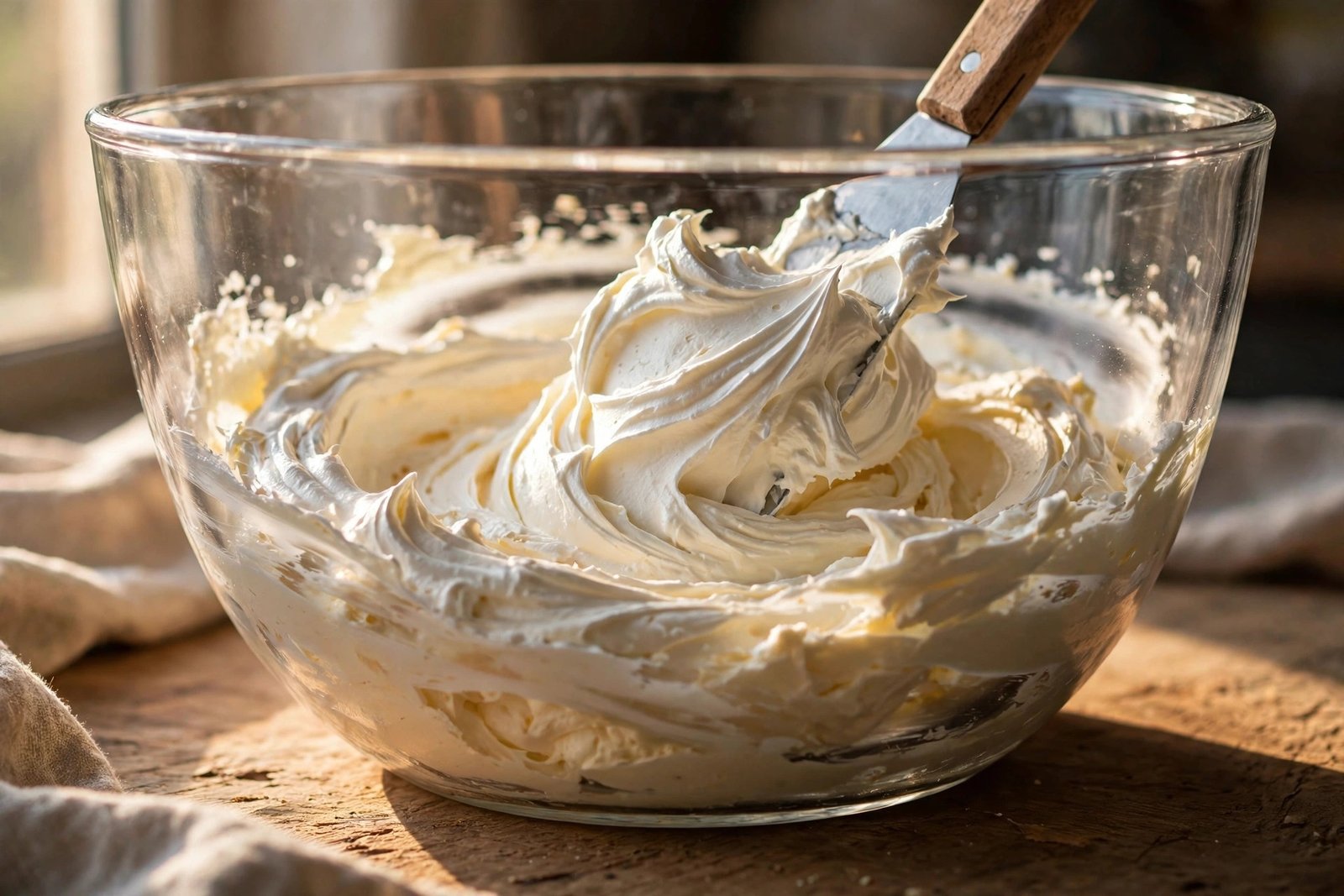
Step 3: Whip and fold. In a separate cold bowl, whip the heavy cream until stiff peaks hold their shape. Fold it into the cream cheese mixture in two batches with a spatula, cutting down the middle and turning the bowl, until no white streaks remain. Gentle folding keeps the air you just whipped in; stirring it flat is how a no-bake filling turns dense and heavy.
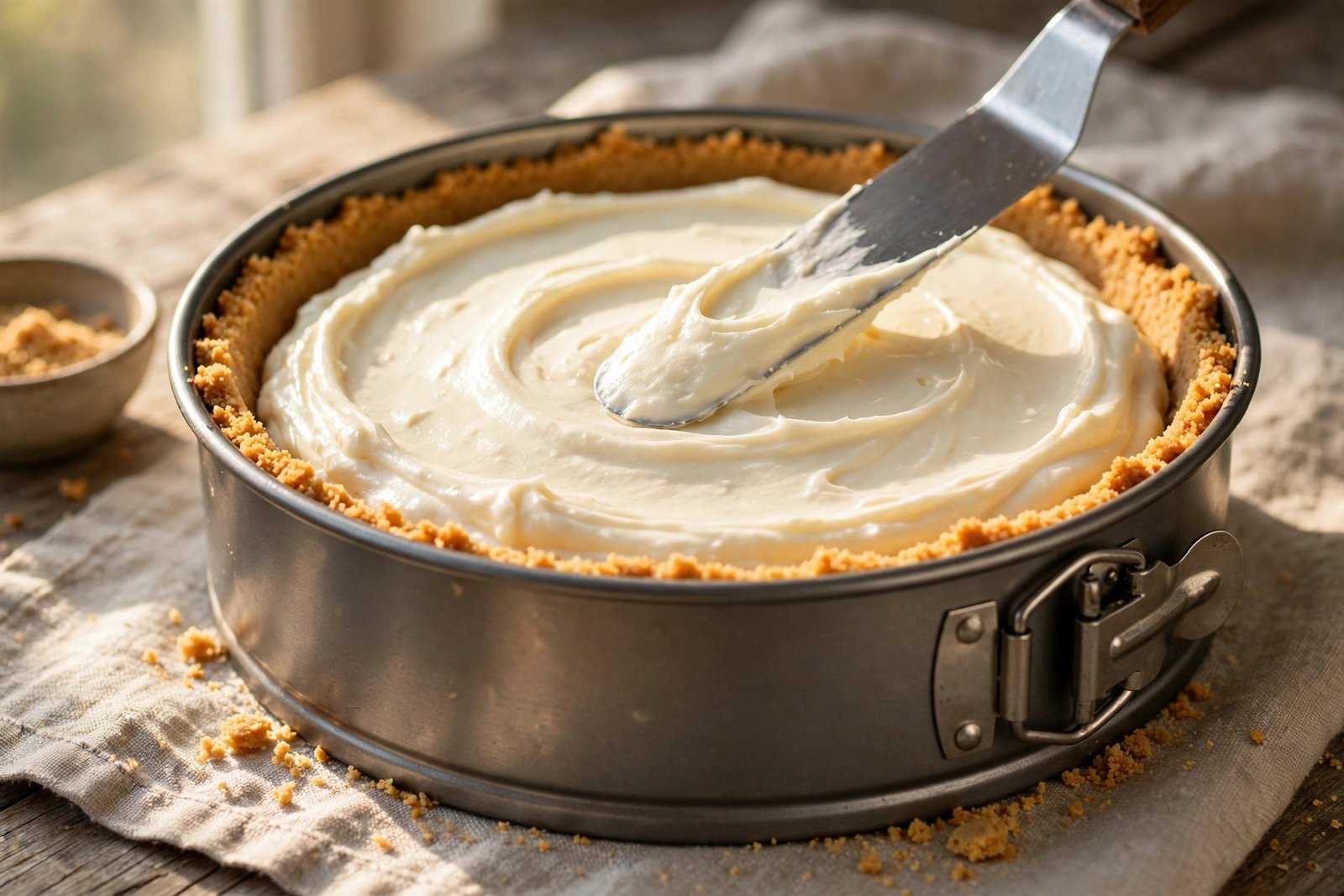
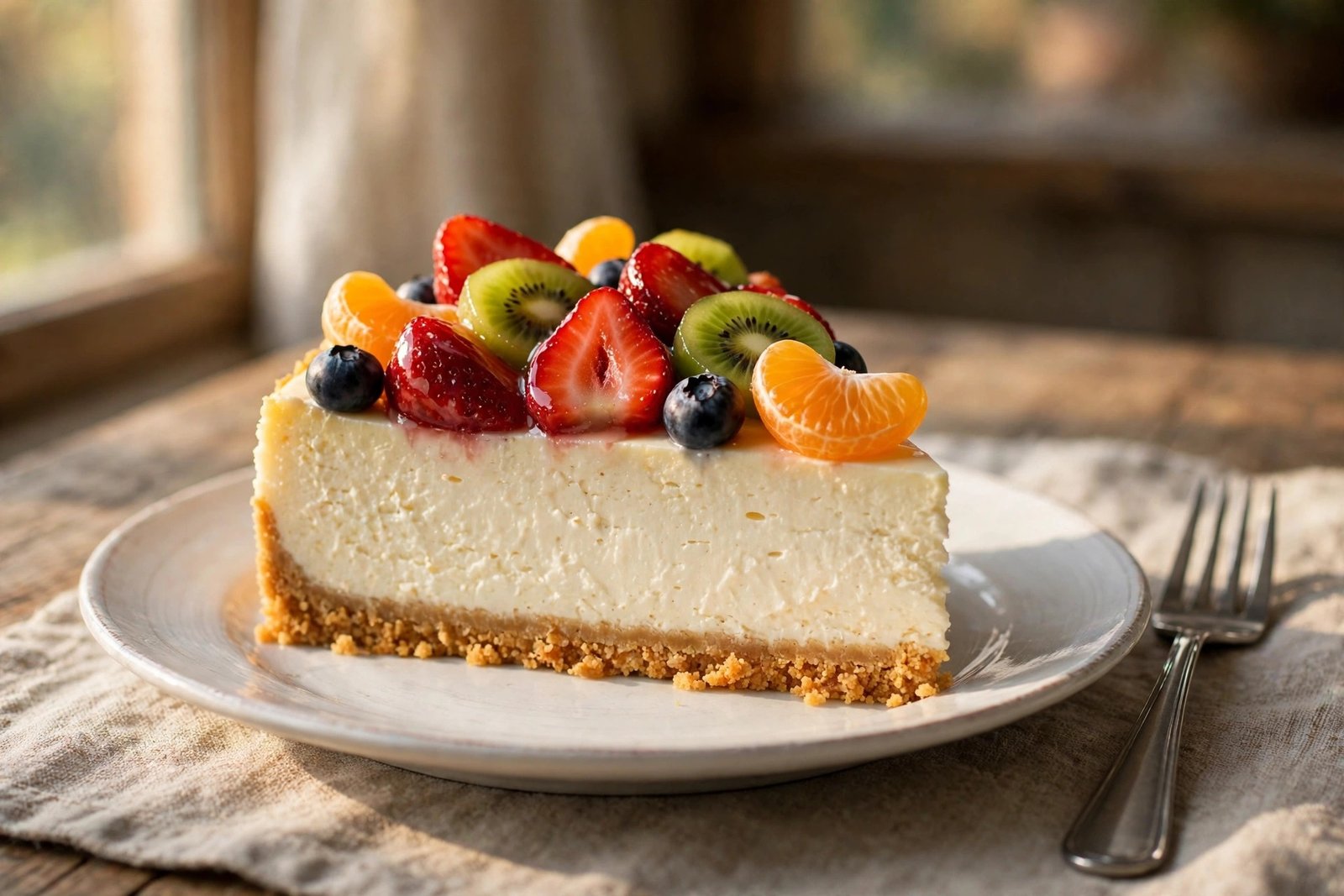
Step 4: Fill and chill — fully. Spoon the filling over the chilled crust and smooth the top with an offset spatula. Tap the pan lightly on the counter to settle out large air pockets. Cover and refrigerate for at least 6 hours, preferably overnight. This is not a step to shorten: the cake looks set after two hours and still will not slice cleanly. Overnight is what gives you the firm, tall slices in the photo.
Step 5: Dry, arrange, glaze. Pat every piece of fruit dry with paper towels. Arrange it over the chilled cake, starting with the strawberries and pineapple and filling the gaps with blueberries, kiwi and mandarin. Warm the apricot jam with the teaspoon of water until fluid, then brush it lightly over the fruit. Do not pour the glaze — a brush gives a thin, even coat that sets clear.
Step 6: Unmold and slice cold. Run a thin knife around the inside of the springform ring before releasing it, so the edge stays sharp. Slice with a long, sharp knife dipped in hot water and wiped dry between every cut — a cold, dry blade is what keeps the fruit in place instead of dragging it through the filling. Serve straight from the fridge.
Why a No-Bake Cheesecake Goes Soft
It never fully chilled. Two hours in the fridge is not a set cheesecake. If your slices slump, the answer is almost always more time — overnight, undisturbed, with the pan covered.
The cream was warm or under-whipped. Cream that only reaches soft peaks folds into a filling that cannot hold its shape. Whip to stiff peaks, with a chilled bowl if your kitchen is warm.
Low-fat or tub cream cheese. Both carry more water than brick cream cheese, and that water stays in the filling. If the package says spreadable, it is the wrong cheese for this cake.
Wet fruit on top. Juice from undried fruit softens the top layer and loosens the glaze. Blot everything, including the mandarin segments, before arranging.
For the full storage picture — this cake keeps 1–2 days once the fresh fruit is on, and the plain cake keeps longer — see how long cheesecake lasts in the fridge.
Cutting Clean Slices
Cut the cake cold, straight from the fridge, and never let it sit out while you hunt for a serving plate. A hot, dry knife between cuts, a confident single downward press rather than sawing, and a quick wipe of the blade after each slice will give you the sharp layers in the photo. Leftovers keep covered in the fridge for up to 2 days with the fruit on; without the fruit, the plain cake holds 4 days, so if you are making it ahead for a party, chill the plain cake and add the fruit and glaze on the day.
More Recipes You’ll Love
If this no-bake style worked for you, the mini lemon cheesecakes are the individual, baked counterpart — same silky filling logic, no water bath — and the Lotus Biscoff cheesecake is the no-bake version to try next when you want caramelized cookie flavor instead of fresh fruit.
Follow us on Instagram for more recipes: Follow us on Instagram
Frequently Asked Questions
Can I use frozen fruit for the topping?
Not for the top. Frozen berries and pineapple release a lot of water as they thaw, and that water softens the filling and clouds the glaze. Use fresh fruit for the topping; frozen fruit is fine only if you cook it down into a sauce first, which is a different cake.
Why is my no-bake cheesecake still soft after chilling?
Usually one of three things: it chilled less than 6 hours, the cream was under-whipped, or the cream cheese was low-fat or spreadable. Give it overnight, whip the cream to stiff peaks, and use brick-style full-fat cream cheese.
Do I need gelatin to make it set?
No, not in this version. Full-fat cream cheese plus properly whipped cream sets firmly on its own with a full chill. Gelatin is only worth adding if the cake has to sit out at a warm event — and even then, it changes the texture toward firm rather than creamy.
Can I make this cheesecake a day ahead?
Yes — it is better a day ahead. Chill the plain cake overnight, then add the fruit and glaze on serving day so the topping stays bright and the slices stay clean.
