
 By Esha Kamran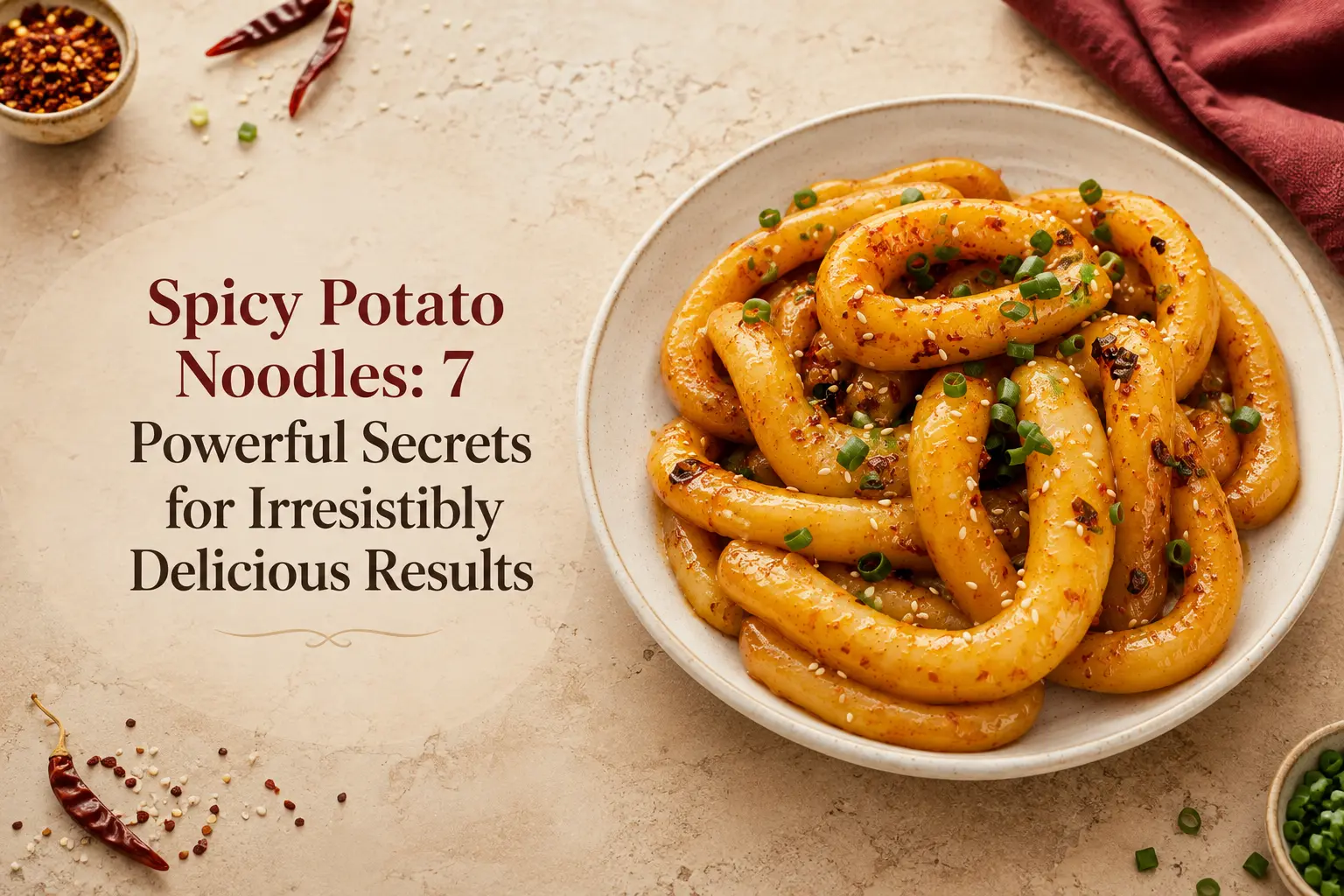
There is something deeply satisfying about a bowl of freshly made noodles coated in a glossy, spicy sauce. These spicy potato noodles are thick, wonderfully chewy and packed with bold flavors from garlic, chili flakes, soy sauce and aromatic sesame oil. Better still, you can prepare them at home using a handful of simple ingredients.
Unlike traditional noodles made primarily with wheat flour, these noodles are prepared with cooked potatoes and potato starch. The potatoes give them a soft interior, while the starch creates their signature bouncy and pleasantly chewy texture. Once boiled, the noodles are tossed in a sizzling chili-garlic sauce that clings to every curve.
This recipe is ideal when you want something comforting but more exciting than an ordinary bowl of noodles. Serve it for lunch, prepare it as a quick dinner or enjoy a smaller portion as a spicy afternoon snack.
Why You’ll Love These Spicy Potato Noodles

These homemade noodles may look impressive, but the preparation is surprisingly approachable. Here are a few reasons to try them:
- They have a uniquely soft and chewy texture.
- The sauce is spicy, savory, tangy and slightly sweet.
- You can adjust the heat level to suit your preference.
- The recipe uses affordable, widely available ingredients.
- No pasta machine or specialized noodle equipment is required.
- The noodles can be customized with vegetables and protein.
- They are naturally wheat-free when made with certified gluten-free sauces.
The contrast between the mild potato noodles and the intense chili-garlic sauce makes every mouthful satisfying. They are particularly delicious when served immediately while still hot and glossy.
What Are Potato Noodles?
Potato noodles can refer to several different dishes, including packaged noodles made with potato starch. In this recipe, however, they are handmade by combining mashed cooked potatoes with potato starch. The mixture is kneaded into a smooth dough and shaped into thick noodles. When dropped into boiling water, the noodles become tender, slightly translucent and delightfully elastic.
Their texture is different from that of wheat pasta. They are softer on the inside but have a noticeable bounce when bitten. Because the noodles themselves have a mild flavor, they work exceptionally well with spicy, aromatic sauces.
Ingredients for Spicy Potato Noodles
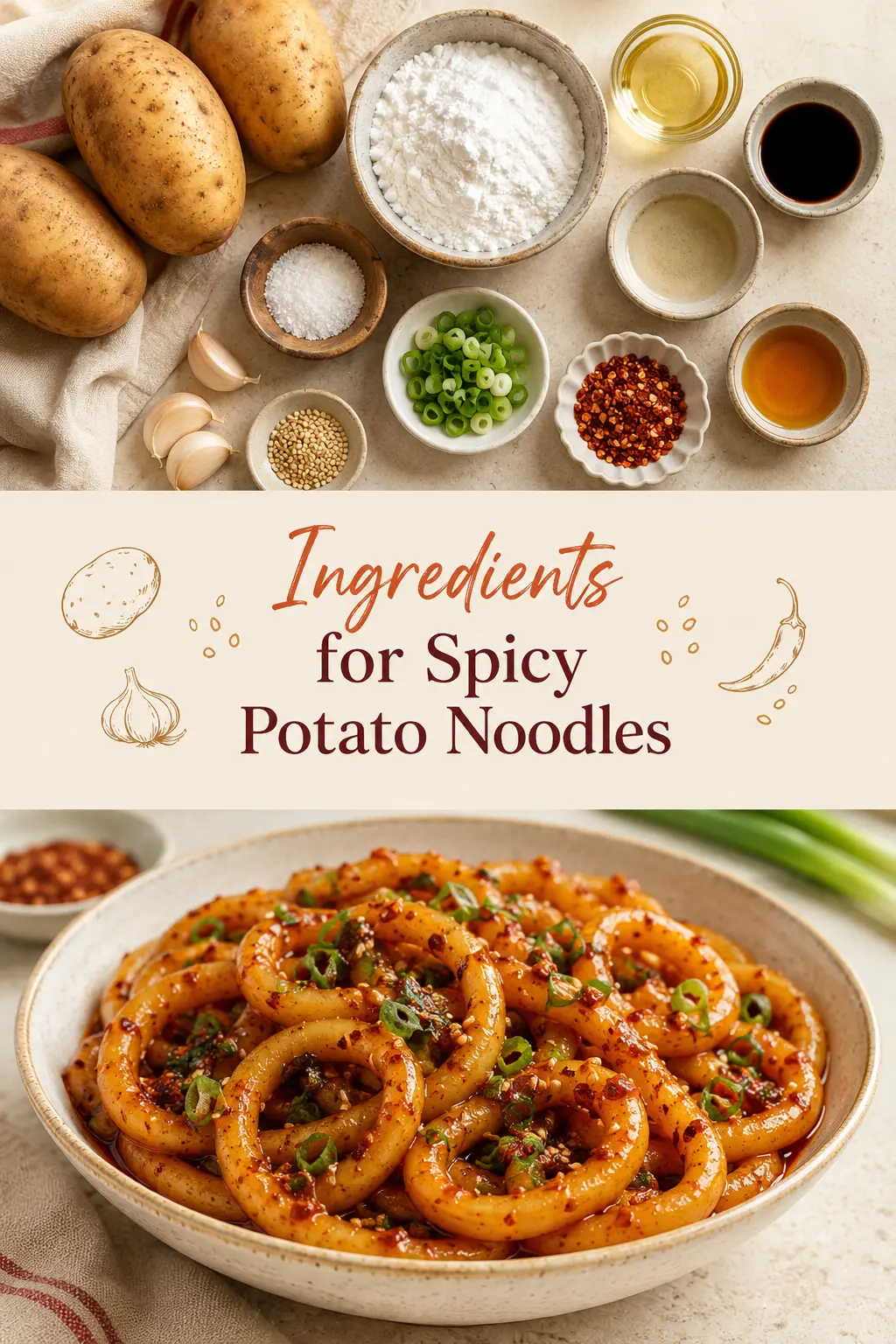
For the Potato Noodles
- 1 pound or 450 grams potatoes
- 1¼ to 1½ cups or 190 to 225 grams potato starch
- ½ teaspoon salt
- 2 to 4 tablespoons hot water, if needed
For the Spicy Sauce
- 3 garlic cloves, finely minced
- 2 green onions, thinly sliced
- 1 to 2 tablespoons red chili flakes
- 1 teaspoon toasted sesame seeds
- 3 tablespoons neutral oil
- 2 tablespoons light soy sauce
- 1 tablespoon Chinese black vinegar or rice vinegar
- 1 teaspoon sesame oil
- 1 teaspoon granulated sugar or honey
- 1 to 2 teaspoons chili oil, optional
- 2 tablespoons hot noodle water
Optional Toppings
- Chopped cilantro
- Extra sliced green onions
- Crushed roasted peanuts
- Thinly sliced cucumber
- Blanched bok choy
- A soft-boiled or fried egg
Choosing the Best Potatoes
Starchy potatoes are the best choice for homemade potato noodles. Russet potatoes work particularly well because they cook into a light, dry mash and combine easily with potato starch. Yukon Gold or other all-purpose potatoes can also be used, although the dough may require slightly more starch. Avoid very waxy potatoes because they tend to produce a sticky mash and may make the noodle dough more difficult to shape. The exact quantity of potato starch will vary depending on the moisture in your potatoes. Add it gradually and pay attention to the texture rather than relying solely on the measurement.
How to Make Spicy Potato Noodles
Step 1: Cook the Potatoes
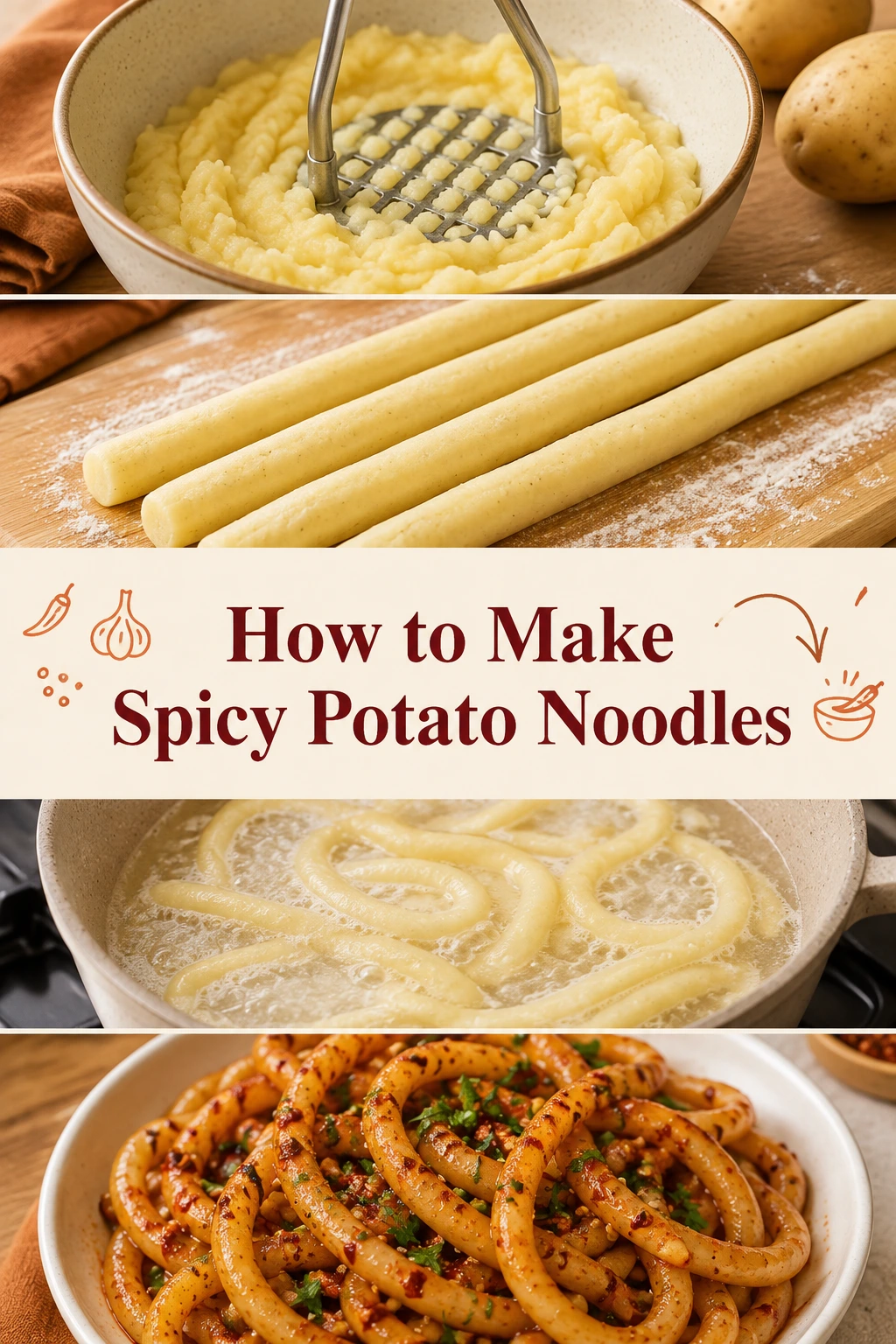
Peel the potatoes and cut them into evenly sized chunks. Place them in a saucepan and cover them with cold water. Add a small pinch of salt and bring the water to a boil. Cook the potatoes for approximately 12 to 15 minutes or until they can be easily pierced with a fork. Drain them thoroughly and return them to the warm saucepan for one minute. This allows excess moisture to evaporate. You may also steam the potatoes instead of boiling them. Steaming introduces less water and can make it easier to achieve a firm noodle dough.
Step 2: Mash Until Smooth
Pass the hot potatoes through a potato ricer or mash them thoroughly until no lumps remain. Smooth potatoes are essential because pieces of unmashed potato can cause the noodles to crack while they are being shaped. Allow the mash to cool for a few minutes. It should remain warm but should not be so hot that it is uncomfortable to handle.
Step 3: Prepare the Dough
Add the salt and 1 cup of potato starch to the mashed potatoes. Mix with a spoon or spatula before kneading the ingredients together by hand. Continue adding the remaining starch a little at a time until a smooth, flexible dough forms. If the dough feels extremely dry or cracks immediately, knead in hot water one teaspoon at a time. If it sticks heavily to your hands, add a little more potato starch. The finished dough should feel soft and pliable without being wet. Avoid adding too much starch at once, as an overly dry dough can produce tough or crumbly noodles.
Step 4: Shape the Noodles
Divide the dough into four portions and keep the portions you are not using covered to prevent them from drying out. Roll one portion into a long rope approximately ½ inch or 1.25 centimetres thick. Cut it into shorter noodle lengths. You can leave the pieces straight or gently roll each piece to smooth its surface. Another option is to shape the dough into small ropes with tapered ends. The noodles do not need to look perfectly identical. Slight variations give the finished dish an appealing handmade appearance. Place the shaped noodles on a tray dusted lightly with potato starch. Make sure they are not touching one another.
Step 5: Prepare the Sauce Base
Place the minced garlic, white parts of the green onions, chili flakes and sesame seeds in a large heatproof bowl. Heat the neutral oil in a small saucepan over medium-high heat. Once it is hot and shimmering, carefully pour it over the garlic and chili mixture. The ingredients should sizzle immediately and release a rich aroma. Stir in the soy sauce, vinegar, sesame oil, sugar and optional chili oil. Taste the sauce and adjust it as needed. Add more vinegar for sharpness, sugar for sweetness or chili flakes for additional heat.
Step 6: Boil the Potato Noodles
Bring a large pot of water to a gentle boil. Add the noodles in batches so they have enough room to move. Stir carefully to prevent them from sticking to the bottom. Once the noodles float to the surface, continue cooking them for approximately two minutes. The exact cooking time will depend on their thickness.
Remove one noodle and taste it. It should be tender throughout, with a pleasant chew and no powdery center. Transfer the cooked noodles to a bowl of cold water. This stops the cooking process and helps create a firmer, bouncier texture. Drain them well after approximately 20 to 30 seconds.
Step 7: Toss and Serve
Add the warm potato noodles to the prepared sauce. Pour in two tablespoons of hot noodle water and toss gently until every noodle is evenly coated. Finish with the green parts of the onions and any additional toppings. Serve the noodles immediately for the best flavor and texture.
7 Secrets for Perfect Spicy Potato Noodles
1. Remove Excess Moisture
Wet potatoes require considerably more starch, which may make the noodles dense. Drain the cooked potatoes properly and let residual steam escape before preparing the dough.
2. Mash the Potatoes While Warm
Warm potatoes are easier to mash smoothly and combine more evenly with potato starch. Do not allow them to become completely cold before making the dough.
3. Add the Starch Gradually
Different potatoes contain different amounts of moisture. Adding the starch in stages gives you greater control over the consistency.
4. Keep the Dough Covered
Potato-based dough can dry out quickly. Cover unused portions with a clean kitchen towel or reusable wrap while shaping the noodles.
5. Maintain a Gentle Boil
Extremely aggressive boiling can damage or break freshly shaped noodles. Keep the water bubbling steadily without allowing it to splash violently.
6. Briefly Rinse the Noodles
A quick cold-water rinse helps firm the surface and keeps the noodles from becoming too soft. Do not leave them soaking for an extended period.
7. Serve Them Fresh
These noodles have their best texture soon after cooking. Over time, they absorb sauce and gradually become softer.
How to Adjust the Spice Level
For mildly spicy noodles, use approximately one teaspoon of chili flakes and omit the additional chili oil. You can also add a teaspoon of honey to soften the heat. For medium heat, use one tablespoon of chili flakes and a small spoonful of chili oil. This produces noticeable warmth without overpowering the garlic, vinegar and sesame flavors.
For genuinely fiery noodles, use two tablespoons of chili flakes, hot chili oil and a small amount of finely chopped fresh red chili. Increase the heat carefully, particularly if your chili flakes are naturally intense.
Easy Recipe Variations
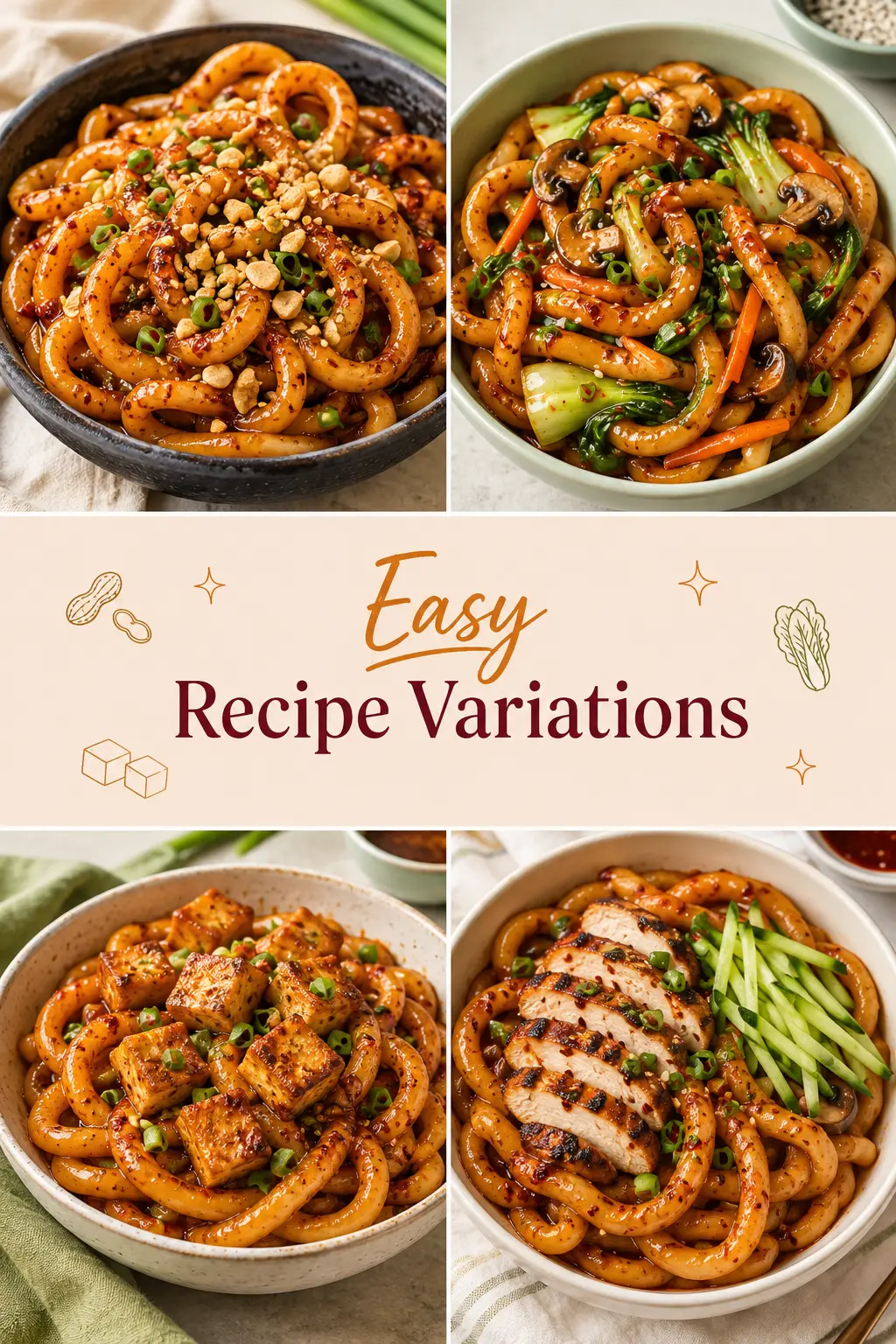
Spicy Potato Noodles With Vegetables
Add blanched bok choy, shredded carrots, sliced bell peppers, mushrooms or cucumber. Fresh cucumber is particularly refreshing against the warm chili sauce.
Peanut Chili Potato Noodles
Mix one tablespoon of creamy peanut butter into the sauce. Add a little extra noodle water to create a smooth, rich coating. Finish with crushed roasted peanuts.
Spicy Sesame Noodles
Add one tablespoon of Chinese sesame paste or tahini. The nutty richness balances the chili and makes the sauce exceptionally creamy.
Potato Noodles With Chicken
Top the finished noodles with sliced grilled chicken, shredded cooked chicken or spicy ground chicken for a more substantial meal.
Potato Noodles With Tofu
Serve the noodles with crispy pan-fried tofu. Tofu absorbs the extra sauce while providing additional protein.
Serving Suggestions
Spicy potato noodles are satisfying on their own, but simple side dishes can turn them into a complete meal. Try serving them with:
- Steamed or pan-fried dumplings
- Smashed cucumber salad
- Garlic bok choy
- Crispy tofu
- Grilled chicken
- Stir-fried mushrooms
- A jammy soft-boiled egg
- Light vegetable soup
A cooling cucumber salad is especially helpful when the noodles are very spicy. Its crisp texture and refreshing flavor provide a pleasant contrast to the hot, chewy noodles.
Storage and Reheating
Fresh potato noodles are best cooked and eaten on the same day. If you need to prepare them ahead, shape the uncooked noodles, dust them generously with potato starch and arrange them in a single layer. Cover and refrigerate for up to one day. Store leftover cooked noodles in an airtight container in the refrigerator for up to two days. They will become softer and may stick together as they sit.
To reheat, place them in a skillet with a splash of water and a small amount of oil. Warm gently over medium-low heat, tossing until the sauce loosens. Avoid overheating because the noodles can lose their pleasantly chewy consistency.
Freezing the uncooked noodles is not recommended unless you have tested your particular potato and starch combination. Changes in moisture during freezing and thawing may cause handmade noodles to crack.
Frequently Asked Questions
Can I use cornstarch instead of potato starch?
Cornstarch is not an ideal direct substitute because it produces a different texture and may not bind the potato dough as effectively. For the characteristic chewy result, use potato starch.
Why are my potato noodles falling apart?
The dough may contain too much moisture or insufficient potato starch. Noodles can also break if the water is boiling too aggressively. Add starch gradually until the dough holds its shape, and cook the noodles at a gentle boil.
Why is my dough cracking?
Cracking usually indicates that the dough is too dry. Knead in hot water one teaspoon at a time until it becomes soft and flexible. Keep the dough covered while working.
Are spicy potato noodles gluten-free?
The noodle dough contains no wheat. To make the entire dish gluten-free, use certified gluten-free soy sauce or tamari and check the labels of your chili oil and vinegar.
Can I make the noodles less spicy?
Yes. Reduce the chili flakes, omit the chili oil and add a little extra sugar or honey. You can also serve the noodles with cucumber, egg or a spoonful of sesame paste to mellow the heat.
Can I make potato noodles ahead of time?
You can shape the noodles and refrigerate them in a single layer for up to 24 hours. Dust them with potato starch and cover them properly so they do not stick together or dry out.
What should properly cooked potato noodles feel like?
They should be tender but pleasantly chewy, with a smooth surface and no dry or powdery center. They should bend without immediately breaking.
Final Thoughts
Homemade spicy potato noodles combine comforting potatoes with the excitement of a bold chili-garlic sauce. Their thick, springy texture makes them different from everyday pasta, while the flexible sauce allows you to control the heat, sweetness and acidity.
The most important part of this recipe is learning to judge the dough. Add the potato starch gradually, keep the dough covered and make small adjustments based on how it feels. Once you have mastered the basic technique, you can experiment with vegetables, tofu, chicken, peanuts and different chili sauces. Serve the noodles hot, finish them with fresh green onions and prepare yourself for a deeply savory, spicy and irresistibly chewy meal.
Check our Instagram and Facebook pages for more recipes.
