
 By Elina
Ramadan is a month of faith, gratitude, family gatherings, and delicious homemade meals. After a satisfying iftar, nothing completes the evening quite like a traditional Middle Eastern dessert. Rich with fragrant rose water, crunchy pistachios, sweet syrup, creamy milk puddings, and buttery pastry, these desserts have been enjoyed across the Middle East for generations. Whether you’re preparing desserts for your family or hosting friends during Ramadan, these recipes are surprisingly simple to make at home. If you’re looking for the Best Ramadan Desserts to Make at Home, this collection brings together four classic favorites that are perfect for sharing. In this guide, you’ll learn how to prepare four authentic Ramadan favorites with detailed step-by-step instructions, expert tips, storage advice, and serving suggestions.
Why Middle Eastern Desserts Are Popular During Ramadan
Middle Eastern desserts are traditionally served after iftar because they:
- Restore energy after fasting
- Pair beautifully with Arabic coffee or mint tea
- Can be prepared ahead of time
- Are perfect for sharing with family and guests
- Feature simple pantry ingredients
Many of these recipes rely on semolina, phyllo pastry, nuts, milk, dates, and fragrant syrups infused with rose water or orange blossom water. These ingredients and traditional preparation methods make them some of the Best Ramadan Desserts to Make at Home for family gatherings and festive evenings.
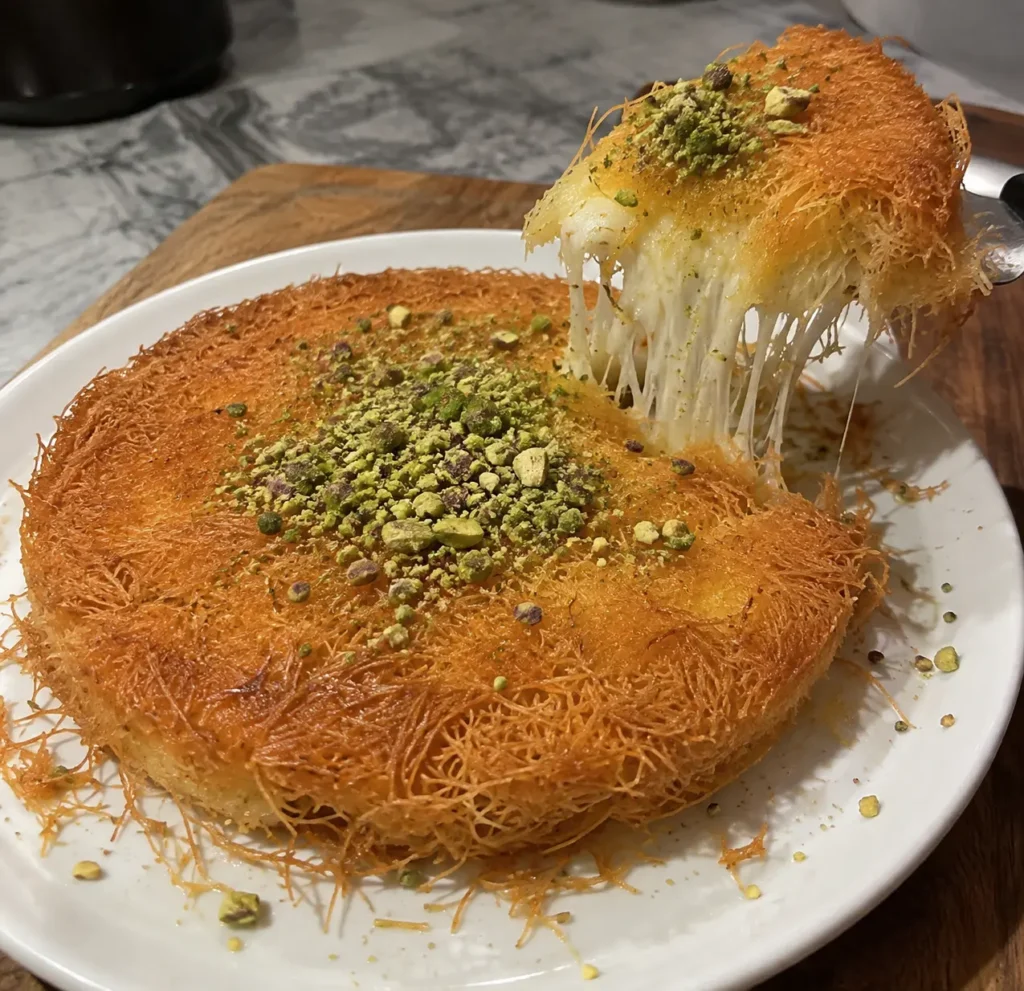
1. Classic Cheese Kunafa (Knafeh)
Prep Time: 25 minutes
Cook Time: 40 minutes
Servings: 8
Ingredients
For the Kunafa
- 500g shredded kataifi pastry
- 200g unsalted butter, melted
- 400g mozzarella cheese (low moisture)
- 200g ricotta cheese
- 2 tablespoons sugar
Sugar Syrup
- 2 cups sugar
- 1 cup water
- 1 teaspoon lemon juice
- 1 tablespoon rose water
- 1 tablespoon orange blossom water
Garnish
- Chopped pistachios
Step 1: Prepare the Syrup
In a saucepan combine:
- Sugar
- Water
- Lemon juice
Bring to a boil. Reduce heat and simmer for 10 minutes. Remove from heat and stir in:
- Rose water
- Orange blossom water
Cool completely.
Step 2: Prepare the Pastry
Separate the kataifi strands with your hands. Pour melted butter over the pastry. Mix until every strand is coated.
Step 3: Prepare the Cheese Filling
Mix together:
- Ricotta
- Mozzarella
- Sugar
Set aside.
Step 4: Assemble
Grease a 9-inch baking pan. Press half of the pastry into the pan. Spread cheese evenly. Cover with remaining pastry. Press gently.
Step 5: Bake
Bake at 180°C (350°F) for 35–40 minutes until golden brown.
Step 6: Add Syrup
Immediately after baking, pour cooled syrup evenly over the hot kunafa. Allow to rest for 10 minutes.
Step 7: Garnish
Sprinkle generously with chopped pistachios. Serve warm.
Tips
- Use fresh mozzarella for a stretchy texture.
- Always use cold syrup on hot kunafa.
- Do not overbake.
2. Stuffed Qatayef (Ramadan Pancakes)

Prep Time: 40 minutes
Cook Time: 20 minutes
Servings: 20 pancakes
Ingredients
Batter
- 2 cups flour
- 2 tablespoons semolina
- 2 teaspoons baking powder
- 1 tablespoon sugar
- 2 cups warm water
- 1 teaspoon instant yeast
Filling
- 1 cup chopped walnuts
- ¼ cup pistachios
- 2 tablespoons sugar
- 1 teaspoon cinnamon
Syrup
Use the syrup prepared in Recipe #1.
Step 1: Prepare Batter
Mix:
- Flour
- Semolina
- Sugar
- Baking powder
- Yeast
Add warm water. Blend until smooth. Rest for 30 minutes.
Step 2: Cook Pancakes
Heat a non-stick skillet. Pour small circles of batter. Cook only one side. When bubbles appear and the surface dries, remove. Do not flip. Cool under a towel.
Step 3: Prepare Filling
Mix together:
- Walnuts
- Pistachios
- Sugar
- Cinnamon
Step 4: Fill
Place one tablespoon filling inside each pancake. Pinch edges closed.
Step 5: Fry
Heat oil to 175°C (350°F). Fry until golden. Drain on paper towels.
Step 6: Coat
Dip immediately into sugar syrup. Drain briefly. Serve warm.
Tips
- Keep cooked pancakes covered.
- Seal edges tightly.
- Do not overfill.
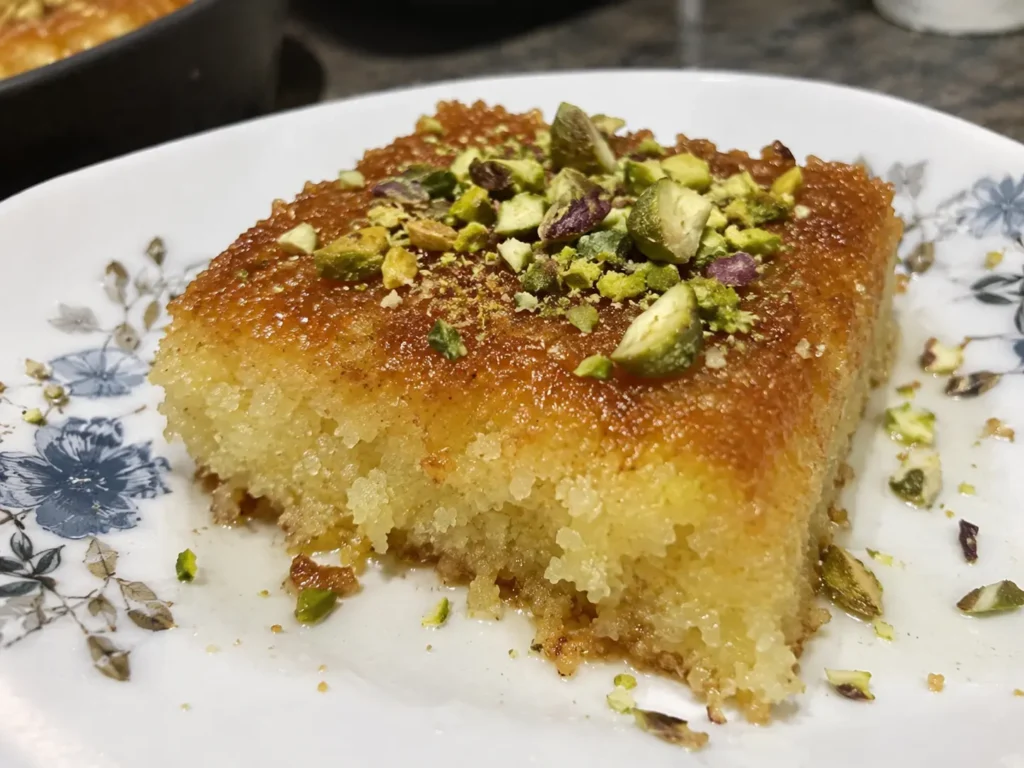
3. Basbousa (Semolina Cake)
Prep Time: 20 minutes
Cook Time: 40 minutes
Servings: 12
Ingredients
- 2 cups coarse semolina
- 1 cup yogurt
- ¾ cup sugar
- ½ cup melted butter
- 1 teaspoon baking powder
- ¼ teaspoon salt
- Whole almonds
- Prepared sugar syrup
Step 1: Prepare Batter
Mix:
- Semolina
- Sugar
- Salt
- Baking powder
Add:
- Yogurt
- Melted butter
Mix gently. Do not overmix. Allow batter to rest for 15 minutes.
Step 2: Prepare Pan
Grease an 8×8-inch baking dish. Spread batter evenly. Smooth top. Cut into diamonds. Place one almond in each piece.
Step 3: Bake
Bake at 180°C (350°F) for 35–40 minutes. The top should be deep golden brown.
Step 4: Add Syrup
Pour cool syrup over the hot cake. Allow it to soak for 1 hour.
Step 5: Serve
Cut along the scored lines. Serve with tea or Arabic coffee.
Tips
- Resting the batter improves texture.
- Don’t skip scoring before baking.
- The syrup should soak completely.
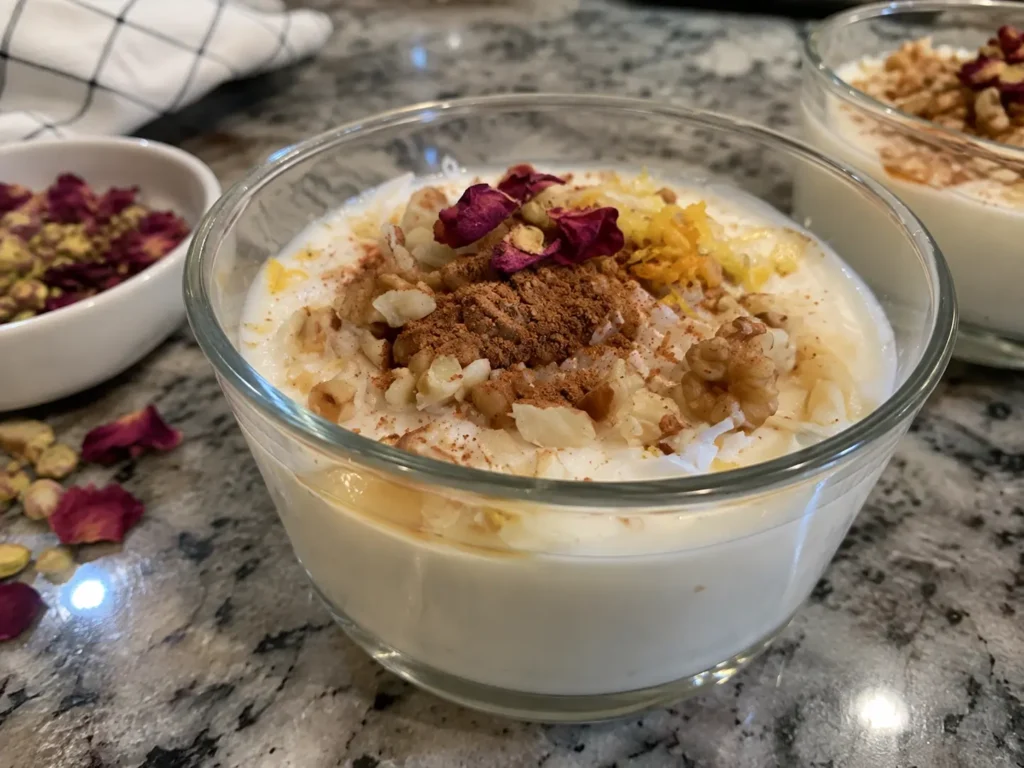
4. Mahalabia (Middle Eastern Milk Pudding)
Prep Time: 10 minutes
Cook Time: 15 minutes
Chilling Time: 3 hours
Servings: 6
Ingredients
- 4 cups whole milk
- 5 tablespoons cornstarch
- ½ cup sugar
- 1 teaspoon vanilla
- 1 tablespoon rose water
- 1 tablespoon orange blossom water
Garnish
- Crushed pistachios
- Coconut flakes
- Cinnamon
- Pomegranate seeds (optional)
Step 1: Mix
Whisk together:
- Milk
- Sugar
- Cornstarch
Until smooth.
Step 2: Cook
Cook over medium heat. Whisk constantly. Continue until thick and creamy.
Step 3: Flavor
Remove from heat.
Add:
- Vanilla
- Rose water
- Orange blossom water
Mix well.
Step 4: Pour
Divide among serving bowls. Cover with plastic wrap touching the surface.
Step 5: Chill
Refrigerate for at least 3 hours.
Step 6: Garnish
Top with:
- Pistachios
- Coconut
- Cinnamon
- Fresh pomegranate
Serve chilled.
Tips
- Stir constantly to prevent lumps.
- Use whole milk for a richer texture.
- Chill overnight for the best consistency.
Why These Are the Best Ramadan Desserts to Make at Home
These four desserts combine traditional Middle Eastern flavors with straightforward preparation methods, making them practical choices for Ramadan gatherings. Whether you prefer crispy pastry, creamy pudding, syrup-soaked cake, or stuffed pancakes, these recipes offer a variety of textures and flavors for your family and guests.
Traditional Sweets for Family Gatherings
Ramadan gatherings are the perfect opportunity to share homemade sweets with family and guests. The Best Ramadan Desserts to Make at Home include traditional favorites such as Kunafa, Qatayef, Basbousa, and Mahalabia, giving everyone a variety of textures and flavors to enjoy.
Make-Ahead Tips for Ramadan
Middle Eastern desserts are traditionally served after iftar because they:
- Restore energy after fasting
- Pair beautifully with Arabic coffee or mint tea
- Can be prepared ahead of time
- Are perfect for sharing with family and guests
- Feature simple pantry ingredients
Many of these recipes rely on semolina, phyllo pastry, nuts, milk, dates, and fragrant syrups infused with rose water or orange blossom water. These ingredients and traditional preparation methods make them some of the Best Ramadan Desserts to Make at Home for family gatherings and festive evenings.
Desserts to Serve After Iftar
A sweet dish after iftar can bring a festive finish to the meal. The Best Ramadan Desserts to Make at Home range from warm, syrup-soaked Kunafa and Qatayef to chilled Mahalabia, so you can choose a dessert based on your family’s preferences and the occasion.
Storage Guide
| Dessert | Refrigerator | Freezer |
|---|---|---|
| Kunafa | 3 days | 2 months |
| Qatayef | 3 days | 2 months |
| Basbousa | 5 days | 3 months |
| Mahalabia | 3 days | Not recommended |
How to Choose the Best Ramadan Desserts to Make at Home
Choosing the Best Ramadan Desserts to Make at Home depends on the time you have, the ingredients available, and whether you want something baked, fried, or chilled. Kunafa and Basbousa are excellent choices when you want traditional baked desserts, while Qatayef is ideal for a festive fried treat. For a simple no-bake option, Mahalabia is quick to prepare and can be made ahead of time.
Frequently Asked Questions
Which dessert is easiest for beginners?
Mahalabia is the simplest recipe, requiring only a few ingredients and no baking.
Can I reduce the sugar?
Yes. You can reduce the sugar in both the desserts and the syrup, although traditional Middle Eastern desserts are intentionally sweet for festive occasions.
Can these desserts be made ahead for Ramadan?
Absolutely. Basbousa and Mahalabia are excellent make-ahead options, while Kunafa can be assembled in advance and baked fresh.
Are these recipes suitable for Eid?
Yes. These desserts are popular during both Ramadan and Eid celebrations and are commonly served to guests.
Best Ramadan Desserts to Make at Home – Conclusion
Homemade Middle Eastern desserts bring warmth, tradition, and celebration to every Ramadan table. From the crispy, cheese-filled layers of Kunafa to the creamy elegance of Mahalabia, each recipe offers authentic flavors that family and friends will love.
Whether you’re trying these sweets for the first time or recreating cherished family traditions, these four classic desserts are perfect for making Ramadan evenings even more memorable. Serve them with fresh mint tea or Arabic coffee, share them with loved ones, and enjoy the comforting taste of homemade hospitality.
Check our Instagram and Facebook pages for more recipes.
