
 By Elina
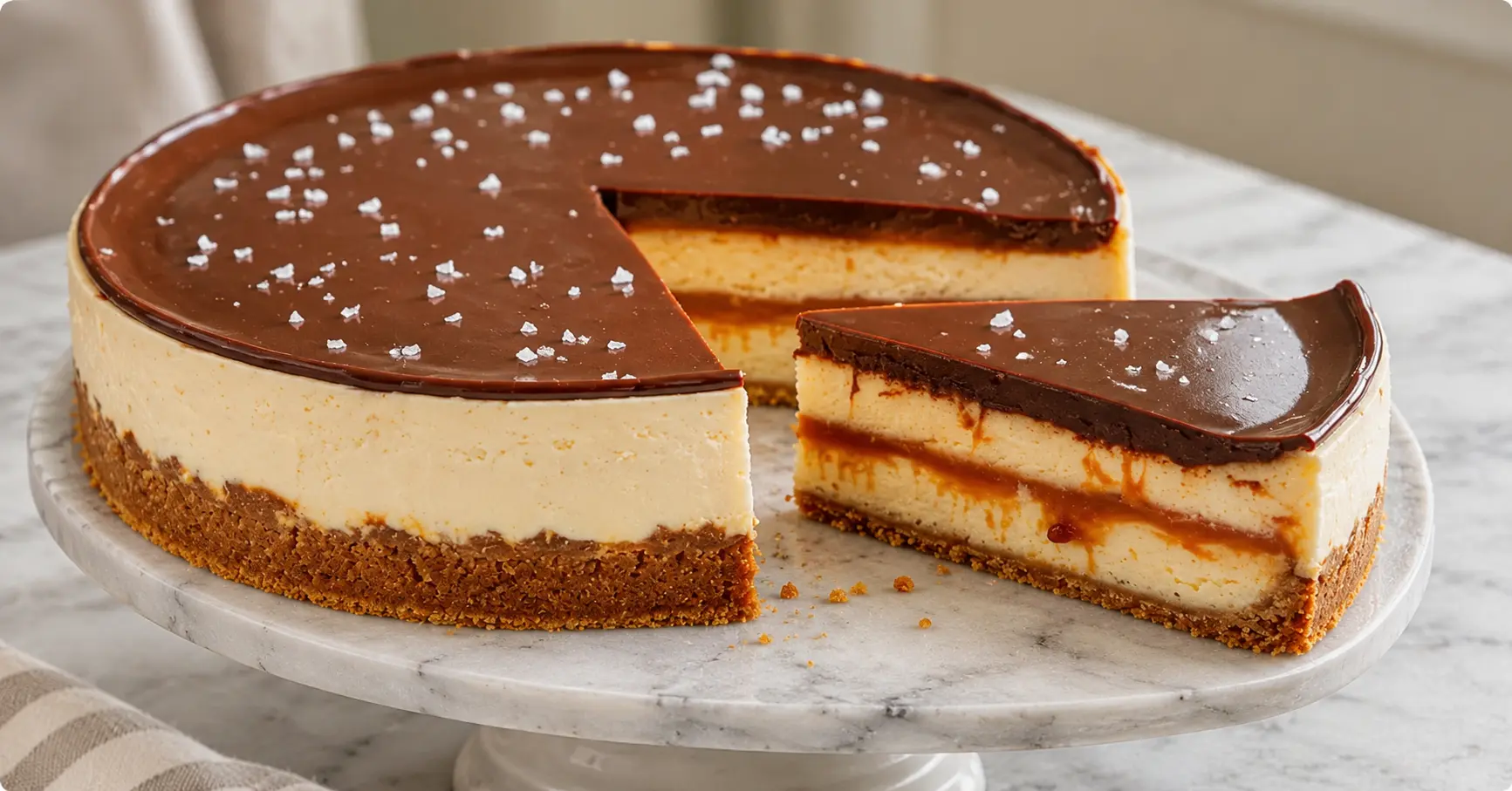
This salted caramel cheesecake is built the way a layered cake is built — a baked shortbread crust, a caramel layer sealed between two halves of a whipped cream-cheese filling, and a glossy chocolate ganache top — and the single thing that decides whether it slices cleanly or slides apart is the temperature of the caramel when it goes in. Hands-on work is about 30 minutes, the crust bakes for 15, and then the fridge does the rest: at least 6 hours, overnight if you can. It serves 10 from a 9-inch springform pan.
How this salted caramel cheesecake is built to hold its layers
Three parts, three jobs. The crust is the only thing that bakes: flour, sugar and cold butter rubbed to sand, pressed in and baked until just golden, so the base stays crisp under a wet filling. The filling never sees the oven — beaten cream cheese lightened with whipped cream, set by chilling rather than baking. And the caramel sits in the middle of the filling as its own layer, not stirred through it, so every slice shows a clean amber band between the pale cream and the dark ganache. The no-bake caramel cheesecake on this site skips the oven entirely with a pressed shortbread crust; this version earns the oven time, because the baked crust stays crisp and nutty where a pressed crumb crust softens after a day in the fridge.
Bake the crust first, and let it cool completely
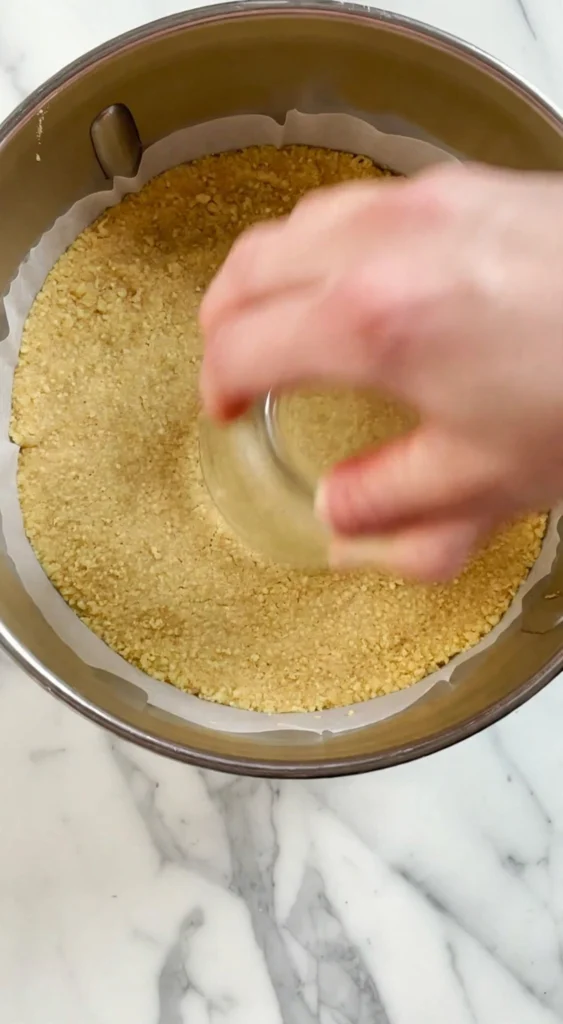
Rub 1 1/2 cups (190 g) all-purpose flour with 1/2 cup (115 g) cold unsalted butter, cubed, 1/4 cup (50 g) granulated sugar and 1/4 teaspoon fine sea salt until the mixture looks like damp sand and clumps when squeezed. Tip it into a 9-inch springform pan and press it even with the flat bottom of a glass, pushing slightly up the sides. Bake at 350°F (175°C) for 12–15 minutes, until just golden at the edges, then cool completely in the pan — at least 20 minutes on the counter. A warm crust melts the filling on contact and turns soggy from the bottom up, so this is not a step to rush. In an 8-inch pan the crust bakes taller and the cake needs a longer chill; in a 10-inch pan the layers run thinner and set faster. Without a springform, line a regular 9-inch pan with a parchment strip with overhang on two sides and lift the chilled cake out by it.
Make the salted caramel cheesecake filling in two halves
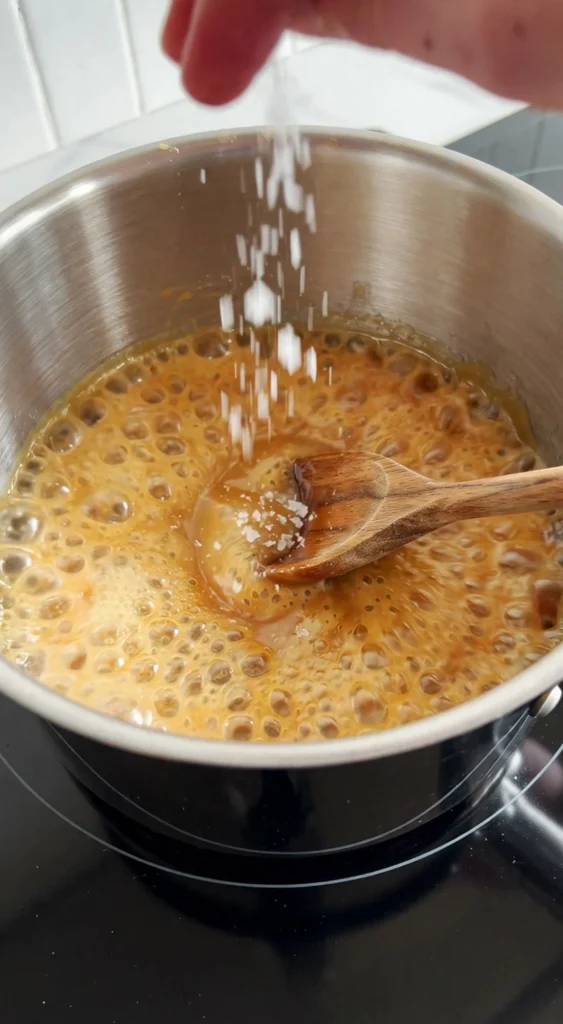
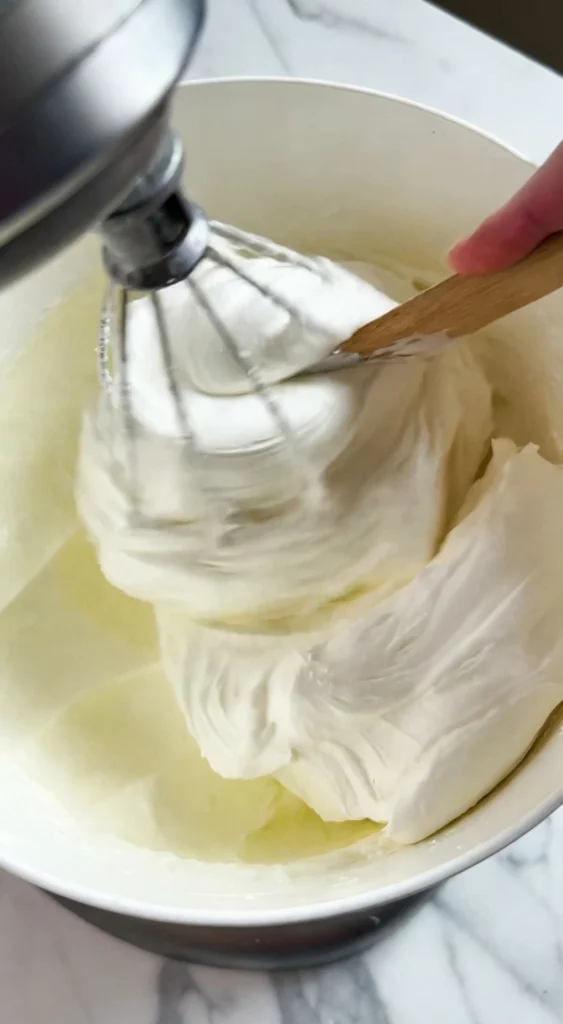
Make the caramel while the crust cools. Melt 1 cup (200 g) granulated sugar in a dry saucepan over medium heat, without stirring, until deep amber — about 5–6 minutes. Off the heat, whisk in 6 tablespoons (85 g) unsalted butter, then pour in 1/2 cup (120 ml) warmed heavy cream in a slow stream; it will bubble hard, so keep your hand back. Stir in 1 teaspoon flaky sea salt and set the caramel aside for 15 minutes, until pourable but no longer hot — it should ribbon off the spoon and hold a trail for a second. Hot caramel poured over filling melts straight through it, and the band disappears — this cooling wait is the whole trick. While it cools, beat 16 oz (450 g) full-fat cream cheese, softened to room temperature, with 3/4 cup (90 g) powdered sugar and 2 teaspoons vanilla extract for about 2 minutes, until completely smooth. In a separate cold bowl, whip 1 1/2 cups (360 ml) cold heavy cream to stiff peaks, then fold it into the cream cheese mixture in two batches with a spatula, cutting down the middle and folding over, until just combined and airy.
Spoon half the filling over the cooled crust and smooth it, spread the cooled caramel over that layer to the edges, then top with the remaining filling and smooth the top. Cover tightly and refrigerate for at least 6 hours, or overnight — overnight gives the cleanest slices, because the caramel firms up inside the filling instead of staying fluid. The cake is ready when the centre feels firm, not wobbly, when you gently shake the pan.
The ganache top: hot cream, rested chocolate
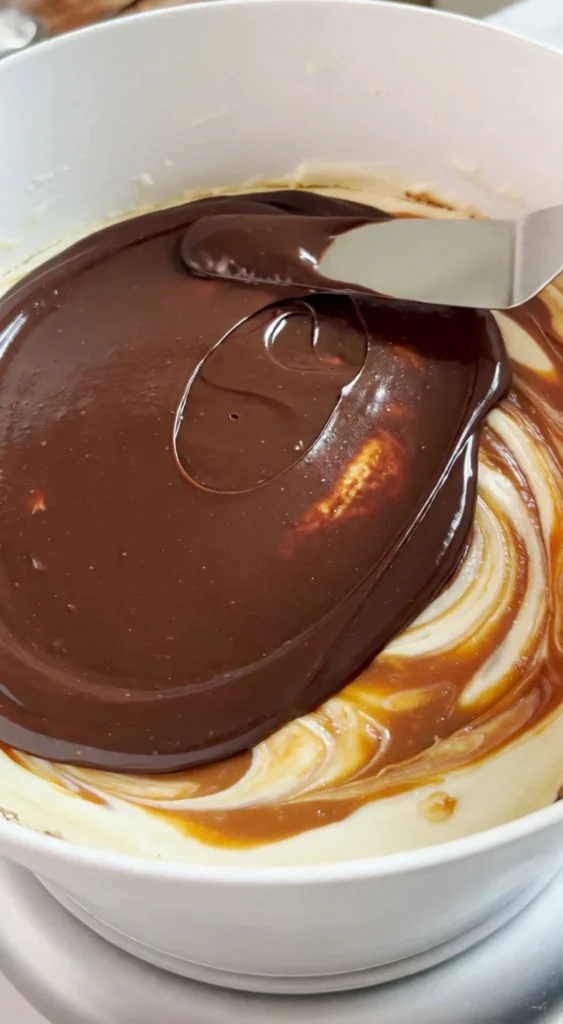
Heat 1/2 cup (120 ml) heavy cream until it just simmers, pour it over 1 cup (170 g) semisweet chocolate chips, rest 2 minutes, then stir from the centre outward until smooth and glossy. Let it cool for 5 minutes so it thickens slightly, then pour it over the chilled cake and tilt the pan so it runs to the edges. Scatter flaky sea salt over the top while the ganache is still wet. Poured too hot, ganache runs off the sides and pools on the plate; left too long, it goes dull and streaky. The right moment is a slow ribbon that holds its shape for a second on the surface. Chill for 30 minutes until the ganache is set, then run a thin knife around the inside edge before unclipping the springform ring.
Three mistakes that ruin a salted caramel cheesecake
Caramel layered while still hot. It melts into the filling, the amber band vanishes, and the extra liquid loosens the set so the cake slumps when sliced. Next time, wait the full 15 minutes: the caramel should ribbon and hold a trail, not run like water. There is no fix after the fact except serving it in bowls.
Crust under-baked, or filled while warm. A pale, soft crust soaks up moisture and crumbles when cut, and a warm crust melts the cream cheese on contact. Bake until the edges are genuinely golden, not just set, and let the pan go fully cool before the filling goes in.
Cutting too soon. At 3 hours the centre is still mousse-soft and will not hold a tall slice. Give it the overnight chill, and cut with a long sharp knife run under hot water and wiped dry, one firm press, wiping the blade between slices so the ganache does not drag across the cream.
Swaps for the pantry you have
If you do not want the oven on, swap the baked crust for a pressed one: 1 1/2 cups finely crushed digestive biscuits with 5 tablespoons melted butter, pressed in and chilled for 20 minutes. The cake still works, but the crisp, golden crust — the whole point of this version — is gone. Milk chocolate makes a sweeter, softer ganache that needs a longer chill; keep the semisweet if you can. Light brown sugar in the caramel gives a deeper, almost toffee note, though it darkens faster, so watch it a minute earlier. And if you have no flaky salt, a pinch of fine sea salt stirred into the caramel carries the salt through the whole cake — just do not sprinkle fine salt on the ganache, where it dissolves and leaves damp spots.
How to store it and serve it cold
Once set, this salted caramel cheesecake keeps in the refrigerator for up to 5 days, covered, or in an airtight container once sliced — the ganache top protects the filling from drying out, so storing the whole cake works better than loose slices. It freezes well too: freeze slices on a tray until solid, wrap individually and keep for up to 1 month. Thaw overnight in the refrigerator, not on the counter, so the ganache does not sweat. For serving, cut it cold and let the plate sit for five minutes before eating — the caramel band shows best when the slice is still firm, and a spoonful of warm caramel drizzled over the plate is the one garnish it needs.
More desserts to try: No-Bake Caramel Cheesecake · Salted Caramel Cheesecake Bars · Cream Cheese Caramel Flan
If the baked crust is what sold you, the no-bake caramel cheesecake is the same flavours with a pressed crust and no oven at all. Cut this one cold, wipe the knife between slices, and watch the layers come together in the Salted Caramel Cheesecake Short — https://www.youtube.com/shorts/eNaky6vKTU0.
