
 By Elina
If you want to know how to thicken soup, start here: the fastest fix is a cornstarch slurry — one tablespoon of cornstarch whisked into two tablespoons of cold water, stirred into simmering soup. Below are eight reliable methods, from 2-minute fixes to flavour-building techniques, plus how to avoid lumps and gluey textures.
Thin, watery soup is one of the most common kitchen frustrations, but it is also one of the easiest to fix. The right method depends on what is already in the pot and how much time you have. Work through the options below and pick the one that suits your soup.
How to thicken soup: 8 foolproof methods
1. Cornstarch slurry (fastest)
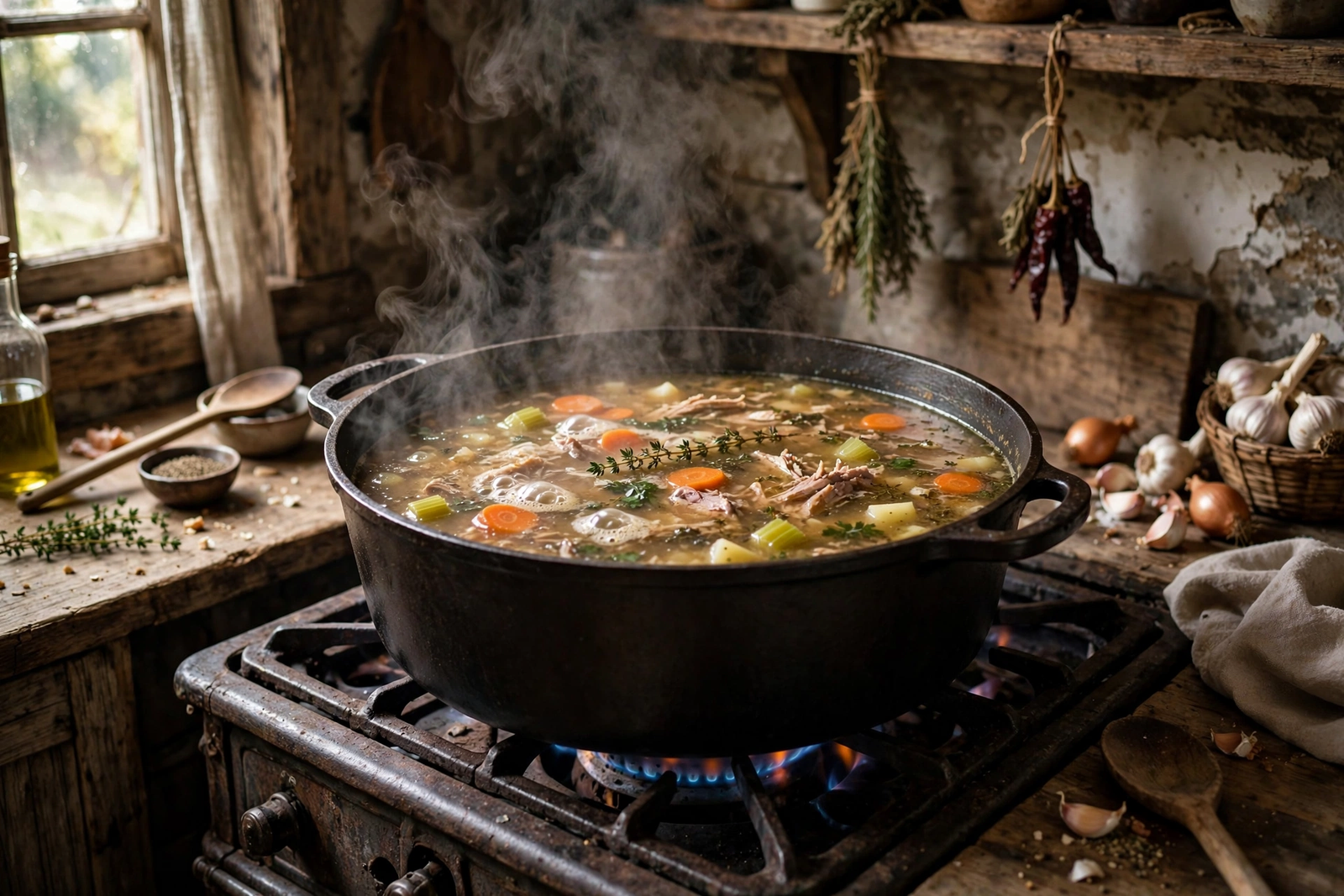
The classic restaurant shortcut. Whisk 1 tablespoon of cornstarch into 2 tablespoons of cold water until completely smooth, then drizzle it into gently simmering soup while stirring. Let it bubble for 1–2 minutes — cornstarch only reaches full thickness at a simmer. One slurry thickens about 4 cups (1 litre) of soup; add a second if needed, but wait the full two minutes before judging. Always mix with cold liquid first: cornstarch added straight to hot soup turns into lumps instantly.
2. Flour slurry or beurre manié
No cornstarch? All-purpose flour works the same way, though it needs a little more: whisk 2 tablespoons of flour into 1/4 cup of cold water and stir it in, then simmer for at least 3–4 minutes to cook out the raw flour taste. For more control, make a beurre manié — knead equal parts softened butter and flour into a paste, then whisk in pea-sized lumps one at a time. It melts in gradually, so you can stop exactly when the texture is right.
3. Roux
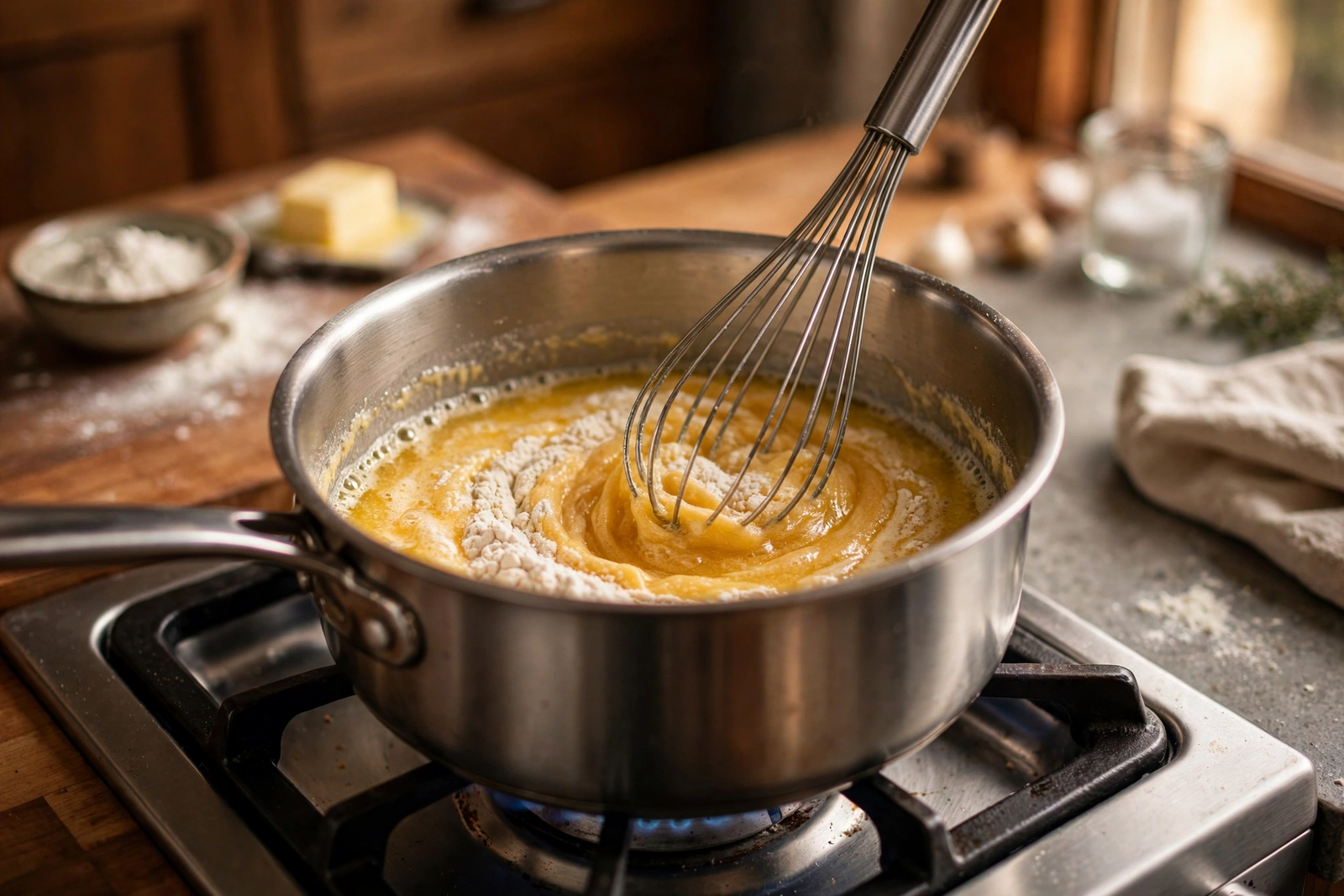
A roux builds body and flavour at the same time, making it ideal for chowders and cream soups. Melt 2 tablespoons of butter in the pot, whisk in 2 tablespoons of flour, and cook for 2–3 minutes until it smells faintly nutty. Then pour in your soup liquid gradually, whisking constantly. A roux added at the start gives the smoothest, most stable thickness of any starch method — but it must be cooked in fat first, never stirred raw into finished soup.
4. Puree some of the soup (or add beans)
The healthiest thickener is the soup itself. Scoop out 1–2 cups of the cooked vegetables and broth, blend until smooth, and stir it back in. A stick blender used directly in the pot for 10 seconds does the same job with less washing up. For extra protein, blend in a can of drained white beans — they disappear into the texture while adding body. This method adds zero extra starch and keeps the flavour exactly as intended.
5. Potato power
Potatoes are nature’s thickener. Grate one raw potato straight into simmering soup and cook for 15–20 minutes — the released starch thickens as it cooks, and the shreds melt away. In a real hurry, stir in 1/2 cup of instant mashed potato flakes and wait two minutes. Both are flavour-neutral, gluten-free, and work in any savoury soup.
6. Reduce it
Sometimes the answer is not adding anything — it is removing water. Simmer the soup uncovered for 10–20 minutes and the excess liquid evaporates, concentrating both body and flavour. This is the best method when the taste is already perfect and only the texture is thin. One warning: reduction intensifies salt, so season lightly and do your final salting after reducing, not before.
7. Cream, coconut milk or yoghurt
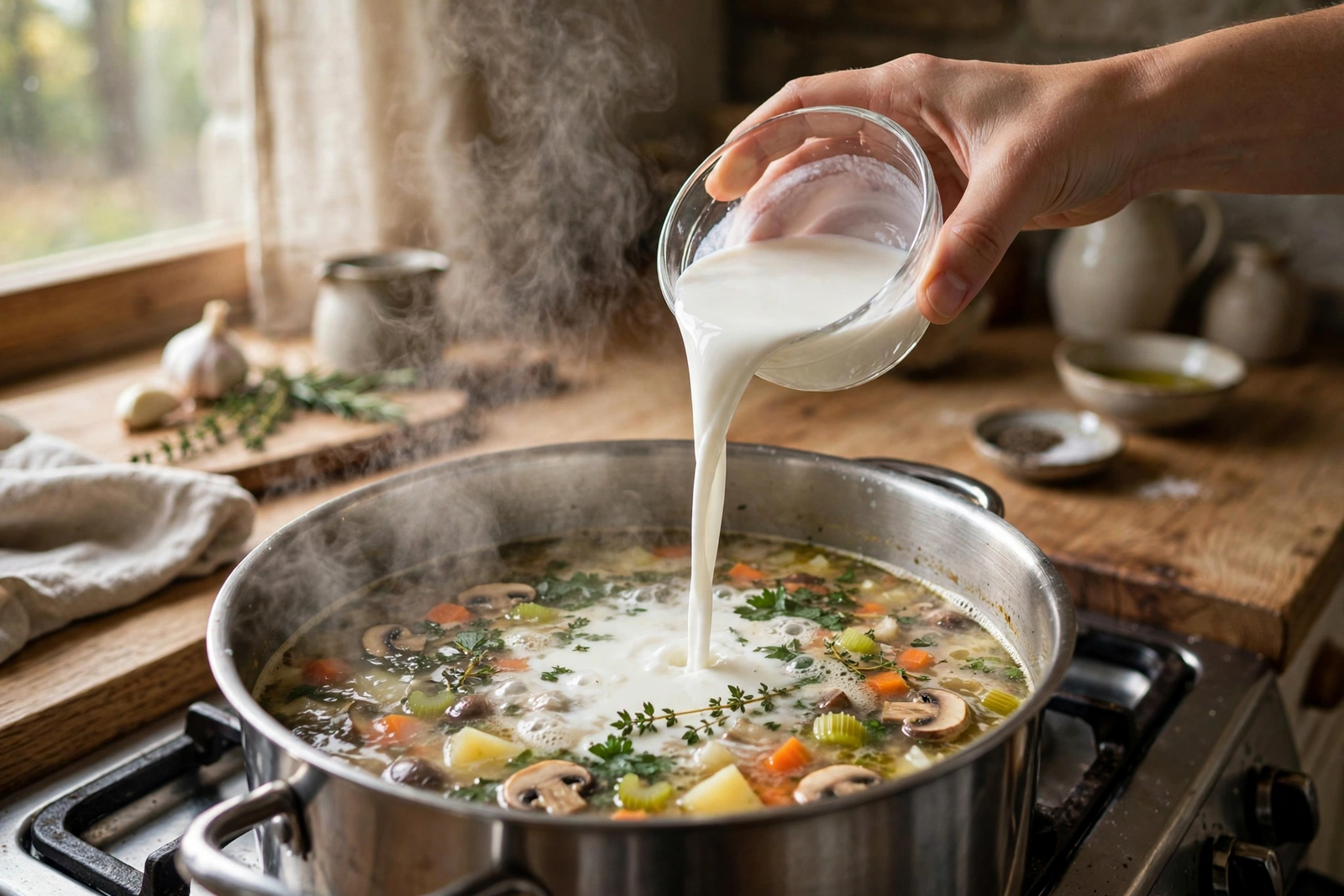
A swirl of heavy cream, coconut milk or full-fat yoghurt adds luxurious body — though strictly speaking it enriches more than it thickens. Add 1/2 to 1 cup per pot off the heat or at the gentlest simmer; boiling cream can split, and yoghurt must be tempered (stir a ladle of hot soup into it first) or it will curdle. Best for soups where richness is welcome: tomato, squash, mushroom and potato soups all love this treatment.
8. Breadcrumbs or oats
An old Italian trick: stir 1/4 cup of fine dry breadcrumbs or rolled oats into simmering soup and cook for 10 minutes. They swell, soften and vanish, leaving a heartier, more substantial bowl. Use plain breadcrumbs (seasoned ones change the flavour) and plain oats. This is a great rescue for rustic vegetable and bean soups where a little extra texture feels like a bonus, not a flaw.
Troubleshooting: fixing common thickening mistakes
- Lumps: you added starch to liquid that was too hot, or did not whisk the slurry smooth first. Strain the soup through a sieve, or blitz it with a stick blender — then re-thicken properly with a cold-mixed slurry added to a gentle simmer.
- Gluey or gummy texture: too much starch. Thin the soup back down with warm stock, a ladle at a time, until the texture relaxes. Next time, add half the thickener, wait two full minutes, then decide.
- Too salty after reducing: reduction concentrates everything, including salt. Add a peeled, halved potato and simmer 10 minutes to absorb some salt, or stretch the soup with unsalted stock or water.
- Over-thickened: the easiest fix of all — stir in warm stock or water until it loosens to the texture you want. Soup should coat a spoon, not stand up on it.

Frequently asked questions
Can I thicken soup without flour or cornstarch?
Yes — several methods need no added starch at all. Blend part of the soup, reduce it by simmering uncovered, or stir in pureed white beans or a grated potato. All are naturally gluten-free and add no processed ingredients.
Why did my soup go lumpy when I added cornstarch?
Cornstarch seizes on contact with hot liquid. Always whisk it into cold water first to make a smooth slurry, then drizzle that into gently simmering (not furiously boiling) soup while stirring constantly.
Can I thicken soup in a slow cooker?
Yes, but give it time and heat. Stir in a cornstarch slurry, switch the cooker to high, and leave the lid ajar for the last 30–45 minutes so steam escapes. Alternatively, transfer a few cups to a saucepan, thicken on the stove, and stir back in.
Will thickening change the flavour of my soup?
Starch slurries and reduction are nearly flavour-neutral; reduction actually deepens flavour. Roux and cream add richness, while potato and beans are undetectable once blended. Taste and adjust seasoning after thickening, not before.
Put these techniques to work in our Chicken Soup with Vegetables Recipe — a hearty classic that is perfect for practising the puree method. And if you cook with a gadget, our Soup Maker Recipes collection covers getting the texture right in the machine too.
